
Oct 31·Science
Follow-up 2h ago Major3
97%
Voyager 1 reaches one light-day from Earth on November 18, 2026
NASA's Voyager 1 probe will reach one light-day (26 billion kilometers) from Earth on November 18, 2026, becoming humanity's most distant artificial object after nearly 50 years in flight. Engineers successfully extended the spacecraft's lifespan through a power-conservation procedure in September and recovered from a 48-hour communications blackout in October, though the aging probe continues to face power constraints as its plutonium-based generators decay.
Quick Facts
- Voyager 1 launched in 1977 for a five-year Jupiter and Saturn mission
- Spacecraft will reach one light-day distance from Earth
- Three heating devices replaced with lower-power alternatives in September 2026 (Operation Big Bang)
- 48-hour communications blackout occurred in mid-October 2026
- Spacecraft experienced automatic thruster switchover during communication loss


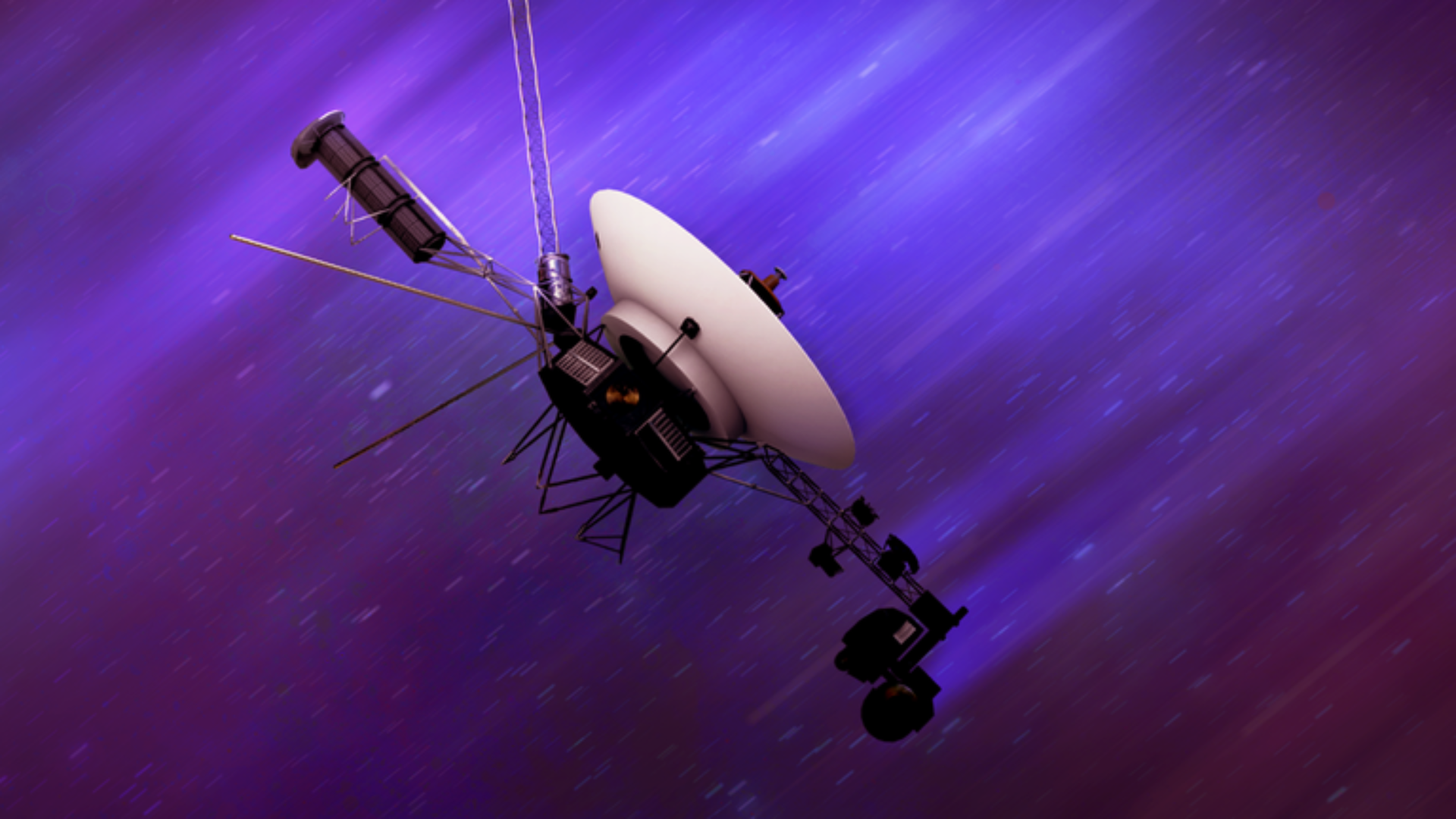
NASA's Voyager 1 spacecraft, launched in September 1977, is set to reach a historic milestone on November 18, 2026, when it will be approximately 26 billion kilometers (16 billion miles) from Earth—a distance known as one light-day. At this distance, radio signals traveling at the speed of light take 24 hours to reach the probe, making round-trip communication between Earth and the spacecraft take a minimum of 48 hours. This achievement marks nearly 50 years of continuous operation, far exceeding the probe's original five-year mission design for Jupiter and Saturn exploration.
Maintaining Voyager 1's operations has required increasingly sophisticated engineering solutions as its power source deteriorates. The spacecraft relies on three radioisotope thermoelectric generators (RTGs) that convert heat from plutonium decay into electricity. These generators lose approximately 4 watts of capacity annually. In September 2026, NASA engineers completed a complex power-conservation procedure nicknamed "Big Bang," which simultaneously replaced three onboard heating devices with lower-power alternatives. This operation was critical to preserve the spacecraft's remaining scientific instruments, as without it NASA would have faced shutting down another instrument by summer 2027.
The mission has faced unexpected challenges recently. In October 2026, Voyager 1 experienced a 48-hour communications blackout when NASA's Deep Space Network lost signal contact. Investigation revealed that one of the spacecraft's thrusters had automatically switched to a backup unit as part of the probe's autonomous fault-protection system, though engineers continue investigating the precise connection between this thruster event and the communication loss. The spacecraft successfully resumed contact on October 20.
Experts estimate the remaining RTG power will sustain Voyager 1's operations through the 2030s. The spacecraft continues traveling at approximately 61,000 kilometers per hour (37,844 miles per hour) relative to the Sun, heading toward a star designated AC +79 3888 in the Ursa Minor constellation, which it will approach within 1.7 light-years in approximately 17 light-years—a journey requiring over 300,000 years. Voyager 2, its sister spacecraft, is expected to reach the one light-day milestone approximately nine years later in November 2035.
Why This Matters
Voyager 1's one light-day milestone demonstrates sustained deep-space exploration capability and validates human-engineered longevity in extreme environments. Round-trip communication now requires 48 hours minimum; any operational insight gained informs future interstellar probe design and power management strategies. The mission's power constraints and recent thruster-related communications event establish measurable engineering challenges for maintaining science instruments through the 2030s and precedent for autonomous fault-protection protocols in uncrewed systems.
Timeline & Sources
Sep 5, 1977
WireVoyager 1 launched from Earth
Jan 1, 2024
WireVoyager 1 suffered critical memory error (later repaired)
Oct 18, 2026
WireVoyager 1 communications blackout begins
Oct 20, 2026
WireVoyager 1 communications resumed after 48-hour blackout; thruster switchover identified
Nov 18, 2026
WireVoyager 1 reaches one light-day distance from Earth
Sources
- 【"1光日"到達目前のボイジャーが奇跡の延命に成功】49年間の飛行で電力不足が深刻化 通信途絶も発生Yahoo!ニュースMediaOct 31, 2026
- Voyager 1 probe to hit historic one light-day distance from Earth in 17 days — 49-year-old spacecraft travels 16 billion miles and survives nearly ten times the length of its original five-year missionTom's HardwareMediaNov 1, 2026
- NASA’s Voyager 1 is about to reach a historic one-light-day milestoneScience DailyMediaNov 4, 2026