
Emerging
Published Jun 18, 2026Updated Jun 191
59%
Jeff Bezos Proposes Moving Heavy Industry to the Moon to Achieve Environmental Balance
Jeff Bezos has proposed relocating heavy industry to the Moon to enable Earth to return to a pre-industrial state while maintaining economic growth. He emphasized the Moon's practical advantages over Mars, including accessibility and energy efficiency, and outlined plans for orbital habitats and lunar resource utilization as part of Blue Origin's vision for sustainable space settlement.
Quick Facts
- Proposed moving heavy industry to the Moon
- Argued for environmental sustainability through space colonization
- Discussed lunar resource utilization
- Presented Prometheus AI enterprise
- Contrasted Moon settlement with Mars exploration strategy
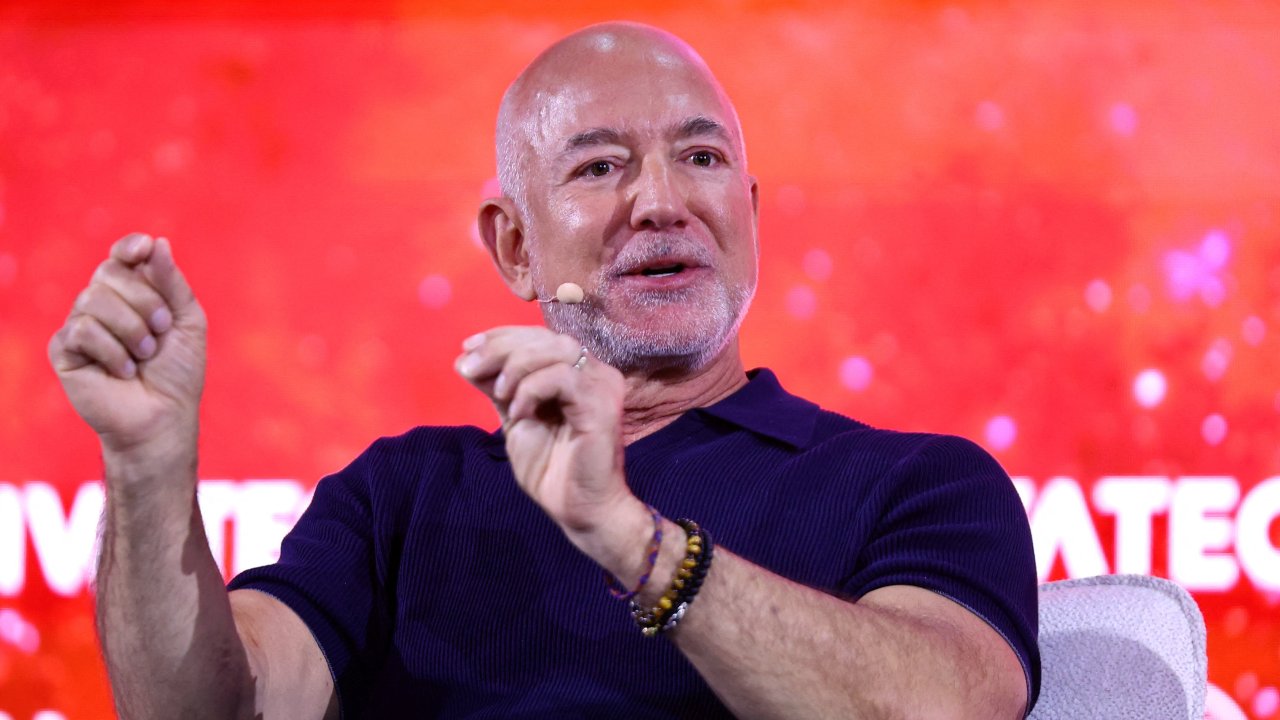




Jeff Bezos, founder of Amazon and Blue Origin, has proposed relocating heavy industry to the Moon as a solution to reconcile economic growth with environmental sustainability. Speaking at the VivaTech technology conference in Paris, Bezos argued that moving manufacturing off-world would allow Earth to return to a cleaner state similar to pre-industrial conditions, while enabling continued economic expansion necessary for human prosperity.
Bezos emphasized the Moon as the logical first step in this vision, rather than jumping directly to Mars. He highlighted several practical advantages: the Moon is accessible within three and a half days and reachable at any time, whereas Mars launch windows occur only once every two years. Crucially, the Moon's low gravity means launching materials from its surface requires 28 times less energy per kilogram compared to launches from Earth, making it far more efficient for establishing space-based industry.
The proposal leverages lunar resources to build sustainable off-world infrastructure. Water ice present on the Moon can be processed into rocket fuel at low cost, while surface minerals can be used to construct space habitats and facilities. Bezos distinguished his vision from the Apollo program, which he characterized as a geopolitical sprint, emphasizing that Blue Origin aims for permanent and sustainable settlement rather than temporary missions.
Bezos articulated a long-term vision involving massive orbital habitats where millions of people would live and work, leaving Earth reserved for clean technologies only. He also discussed Prometheus, his artificial intelligence enterprise, which is trained on engineering data and aims to halve the time required for designing and manufacturing physical objects—potentially reducing development timelines from ten years to five. Bezos concluded by expressing optimism to young entrepreneurs, characterizing the present era as the richest in opportunity in human history.
Why This Matters
This proposal fundamentally reshapes how we think about the relationship between economic development and environmental protection. By moving resource-intensive industries off-world, humanity could theoretically preserve Earth's ecology while maintaining the manufacturing capacity that modern civilization requires. For readers invested in climate solutions, space technology, or future economic models, this represents a concrete—if ambitious—technological pathway that major private space companies are actively pursuing and funding.
Timeline & Sources
Jun 18, 2026
WireJeff Bezos presents space industrialization proposal at VivaTech in Paris