
Emerging
Published Jun 23, 2026Updated Jun 232
76%
Scientists discover Australian spider that uses spring-loaded silk trap to catapult ants
Researchers in Australia have discovered a previously unknown spider species that constructs a spring-loaded, cone-shaped silk trap to catapult green tree ants into its web at forces exceeding 15 times those experienced by jet pilots. The "ballista spider" is the only known species to hunt exclusively one prey type, using pheromones to lure and trigger attacks from aggressive ants, allowing it to safely transport dangerous prey away from ant colonies.
Quick Facts
- Discovered new spider species using spring-loaded silk trap
- Spider catapults green tree ants into main web
- Spider constructs cone-shaped silk scaffold with tension lines
- Prey triggers trap mechanism through aggressive bite
- Spider uses pheromones to attract specific ant species

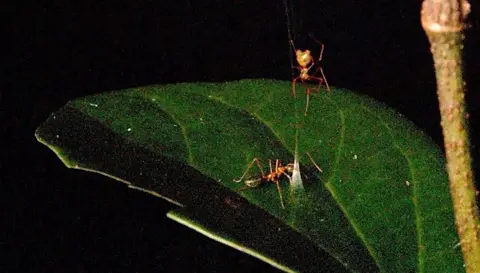

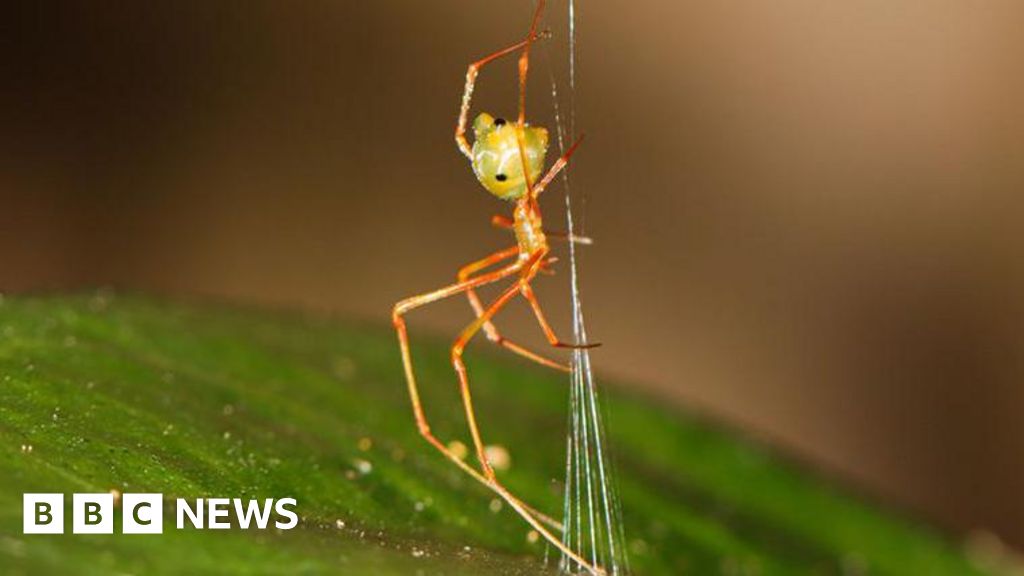
Researchers from Macquarie University have identified a previously unknown spider species in the remote rainforests of northern Queensland that employs a remarkable hunting strategy: a spring-loaded, cone-shaped silk trap that catapults prey into its main web. The spider, informally nicknamed the "ballista spider" after the ancient siege weapon, belongs to the genus Propostira and measures approximately 5 millimeters in length with an orange and greenish-yellow body.
The trap operates through a sophisticated biomechanical mechanism. The spider constructs an anchor point using a silk line, then spends hours creating a cone-shaped scaffold of dozens of tension lines, which it wraps with a thinner silk layer. When a green tree ant (Oecophylla smaragdina) bites the trap's base, the silk tethers release, hurling the ant upward with acceleration forces exceeding 15 times those experienced by jet pilots—thousands of times more power than muscle alone can generate relative to the spider's size. This makes the acceleration comparable to that of a Formula One race car.
What makes this discovery particularly exceptional is the spider's extreme ecological specialization. The ballista spider is the only known spider species to hunt exclusively a single prey species, and it appears to employ pheromones on the trap to lure and anger only green tree ants, triggering their aggressive response. Scientists believe this specialized hunting method evolved to safely capture dangerous ants that possess chemical defenses, stinging abilities, and can rapidly recruit reinforcements from nearby colonies. By flinging each ant far from foraging trails and nests, the spider minimizes the risk of being overwhelmed by ant workers.
The discovery represents an unprecedented combination of extreme biomechanical performance and ecological specialization. Researchers, including lead scientist Professor Ajay Narendra and study coauthor Dr. Jonas Wolff, spent 10 nights in tropical rainforests using high-speed and infrared cameras to document the spider's behavior. The initial observation was made by biomedical and spider researcher Greg Anderson, who contacted the research team when recognizing the extraordinary nature of the trap mechanism.
The findings, published in the journal Current Biology in June 2026, reveal a mechanism triggered by prey rather than predator—a behavioral pattern unprecedented in spider hunting strategies. Scientists note that green tree ants are the only prey captured by the spider, even when researchers released other nocturnal ant species near the trap, confirming the spider's remarkable selectivity and the potential role of pheromone-based prey discrimination in this specialized hunting system.
Topics
Why This Matters
This discovery reveals an extraordinary example of biomechanical engineering in nature and extreme ecological specialization that challenges our understanding of predator-prey evolution. The ballista spider's specialized hunting mechanism—combining spring-loaded mechanics with pheromone-based prey discrimination—offers insights into how species can adapt to capture dangerous prey. For readers interested in evolution, biomechanics, or animal behavior, this demonstrates nature's capacity for innovation under ecological pressure and provides researchers with a model for studying biomechanical systems and chemical ecology in predatory strategies.