
Yesterday·Emerging
Follow-up 3h ago Major2
97%
Trump hosts Xi Jinping at White House state dinner with tech titans
President Trump hosted Chinese President Xi Jinping at a White House state dinner featuring an American-Asian fusion menu, a guest list of technology executives, and formal protocol including a ceremonial arrival. The dinner followed a two-hour bilateral meeting that covered artificial intelligence, trade, and security, with both leaders emphasizing improved relations between the two nations.
Quick Facts
- State dinner hosted at White House East Room
- Ceremonial greeting at Joint Base Andrews with red carpet and B-1 bomber flyover
- Closed-door bilateral meeting lasting approximately two hours
- Menu presentation with yellow squash velouté, sesame-crusted sea bass, and vanilla crémeux dessert
- Presentation of three-foot bald eagle statue as gift
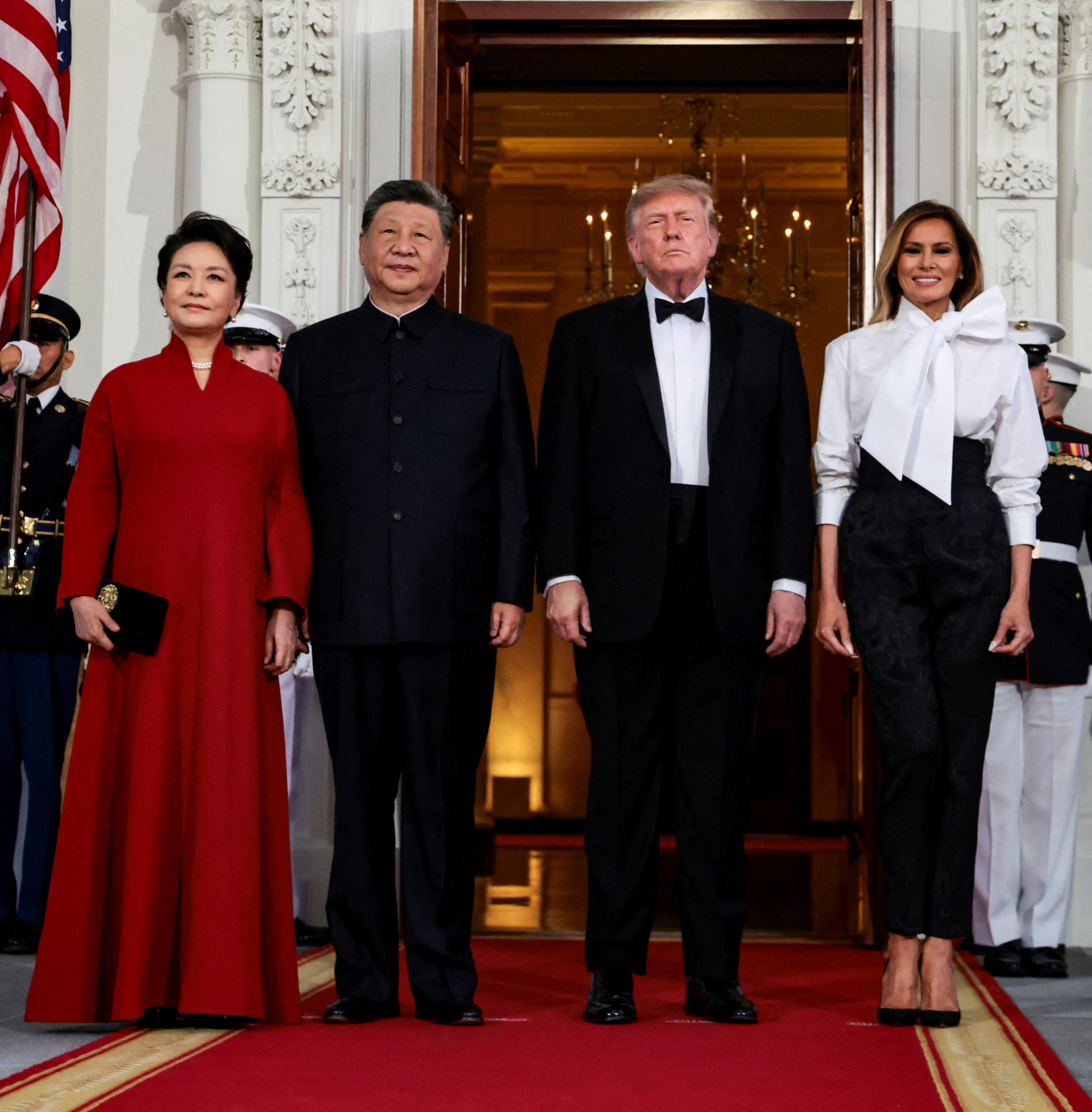
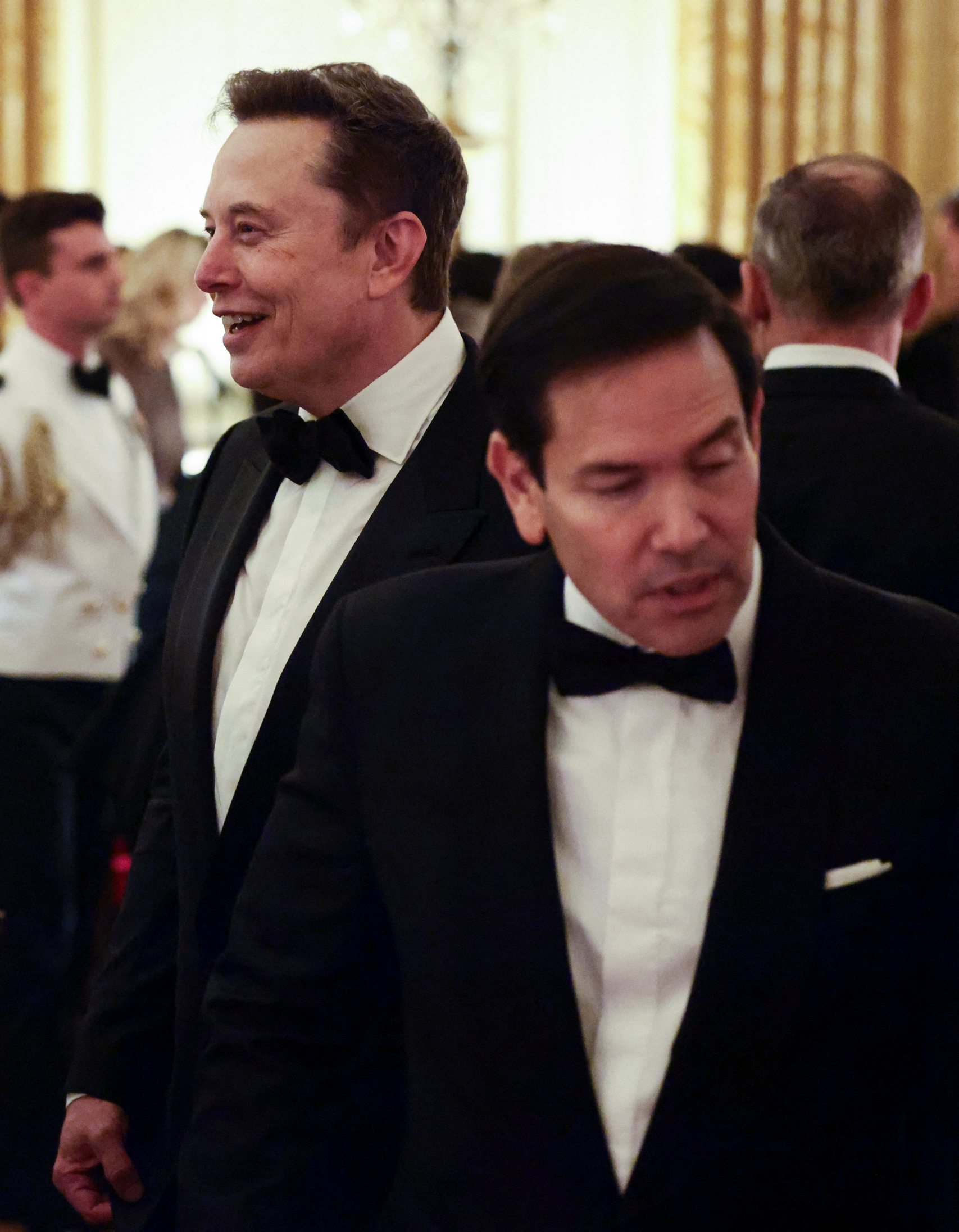
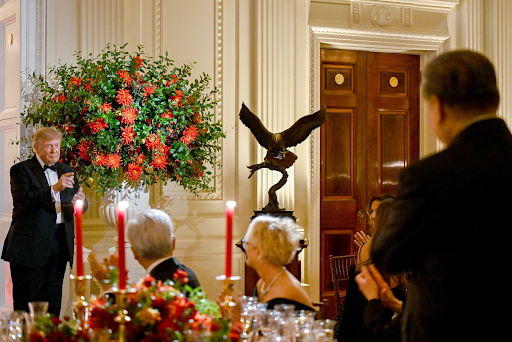
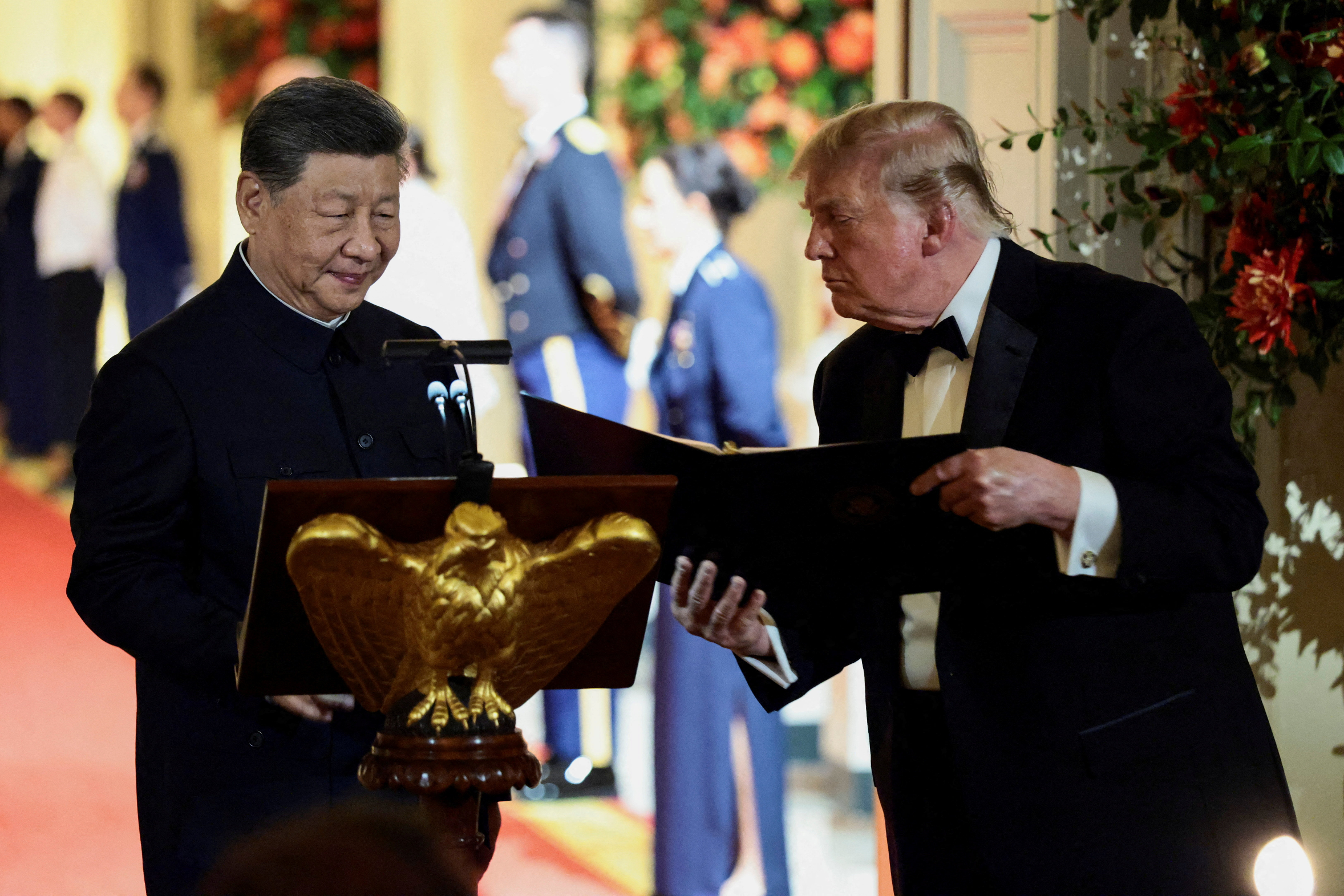
President Donald Trump hosted Chinese President Xi Jinping and his wife Peng Liyuan at a state dinner in the White House's East Room on Thursday, featuring a carefully curated menu and a guest list heavy with American technology and business leaders. First Lady Melania Trump oversaw menu preparations, which included a first course of yellow squash velouté with wild mushrooms, fresh herbs, crispy pancetta and scallion oil, followed by sesame-crusted sea bass with braised baby bok choy, roasted eggplant and sauce verte. Dessert consisted of vanilla crémeux with sour cherry confit and walnut frangipane, accompanied by ice cream made with honey from the White House.
The dinner came after Trump personally greeted Xi and his wife at Joint Base Andrews outside Washington on Wednesday—an unusual protocol break, as presidents typically wait for state visit guests to arrive at the White House itself. A 100-foot red carpet was unfurled for Xi's plane, accompanied by a 21-person honor guard, flower presentations from American children, and a flyover featuring two B-1 bombers. Trump presented Xi with a three-foot statue of a bald eagle, described as a symbol of American freedom and high aspirations.
The state dinner guest list included major figures from American technology and finance sectors: Amazon founder Jeff Bezos, Tesla and SpaceX CEO Elon Musk, Google's Sundar Pichai, OpenAI President Greg Brockman, Nvidia CEO Jensen Huang, and Dell Technologies CEO Michael Dell, among others. According to Trump, attendees represented "the entire tech world, the entire banking world and a lot more," with the president calling it "the hottest ticket in town" during the week's United Nations General Assembly.
Prior to the dinner, Trump and Xi held a closed-door meeting at the White House lasting approximately two hours—an hour longer than scheduled. The discussion covered artificial intelligence, trade, security, and bilateral relations. Trump emphasized his personal relationship with Xi, while Xi focused on long-term state-to-state relations and mutual interests. During the dinner remarks, Xi stated that China's strengthening was not directed against the United States, referenced World War II cooperation between the two nations, and acknowledged Richard Nixon's 1972 visit to China and Henry Kissinger's role in improving bilateral ties. Xi did not address Taiwan or South China Sea disputes in his public remarks.
The event was framed by both sides as signaling positive diplomatic momentum. Experts noted that such ceremonial details—menu choices, seating arrangements, body language, and guest composition—offer diplomatic signals about the actual state of relations between the two powers. Trump previously visited Beijing in May, where Xi hosted him at a state dinner in the Great Hall of the People; Trump has since begun referring to a new White House ballroom as the "Great Hall of the United States" to rival the venue where he dined in China.
Among substantive outcomes, the trade negotiations between the United States and China were extended by two months, with a new deadline of January 10.
Why This Matters
The state dinner and bilateral meeting represent a formal diplomatic engagement between the United States and China at the highest level, with direct implications for ongoing trade negotiations (new deadline set for January 10), artificial intelligence collaboration frameworks, and bilateral security discussions. The ceremonial protocol—including the Joint Base Andrews reception, guest composition featuring major tech executives, and menu symbolism—signals diplomatic positioning ahead of broader trade and technology negotiations. Market participants, multinational tech firms with China exposure, and countries monitoring US-China relations will assess outcomes for clarity on trade policy trajectory and bilateral technology cooperation prospects.
Timeline & Sources
Sep 23, 2026
WireXi Jinping and Peng Liyuan arrived at Joint Base Andrews; Trump personally greeted them with ceremonial reception including red carpet, honor guard, and B-1 bomber flyover