
AI
Published Jun 17, 2026Updated Jun 23 Major2
88%
Bezos Predicts AI Will Create Labor Shortage, Not Replace Humans, at VivaTech Paris
Jeff Bezos told the VivaTech conference in Paris that artificial intelligence will create a labor shortage by unlocking new problems and opportunities, rather than replacing human workers. His optimistic view contrasts with rising AI-linked job cuts and warnings from political and business leaders. Bezos also discussed his AI venture Prometheus and Blue Origin's space ambitions, including a permanent lunar base.
Quick Facts
- AI predicted to create labor shortage
- Blue Origin CEO confirms launch resumption
- Prometheus AI venture focused on manufacturing
- New Glenn rocket explosion in May
- Jeff Bezos
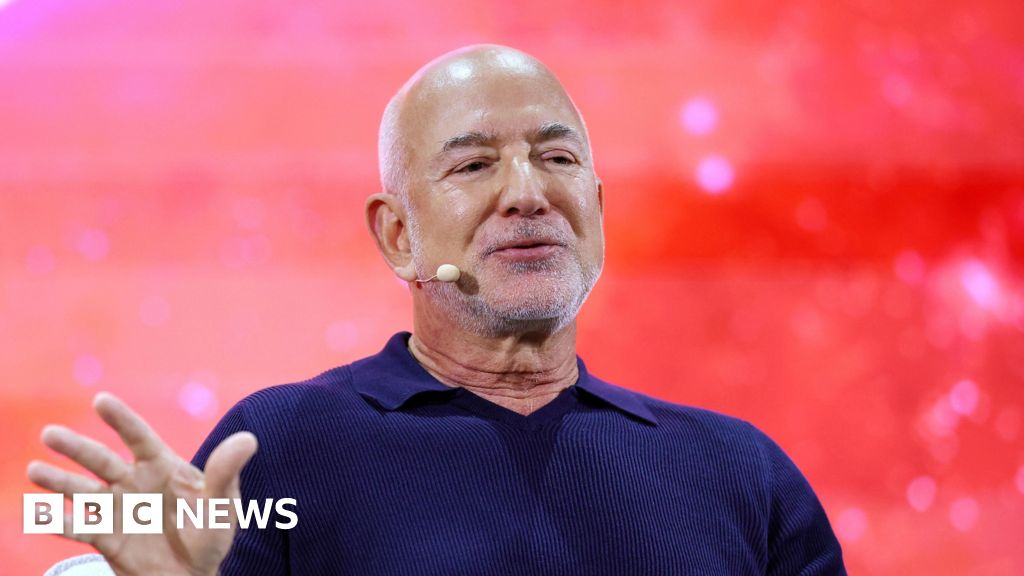

Amazon founder Jeff Bezos has pushed back against concerns that artificial intelligence will make human workers redundant, instead predicting the technology will create a labor shortage by enabling people to tackle new problems and expand innovation. Speaking at the VivaTech conference in Paris on Wednesday alongside Blue Origin CEO David Limp, Bezos argued that AI will increase demand for human labor as it unlocks new opportunities and removes barriers to executing ideas.
“I know there's a lot of concern that many people have, including many smart people, that AI is going to make humans redundant and so on,” Bezos said. “I totally disagree with this point of view. And I think, in fact, AI is going to create a labour shortage.” He painted an optimistic picture, suggesting that humanity is limited not by imagination but by the ability to execute, and that AI will help overcome those constraints.
Bezos’ remarks come as a growing number of companies cite AI as a justification for layoffs. According to a report by Challenger, Gray & Christmas, more than 97,000 job cuts were announced in May, with AI cited as the leading reason for 38,579 of them—about 40 percent of all cuts. This marks the third consecutive month of rising job cuts linked to AI. “The labor market is being reshaped by technology in real time,” said Andy Challenger, the firm’s labor expert. Meanwhile, Reuters/Ipsos polling shows that over half of Americans fear they or someone in their household could lose their job to AI.
Bezos’ positive outlook contrasts with warnings from other tech and political figures, including former UK Prime Minister Rishi Sunak, now an adviser to Microsoft and AI firm Anthropic, who recently said AI is affecting young people’s job prospects. The UK’s Trades Union Congress has cautioned that AI could repeat “the disaster of deindustrialisation” as shareholders benefit while jobs are “degraded or displaced,” though it acknowledged AI’s transformative potential if properly managed.
During his appearance, Bezos also discussed his new AI venture, Prometheus, which aims to accelerate physical manufacturing—a sector increasingly turning to automation. He outlined a long-term vision for space exploration, stating that humanity will go “to the Moon to stay, not just to visit,” and highlighted the potential of lunar resources for refueling rockets. Blue Origin suffered a setback in May when an uncrewed New Glenn rocket exploded during a ground test at Cape Canaveral, Florida, but Bezos described the damage as luckily limited, with no injuries. Blue Origin CEO Dave Limp said reconstruction is underway and launches are expected to resume before the end of the year.
Why This Matters
Bezos’s view challenges the prevailing narrative that AI primarily threatens jobs. If he is correct, businesses and policymakers should focus on enabling workforce transitions and reskilling, rather than assuming widespread replacement. This has direct implications for labor strategy, investment in AI education, and the design of social safety nets.
Timeline & Sources
Jun 17, 2026
WireJeff Bezos speaks at VivaTech conference in Paris, predicts AI will create labor shortage