
Emerging
Published Jun 18, 2026Updated Jun 19 Major2
83%
South Korea Changes Jersey Names to Full First Names at 2026 World Cup
South Korea replaced traditional surnames with full first names on player jerseys for the 2026 World Cup to help international audiences distinguish between players with common Korean surnames like Kim, Lee, and Park. The change prompted confusion during the team's opening match, where star player Son Heung-min appeared as "Heungmin," while the Korean Football Association attributed the modification to practical identification needs and cultural naming conventions.
Quick Facts
- South Korea changed jersey names from surnames to full first names
- Players display only first names on shirts during 2026 World Cup
- South Korea defeated Czech Republic 2-1 in opening match
- Team employs squad number swapping strategy to confuse opponents
- Formation adjusted from 4-2-3-1 to more defensive setup with 3-5 defenders

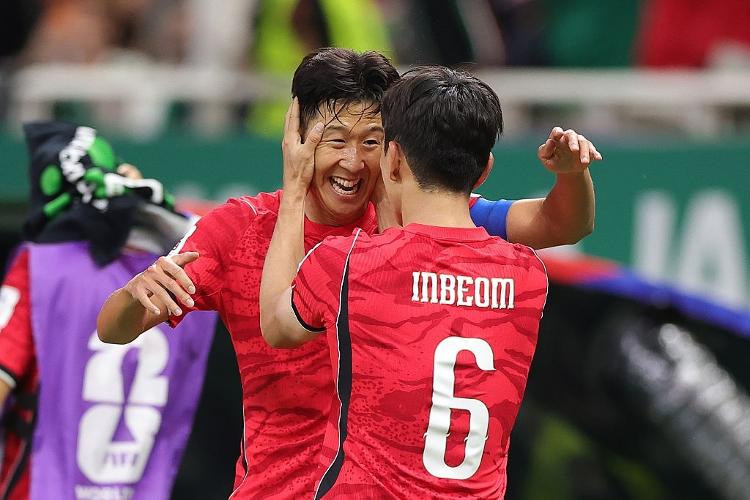
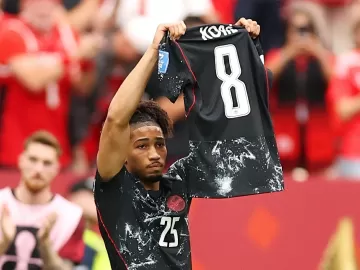

South Korea's national football team made an unconventional decision for the 2026 World Cup by displaying players' full first names on their jerseys instead of the traditional surname format. The change was designed to help international audiences distinguish between players sharing common Korean surnames such as Kim, Lee, and Park. The alteration became immediately noticeable during South Korea's opening match against Czech Republic on June 11, when star player Son Heung-min appeared on his jersey as "Heungmin," causing confusion among viewers searching for the familiar "Son" surname.
According to the Korean Cultural Center, which falls under the Ministry of Culture, Sports and Tourism, the modification addresses a practical challenge: many Korean surnames are extremely common, making player identification difficult for Western audiences unfamiliar with Korean naming conventions. In South Korean tradition, the family name precedes the given name, reflecting historical Confucian influences and the cultural significance placed on family lineage and ancestry. The surname carries substantial meaning, often indicating a person's clan (shijok) and regional or historical associations. With multiple players bearing the same surname—the squad includes Kim Seung-gyu, Kim Min-jae, Kim Moon-hwan, Kim Tae-hyeon, and Kim Jin-gyu—the use of first names provides clearer differentiation.
The jersey change represents one of several tactical strategies South Korea has employed to gain competitive advantage. The team has also adopted a practice of swapping squad numbers among players to confuse opponents, capitalizing on the observation that Western audiences may struggle with identifying players on the field. This tactic, initiated during the 2018 World Cup qualifying cycle, was temporarily abandoned under Portuguese coach Paulo Bento in 2022 but resumed under current manager Hong Myung-bo. In pre-World Cup friendlies, Son wore the number 13, but changed to his traditional number 7 for the tournament opener.
Hong Myung-bo, who assumed control of the team in July 2024, has also sought to modify the squad's formation from the traditional 4-2-3-1 setup toward a more defensive configuration employing three or five defenders. The squad continues to rely on experienced players like Son Heung-min and Lee Kang-in, though only five of the 26-player roster compete in Europe's top five leagues. South Korea's unconventional preparations extended to managing media relations, with the team severing ties with World Cup press coverage following incidents of journalists mocking captain Son Heung-min.
Why This Matters
This change reflects how sports organizations adapt cultural conventions to serve international audiences, raising questions about authenticity versus accessibility in global competitions. For international viewers, clearer player identification improves match experience and engagement. For South Korea, the strategy demonstrates tactical innovation—combining jersey changes with squad number swapping—showing how teams leverage psychological and logistical advantages in high-stakes tournaments. Understanding these behind-the-scenes preparations reveals the meticulous planning that shapes modern World Cup competition.
Timeline & Sources
Jan 1, 2018
WireSouth Korea initiates squad number swapping strategy during World Cup qualifying cycle
Jan 1, 2022
WireCoach Paulo Bento abandons squad number swapping tactic during World Cup