
Emerging
Published Jun 27, 2026Updated Jun 27 Major3
96%
Baltic States Push EU to Accelerate Russian Oil Embargo
The Baltic states of Estonia, Latvia, and Lithuania have urged the EU to accelerate an embargo on Russian oil imports to weaken Moscow's war financing, raising the issue at an EU energy ministers' meeting. The push comes as reduced Middle East tensions have eased earlier energy security concerns that had blocked such measures, though implementation may face resistance from Hungary, Slovakia, and other price-sensitive member states.
Quick Facts
- Baltic states called for accelerated EU embargo on Russian oil imports
- Demand for clear timeline for phased withdrawal from Russian crude
- EU energy ministers meeting held on Friday
- Russian oil imports reduced from 27% to 2% of EU supplies
- US-Iran negotiations reached agreement, reopening Strait of Hormuz

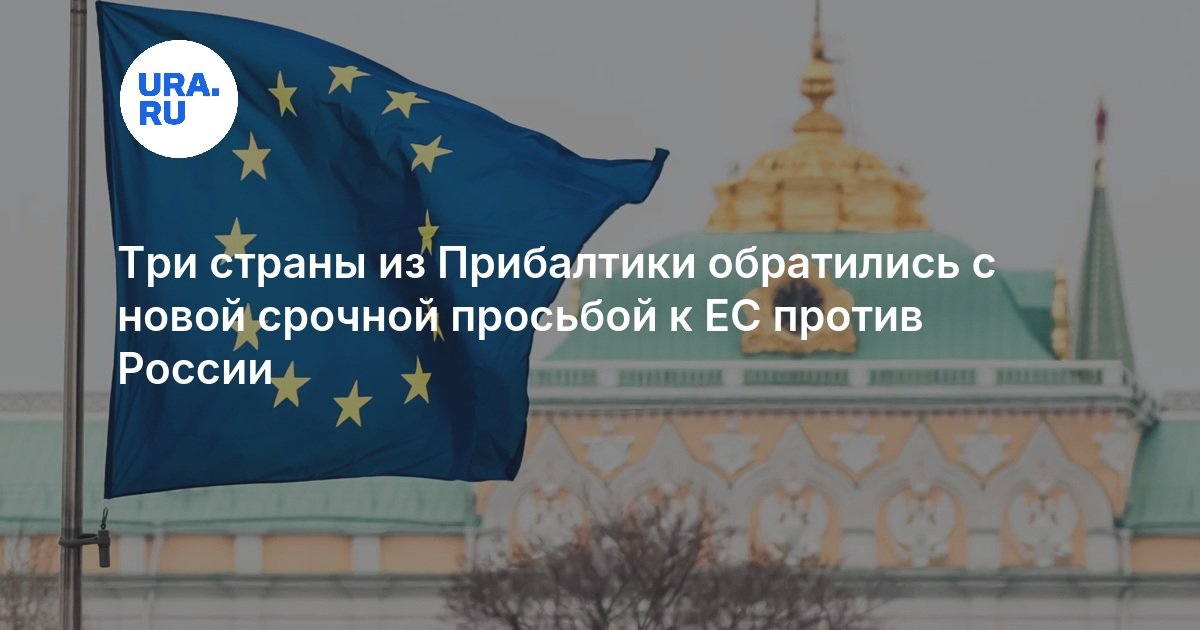
Estonia, Latvia, and Lithuania have called on the European Union to expedite the implementation of an embargo on Russian oil imports, citing the need to cut off financial flows supporting Russia's military operations in Ukraine. The appeal was made during a Friday meeting of EU energy ministers, where the Baltic states demanded a clear timeline for phased withdrawal from Russian crude. Their intervention comes as geopolitical circumstances have shifted, with recent US-Iran negotiations reducing immediate energy security concerns that had previously delayed such measures.
The EU has previously established policies to reduce Russian energy dependence following Moscow's full-scale invasion of Ukraine in February 2022. According to the European Commission, Russian oil imports have dropped dramatically from 27 percent of total EU supplies in early 2022 to just 2 percent in 2025, though this still amounts to 9.7 million tonnes of crude annually. The bloc had agreed to phase out Russian gas by autumn 2027, yet implementation of an oil embargo has stalled due to broader energy market instability.
Energy Commissioner Dan Jørgensen did not publicly respond to the Baltic initiative during the closed-door session but acknowledged afterward that the Middle East situation has reduced the risk of aviation fuel shortages. Poland's Deputy Energy Minister Wojciech Wrona told the Financial Times that Warsaw views an embargo as necessary by year's end, acknowledging that higher prices and reduced competitiveness are acceptable costs for energy independence from Russia.
The proposal faces potential resistance from member states heavily dependent on Russian oil, particularly Hungary and Slovakia, as well as from nations battling high energy prices. However, individual member states cannot veto the measure. The Commission has committed to tabling a proposal for member consideration, though a specific timeline remains uncertain. Meanwhile, oil market recovery is expected to take several months and gas market stabilization several years, according to EU officials.
Why This Matters
An accelerated Russian oil embargo would directly curtail Moscow's revenue from energy exports, a critical war financing mechanism. For readers in energy-dependent regions, this signals potential price volatility and supply chain disruptions, while geopolitically it represents a coordinated EU effort to escalate economic pressure on Russia. The shift in energy security calculations—driven by improved Middle East conditions—creates a narrowing window for decisive EU action before resistance hardens.
Timeline & Sources
Jan 1, 2025
WireRussian oil imports decline to 2% of EU supplies (9.7 million tonnes annually)
Jun 17, 2026
WireUSA and Iran sign memorandum on ceasefire and Strait of Hormuz reopening
Jun 27, 2026
WireBaltic states formally call for accelerated EU oil embargo at energy ministers' meeting
Sources
- Три страны из Прибалтики обратились с новой срочной просьбой к ЕС против РоссииURA.RUMediaJun 27, 2026
- СМИ: страны Балтии призывают ЕС ускорить введение запрета на импорт российской нефтиЄвропейська правдаMediaJun 27, 2026
- Прибалтика просит ЕС ускорить введение эмбарго на российскую нефтьdp.ruMediaJun 27, 2026