
Market
Published Jul 23, 2026Updated Jul 255
94%
2026 El Niño on track to be strongest on record by wide margin
The 2026 El Niño is forecast to be the strongest on record, with ocean temperatures in the key Niño 3.4 region projected to peak near 3.6°C above normal—about 0.8°C higher than the 2015–16 record. Combined with climate change, this could drive global temperatures to 1.7°C above pre-industrial levels in 2027. Regional impacts in Brazil and globally include droughts, floods, wildfires, and economic disruption.
Quick Facts
- 2026 El Niño intensifying to record strength
- Ocean temperatures in Niño 3.4 region exceed +2°C by late July
- Peak temperatures forecast at approximately 3.6°C above normal
- Rapid intensification rate compared to 1997–98 and 2015–16 events
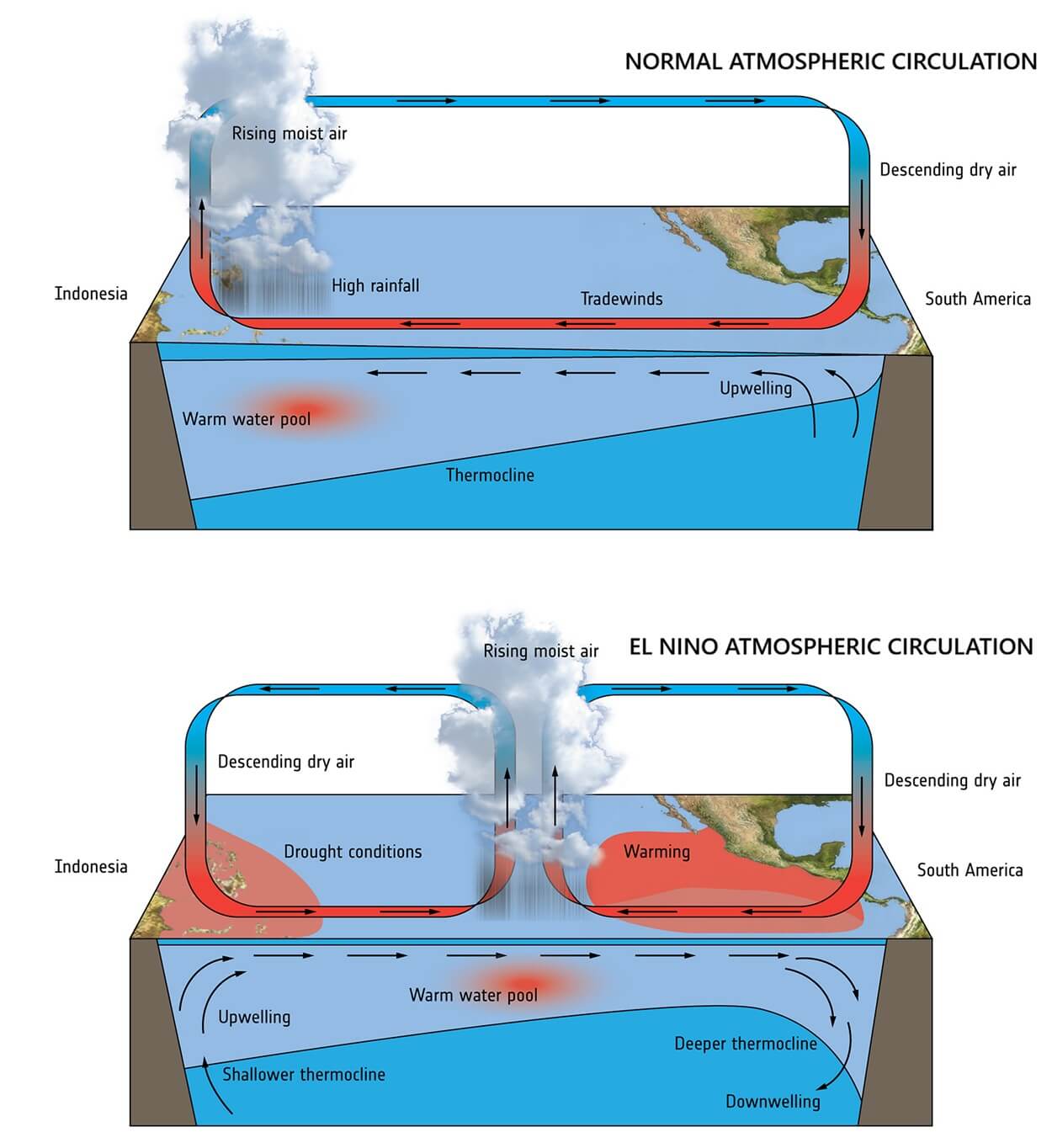
- Global atmospheric circulation altered via Walker Cell mechanism

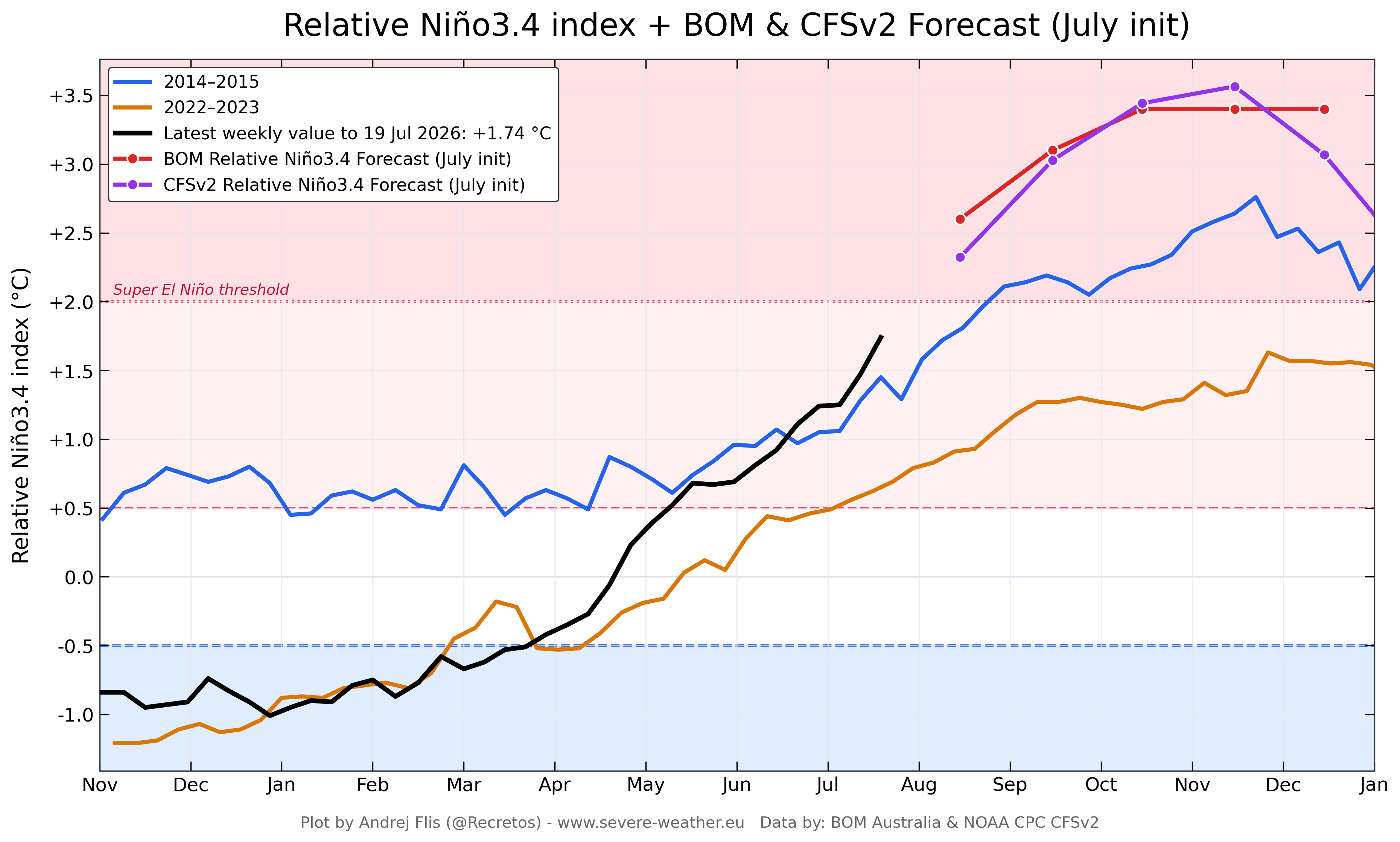

The 2026 El Niño is rapidly intensifying and is forecast to become the strongest event in at least 150 years of instrumental records, according to climate scientists and international meteorological agencies. Ocean temperatures in the Niño 3.4 region—the standard measure used to track El Niño strength—have already exceeded +2°C by late July, a milestone typically reached only in September to November during major historical events. The median estimate from 14 climate models projects peak temperatures could reach approximately 3.6°C above normal by late 2026, exceeding the previous record set during the 2015–16 event by about 0.8°C—an unusually large margin in historical terms.
The intensification is occurring faster than previous Super El Niño events. In March 2026, the Niño 3.4 anomaly measured +0.48°C; by mid-July it had reached +2.1°C to +2.2°C, a rate of warming that surpasses even the rapid onset of the 1997–98 and 2015–16 events at the same calendar date. Some model simulations project anomalies between 3.1°C and 4.3°C by November–December, though these represent the upper range of forecasts. The U.S. National Oceanic and Atmospheric Administration (NOAA) reports a four-in-five probability of a "very strong" El Niño by year-end, with near certainty it will persist until at least April 2027.
Climate researchers emphasize the global implications. Combined with background warming from human-caused climate change, the 2026–27 El Niño could push global average temperatures as high as 1.7°C above pre-industrial levels in 2027, bringing the planet close to the 1.5°C threshold established under the Paris Agreement. There is also increasing likelihood that 2026 itself could set an annual heat record, with probability rising from 19 percent in April to 35 percent by July. The phenomenon alters atmospheric circulation patterns globally through the Walker Cell mechanism, shifting pressure systems, affecting tropical rainfall, and disrupting jet streams over North America, Europe, and Canada.
Brazilian meteorological institutions project severe regional impacts. The North, particularly the Amazon, faces below-average rainfall from September 2026 through May 2027, potentially matching or exceeding the intensity of the severe 2024 drought, with risks to river levels, riverine communities, forests, hydroelectric generation, and agriculture. The South and parts of the Southeast are forecast to experience above-average rainfall, particularly in spring and summer, increasing flood and landslide risks. Elevated air temperatures across nearly all Brazilian territory over the coming 12 months, combined with precipitation variations, heighten risks of large-scale wildfires, water stress, crop losses, and heat-related health emergencies.
Economic and ecological consequences extend beyond Brazil. Historical analysis indicates that the strong 1997–98 El Niño reduced global economic growth by approximately US$5.7 trillion in subsequent years. Fisheries in the eastern Pacific are already showing lower catches, prompting Peru to implement anchoveta fishing bans. International agencies including NOAA, the World Meteorological Organization (WMO), Columbia University's International Research Institute for Climate and Society (IRI), and Brazil's National Institute for Space Research (Inpe) continue monitoring and updating forecasts as new ocean and atmospheric data emerge.
Entities
- Eastern Pacific fisheries
- Brazil
- NOAA (U.S. National Oceanic and Atmospheric Administration)
- Columbia University International Research Institute for Climate and Society (IRI)
- Instituto Nacional de Pesquisas Espaciais (Inpe, Brazil)
- Peru
- Niño 3.4 region (central-eastern tropical Pacific)
- Justin Mankin
- Amazon / Brazilian North
- Zeke Hausfather
Why This Matters
The 2026 El Niño is now forecast to exceed the 2015–16 record by an unusual margin, with potential to drive global temperatures to 1.7°C above pre-industrial levels in 2027—approaching the Paris Agreement threshold. Direct measurable impacts include: Amazon and Brazilian North face below-average rainfall September 2026–May 2027 with hydroelectric and crop risks; South/Southeast Brazil face above-average rainfall increasing flood likelihood; global fisheries (Peru anchoveta) already showing reduced catches; historical precedent (1997–98 event) suggests potential US$5.7 trillion in economic disruption; atmospheric circulation shifts will alter weather patterns over North America, Europe, Canada, and tropical zones. Multiple international agencies (NOAA, WMO, IRI, Inpe) are updating real-time forecasts as ocean data emerge.
Timeline & Sources
Jan 1, 2027
WireFull climate system impacts expected; global temperatures forecast to reach 1.7°C above pre-industrial
Related Signals
Sources
- The 2026 El Niño Is on Track to Be the Strongest on RecordwiredMediaJul 24, 2026
- Super El Niño Forecast Pushes Toward Record Strength as Winter 2026/2027 Signals EmergeSevere Weather EuropeMediaJul 23, 2026
- This El Niño is set to be the largest on record by a ‘mind-blowing margin’natureMediaJul 23, 2026
- El Niño atinge intensidade jamais vista para julho e reforça risco de evento históricoVEJAMediaJul 25, 2026
- Opinião | El Niño: o Brasil precisa agir antes dos extremosEstadãoMediaJul 25, 2026