
Emerging
Published Jun 23, 2026Updated Jun 24 Major4
87%
Dettol Faces Major Backlash Over Chinese Advertisement Promoting Gender Stereotypes
Dettol apologized for a controversial five-minute Chinese advertisement that portrayed women's past relationships as contamination while applying different standards to men. The ad sparked widespread boycott calls and raised questions about the brand's systematic failures in content review and its repeated use of gender stereotyping for viral marketing.
Quick Facts
- Released controversial five-minute advertisement for clothing disinfectant
- Advertisement portrayed women with past relationships as 'polluted' and 'contaminated'
- Applied double standards to male and female characters regarding relationship history
- Included narrative reversal intended to critique misogyny, but critics argued it was ineffective
- Issued apology acknowledging offensive content and review failures



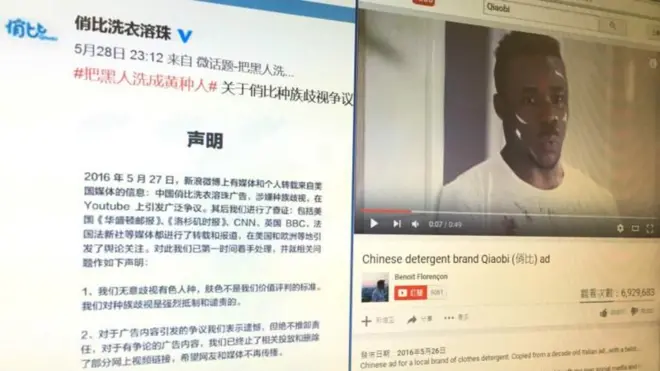
Dettol, a British hygiene brand owned by parent company Reckitt, issued an apology on June 22 after a controversial five-minute advertisement in China sparked widespread outrage over gender discrimination and harmful stereotyping. The short-form video advertisement for a clothing disinfectant featured a male protagonist who rejected his girlfriend after discovering she had cohabitated with a previous partner, describing her as "clean, never polluted by other men." The advertisement portrayed women's past relationships as a form of contamination while establishing a double standard for men, who were depicted as capable of having past experiences without judgment.
The ad intended to include a narrative reversal in which the female character confronted the male protagonist's misogynistic remarks and ended the relationship, after which Dettol was presented as a solution against "toxic men." However, critics argued the reversal was ineffectual, with the offensive framing occupying nearly the entire runtime while the corrective messaging lasted only seconds. Chinese social media users expressed intense anger, with many calling for boycotts. Comments on Weibo included accusations that the advertisement equated women's personal histories with contamination, reduced women to objects requiring cleansing, and weaponized the concept of "cleanliness" to judge female morality while applying different standards to men.
Dettol's statement acknowledged that the advertisement "offended many people, especially women" and took responsibility for "deficiencies in content expression and dereliction of duty in review." The company stated its mission to "protect family health" includes "maintaining the dignity of every individual and their right to equal treatment." However, critics noted the apology appeared to shift blame to third-party creators rather than addressing systemic failures in content approval processes.
This incident is not Dettol's first controversy in China. In 2025, the brand released an advertisement stating a bride "was returned before marriage because her body was not clean," comparing women to returnable merchandise. The same year, another ad featured explicit language about intimate hygiene, while a 2026 toilet disinfectant advertisement stereotyped men as inherently unhygienic. Media analysis revealed additional problematic content including statements suggesting cohabitation equates to becoming a "free maid" and references to devaluing women who have received "free" benefits.
Legal experts noted that gender-discriminatory advertisements in China can result in fines of 200,000 to 1 million yuan (approximately $28,000 to $140,000 USD). Despite Reckitt's 2025 annual revenue of 142.05 billion pounds with strong Chinese market performance, analysts argue such penalties represent negligible costs relative to potential viral attention and sales. Critics characterized the pattern as evidence of a broken internal review mechanism, where approval prioritizes viral potential and commercial gain over cultural sensitivity and values alignment. Commentators highlighted that the brand's repeated approach to manufacturing gender conflict for engagement contradicts its stated commitment to health and dignity.
Why This Matters
This controversy reveals how global brands systematically exploit gender discrimination for viral marketing while facing minimal financial consequences in high-value markets. For consumers and advertisers, it demonstrates the necessity of robust content review systems that prioritize ethical standards over engagement metrics. For regulators, it underscores gaps in enforcement: despite existing Chinese penalties of 200,000–1 million yuan for gender-discriminatory ads, Dettol's pattern of repeat offenses suggests penalties are negligible relative to potential commercial gains, incentivizing continued misconduct.
Timeline & Sources
Jan 1, 2025
WireDettol released advertisement comparing women to returnable merchandise with dialogue 'was returned before marriage because her body was not clean'
Jan 1, 2025
WireAnother Dettol advertisement featured explicit language about intimate hygiene: 'I washed my underwear with it, and my husband licked it like a dog'
Jun 23, 2026
WireBBC Zhongwen published article analyzing the controversy
Jun 24, 2026
WireMultiple Chinese media outlets published detailed analysis of Dettol's pattern of gender-discriminatory advertising