Geo
Jun 22, 2026 Major5
90%
DRC Ebola outbreak surpasses 1,000 cases as violence and displacement complicate containment
The Democratic Republic of the Congo has reported over 1,000 confirmed Ebola cases, with 277 deaths, marking the highest first-month caseload on record in Africa. The outbreak, caused by the rare Bundibugyo strain, is being complicated by ongoing violence, mass displacement, misinformation, and inadequate contact tracing, while affecting vulnerable populations including children and spreading across borders to Uganda.



Quick Facts
Who
Democratic Republic of the Congo Ministry of Health
What
Ebola outbreak declared
When
May 15, 2026 (outbreak declared)
Where
Democratic Republic of the Congo
- Ebola outbreak declared
- Confirmed cases surpass 1,000
- Deaths reach 277
- Treatment capacity expanded to over 500 beds
- Laboratory testing scaled to over 2,000 tests per day
The Democratic Republic of the Congo (DRC) has reported 1,094 confirmed Ebola cases, including 277 deaths, in an outbreak declared on May 15, with the World Health Organization (WHO) recording the highest first-month caseload ever documented in Africa. The outbreak, caused by the rare Bundibugyo ebolavirus strain, is centred in the northeastern Ituri province and has spread across eastern provinces including North Kivu and South Kivu. As of late June, 387 cases were under quarantine or receiving treatment, while 115 people have recovered, though officials acknowledge that many infections likely remain undetected and the epidemic peak may still be ahead.
Public health response efforts have expanded significantly despite ongoing challenges. Treatment capacity has increased to over 500 beds across 19 health zones, up from minimal capacity at the outbreak's start. Laboratory testing has been decentralized and scaled from approximately 30 tests per day to over 2,000 daily tests through eight laboratories across the affected provinces. However, contact tracing remains inadequate, with authorities reaching only 55 to 58 percent of identified contacts—far below the 90 to 95 percent target needed for effective containment. DRC President Felix Tshisekedi has committed to visiting Ituri province and called for stronger regional cooperation, while Uganda has confirmed 20 cases linked to cross-border transmission and launched joint surveillance and response efforts with the DRC.
The outbreak's spread is significantly hampered by ongoing violence and mass displacement in the region. Attacks by the ISIL-linked Allied Democratic Forces have cut off villages and forced thousands into overcrowded displacement camps, creating conditions where disease transmission is highly likely. At the Kigonze displacement camp near Bunia, which houses over 20,000 people, officials reported 10 unexplained deaths and warned that an epidemic at the site would be catastrophic. Community leaders have emphasized the precarious living conditions in these camps, exacerbating health risks alongside Ebola exposure.
Misinformation and community distrust present major obstacles to containment efforts. Health officials report widespread rumors and social media misinformation that have made populations resistant to prevention measures and healthcare engagement. Humanitarian organizations working on the response note that rebuilding community trust through local leaders and targeted engagement is essential to addressing these challenges. UNICEF has raised particular concern for vulnerable children, noting that an estimated 2.95 million children and adolescents in affected health zones are at risk, with children and adolescents comprising about 15 percent of confirmed cases but more than 25 percent of deaths—roughly twice the fatality rate of adults. In Ituri province, dozens of children have been orphaned, with 135 currently receiving support including psychosocial care.
Regional concerns persist as the outbreak threatens to spread beyond the DRC's borders. The WHO assessed the health risk in the DRC as very high due to continued transmissions and expansion into new health zones, while the risk in Uganda remains high due to confirmed cross-border cases and ongoing epidemiological connections along the eastern DRC-Uganda corridor. International cooperation, border management, and sustained resource allocation remain critical to preventing further regional spread of the outbreak.
Why This Matters
This outbreak represents the most severe Ebola emergency in Africa by first-month caseload, with ramifications extending across borders and threatening millions of vulnerable children. The confluence of active conflict, mass displacement, and healthcare system limitations creates ideal conditions for exponential disease spread. For global health stakeholders and policymakers, this situation underscores the critical intersection of humanitarian crisis and infectious disease control, requiring immediate cross-border coordination and sustained resource commitment to prevent regional catastrophe.
Timeline & Sources
May 15, 2026
WireEbola outbreak officially declared by DRC Ministry of Health
Jun 19, 2026
WireUNICEF data shows children comprise 15% of confirmed cases and 25% of confirmed deaths
Jun 20, 2026
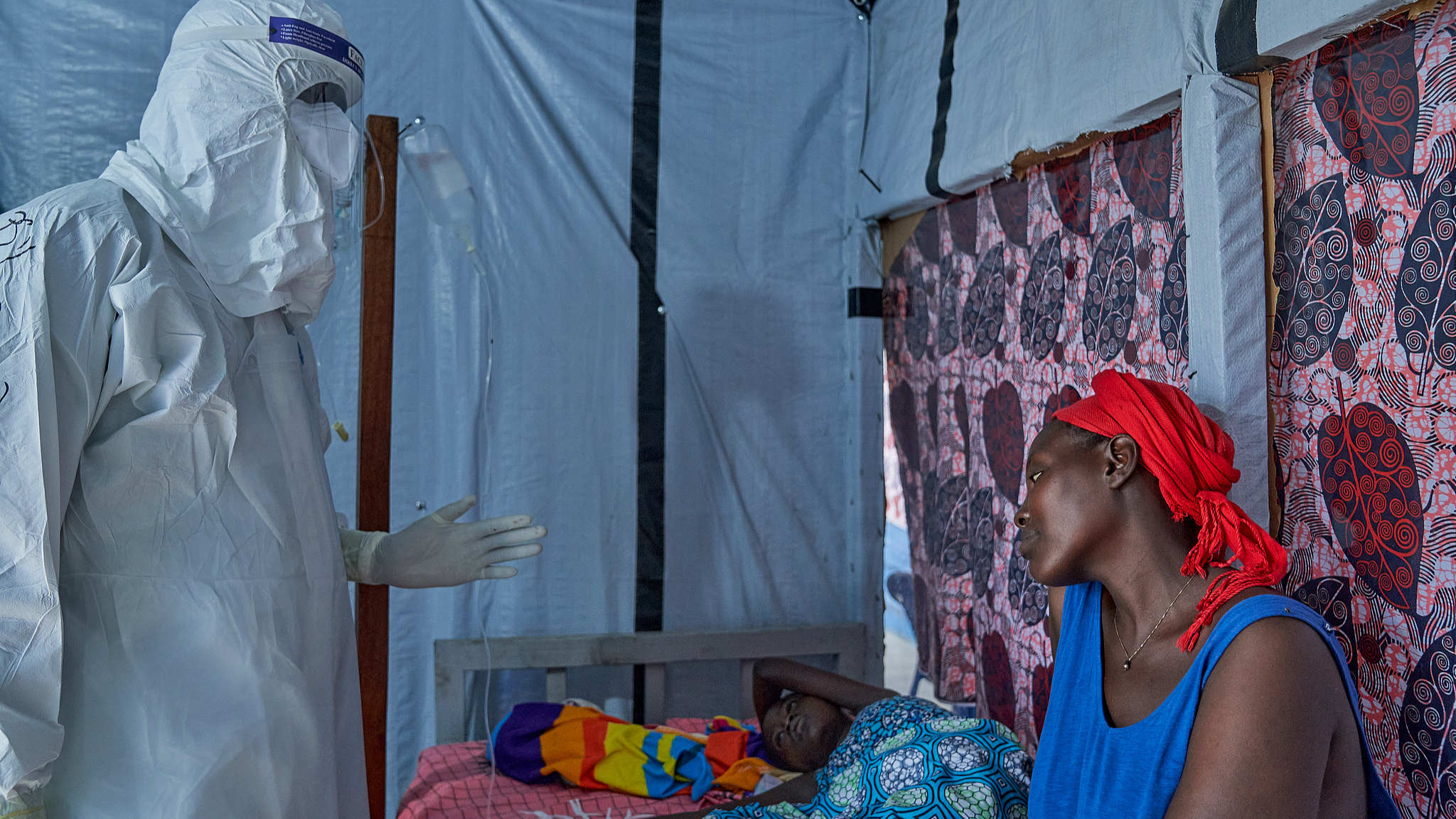
WirePatients attended to in Ebola treatment center in Rwampara health zone, Ituri Province
Jun 21, 2026
WireConfirmed cases surpass 1,000 (1,003 cases, 254 deaths reported)
Jun 21, 2026
WireDRC health authorities report confirmed Ebola cases surpass 1,000 (1,003 cases, 254 deaths)
Jun 22, 2026
WireLatest epidemiological update released; case count reaches 1,048 with 267 deaths
Jun 22, 2026
WireContact follow-up rate reported at 58%, with 365 patients in isolation or hospitalized, 100 recovered
Jun 23, 2026
WireContact follow-up rate reported at 58% across three affected provinces
Jun 23, 2026
WireUpdated report shows confirmed cases risen to 1,048, deaths increased to 267
Jun 24, 2026
WireCase count reaches 1,094 with 277 deaths; WHO confirms highest first-month caseload in Africa
Jun 24, 2026
WireDRC President Tshisekedi commits to visiting Ituri province; calls for regional cooperation
Jun 24, 2026
WireUganda and DRC launch cross-border collaboration framework for outbreak response
Jun 24, 2026
WireUNICEF warns 2.95 million children in affected zones at risk from Ebola
Entities
- Dr Jean Kaseya
- Bunia
- Catherine Russell
- Africa Centres for Disease Control and Prevention
- Bundibugyo ebolavirus
- Kigonze displacement camp
- Uganda
- Allied Democratic Forces
- Democratic Republic of the Congo Ministry of Health
- World Health Organization (WHO)
- Ituri Province, Democratic Republic of the Congo
- Democratic Republic of the Congo
- Jean Kaseya
- Felix Tshisekedi
- Charite Banza
- CARE
- DRC Ministry of Health
- World Health Organization
- Ituri province
- Abdirahman Mahamud
- CARE (humanitarian NGO)
- Bonheur Baeni
- UNICEF
Sources
- DR Congo Ebola cases top 1,000cgtnMediaJun 22, 2026
- Confirmed Ebola cases in DR Congo rise to 1,048xinhuaMediaJun 23, 2026
- Ebola cases surpass 1,000 in DR Congo amid violence and displacementAl JazeeraMediaJun 24, 2026
- Ebola cases in DRC surpass 1,000 as UNICEF warns millions of children at riskABC News - Breaking News, Latest News and VideosMediaJun 24, 2026
- 1,094 Ebola cases reported in DR Congo as WHO records highest first-month caseloadxinhuaMediaJun 24, 2026