Science
Jun 17, 2026 Major2
83%
Moon to Occult Venus in Rare Daytime Event on June 17
On June 17, 2026, the Moon will occult Venus in a rare daytime event visible across North America and parts of South America between 3:30 and 5:00 p.m. EDT. Observers must use binoculars or telescopes safely, taking precautions to avoid accidental solar exposure, and position themselves in shade or behind structures to view this dramatic astronomical phenomenon.
Quick Facts
Who
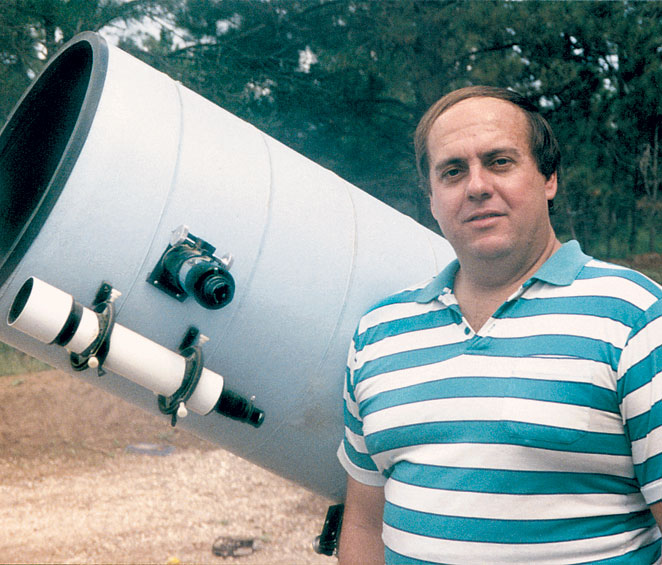
Bob King (Sky & Telescope astronomer)
What
Moon occults Venus in rare daytime event
When
June 17, 2026
Where
Contiguous 48 United States
- Moon occults Venus in rare daytime event
- Venus disappears behind lunar disk
- Venus reappears at Moon's bright limb
- Moon acts as celestial guidepost for locating Venus
- Evening observation of Moon near Beehive Cluster
On June 17, 2026, the Moon will pass directly in front of Venus during a rare daytime occultation visible across much of North America and parts of northeastern South America. The event will occur between 3:30 p.m. and 5:00 p.m. EDT, with the Moon positioned approximately 38 degrees away from the Sun in the sky. At the time of the occultation, the Moon will be a thin waxing crescent about 3.1 days old with roughly 11 percent illumination, while Venus will shine at magnitude -4.0 as a brilliant white disk.
While Venus is theoretically visible to the naked eye during daylight with excellent vision and precise knowledge of its location, binoculars or telescopes provide the optimal viewing experience. The thin lunar crescent will serve as a celestial guidepost to locate Venus, and optical aid will reveal the dramatic sight of the planet's illuminated disk slowly disappearing behind the jagged, unlit edge of the lunar limb against a blue daytime sky. For photographers using telescopes, magnification of at least 50 times will be needed to clearly show Venus's 74 percent waning gibbous phase, which spans just 14.1 arcseconds—142 times smaller than the Moon.
Observers must exercise extreme caution when viewing the daytime sky. The Sun will remain high in the sky during the event, and accidentally sweeping binoculars or a telescope across it can cause instant and permanent eye damage. Experts recommend placing telescopes in the physical shadow of a building so the Sun is completely blocked by the roofline, or positioning oneself where the Sun is already obscured by a structure or tree. This approach also makes the thin crescent easier to locate and allows viewers to observe in comfortable shade.
The International Occultation Timing Association has published a detailed visibility map and specific times for the planet's disappearance and reappearance at various cities. For viewers in Chicago, the Moon's dark limb will contact Venus at 2:24 p.m. local time, with the complete covering taking approximately 27 seconds. Venus will reappear at the Moon's bright limb around 3:50 p.m., creating a striking composition reminiscent of the famous Earthrise photograph taken from lunar orbit during Apollo 8.
Venus's exceptional brightness during this event stems from its thick cloud cover, which reflects approximately 75 percent of incoming sunlight, compared to the Moon's modest 12 percent reflection. Additionally, Venus orbits closer to the Sun and receives more intense solar illumination than the Moon. For those seeking additional evening sky observations, the waxing crescent Moon will also pass near the Beehive Cluster (M44) in Cancer after sunset, visible through binoculars as dozens of faint blue-white stars, with earthshine illuminating the dark portion of the lunar disk.
Why This Matters
This rare daytime occultation offers amateur astronomers and the public an extraordinary opportunity to witness a dramatic celestial event without requiring expensive equipment or nighttime observing. Understanding safe viewing practices and the mechanics of this phenomenon enhances public engagement with astronomy and demonstrates how celestial mechanics create predictable, observable phenomena that inspire wonder and scientific curiosity.
Timeline & Sources
Jun 17, 2026
WireMoon occults Venus during daytime, visible from North America and parts of South America
Jun 17, 2026
WireIn Chicago, Moon's dark limb contacts Venus (2:24 p.m. CDT)
Jun 17, 2026
WireComplete covering of Venus by Moon takes approximately 27 seconds
Jun 17, 2026
WireOccultation begins across North America (approximately 3:30 p.m. EDT)
Jun 17, 2026
WireVenus reappears at Moon's bright limb in Chicago (3:50 p.m. CDT)
Jun 17, 2026
WireOccultation ends across North America (approximately 5:00 p.m. EDT)
Jun 17, 2026
WireEvening sky observation: Moon positioned near Beehive Cluster (M44) after sunset