Emerging
Jun 23, 20262
80%
Pakistan National Assembly passes Finance Bill 2026-27 after opposition walkout and heated debate
Pakistan's National Assembly passed the Finance Bill 2026-27 on Tuesday after an opposition walkout and heated debate during which all 63 opposition amendments were rejected. The bill introduces revised income tax slabs, new property taxation measures, and changes to import duties as part of an Rs18.8 trillion federal budget aimed at reversing punitive taxes on salaried workers and the real estate sector.




Quick Facts
Who
Muhammad Aurangzeb (Finance Minister)
What
National Assembly passed Finance Bill 2026-27
When
Tuesday, June 23, 2026
Where
National Assembly of Pakistan
- National Assembly passed Finance Bill 2026-27
- Opposition staged walkout during session
- Opposition leader delivered critical speech on constitutional and regional issues
- Speaker rejected opposition speech from being broadcast
- 63 amendments presented by opposition were rejected
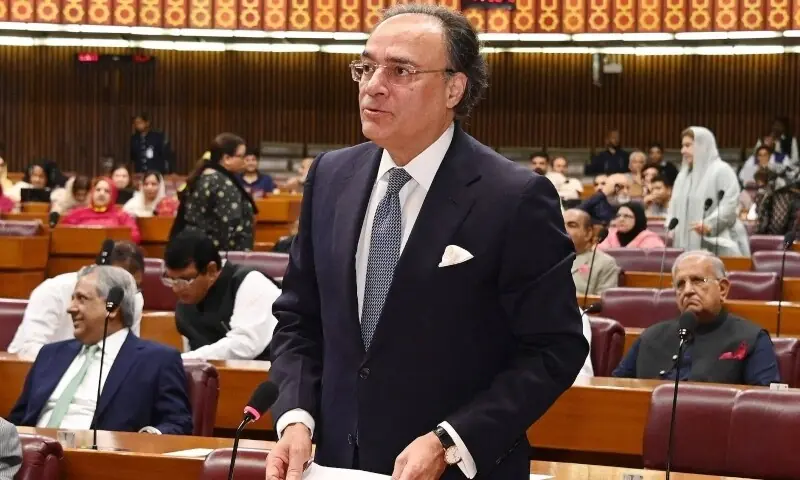
The National Assembly of Pakistan passed the Finance Bill 2026-27 on Tuesday following a contentious session marked by an opposition walkout and extended clause-by-clause debate. Finance Minister Muhammad Aurangzeb moved the bill to give effect to the federal government's financial proposals for the fiscal year commencing July 1, 2026. The session was preceded by a fiery speech from National Assembly Opposition Leader Mehmood Khan Achakzai, whose remarks were not broadcast on the National Assembly's social media platforms or television channels, prompting accusations of censorship and drawing a sharp rebuke from Speaker Ayaz Sadiq.
Achakzai's speech was highly critical of the government on multiple fronts. He attacked the Speaker for dismissing 14 colleagues from the Assembly, criticized the government's handling of regional issues in Khyber Pakhtunkhwa and Balochistan, and condemned the life imprisonment sentence given to Baloch Yakjehti Committee leader Dr Mahrang Baloch. He accused the government of "clipping the wings" of the judiciary and "trampling the Constitution." Speaker Sadiq responded forcefully, stating he would not allow criticism of "Pakistan, armed forces, and the judiciary," declaring he was willing to commit such alleged "violations" to protect national institutions.
The Finance Bill includes significant tax reforms affecting multiple sectors. Revised income tax slabs have been introduced for salaried individuals, with those earning up to Rs600,000 annually remaining exempt and progressive rates rising to 35 percent for annual incomes exceeding Rs7 million. The legislation introduces new property taxation measures including advance taxes on buyers and sellers, changes to import duties on vehicles with reduced burdens on certain engine capacities, and increased duties on selected imported electric vehicles. Corporate taxation amendments target banking, fertilizer, and large corporate sectors with revised rates depending on income thresholds.
During the parliamentary debate, the opposition presented 63 amendments across seven clauses of the Finance Bill, all of which were rejected by majority vote. The bill strengthened tax compliance enforcement with heavier penalties for non-filers, introducing fines up to Rs1 million for first violations and Rs2 million for repeat offences. It also made electronic filing of income tax returns mandatory through the Federal Board of Revenue's online system and introduced penalties including imprisonment for tampering with monitoring systems.
The Finance Bill is part of an Rs18.8 trillion federal budget unveiled by Finance Minister Aurangzeb on June 12—the fifth budget overseen by Prime Minister Shehbaz Sharif since 2022. The budget, backed by provincial grants exceeding Rs1 trillion, aims to reverse previously implemented taxes on the salaried class and real estate sector while advancing economic liberalization. The government projects a Rs7 trillion federal deficit for the coming year, which will be filled through additional loans including $23.4 billion in foreign borrowing, comprising $2 billion through Euro and Panda bonds. The budget represents a 20 percent increase over the previous fiscal year's revised outlay, signaling a shift from consolidation to increased government spending.
Why This Matters
The passage of Pakistan's Finance Bill 2026-27 signals a significant policy shift toward economic liberalization and fiscal stimulus, with direct implications for salaried workers and the real estate sector through tax relief measures. For international investors and observers, the budget's reliance on $23.4 billion in foreign borrowing and the contentious parliamentary process reveal both economic pressures and deep political divisions that may affect policy stability and implementation. The heated constitutional debate and censorship allegations underscore institutional tensions that could influence investor confidence and governance effectiveness in Pakistan.
Timeline & Sources
Jun 12, 2026
WireFinance Minister Aurangzeb unveiled Rs18.8 trillion federal budget for fiscal year 2026-27
Jun 23, 2026
WireOpposition Leader Achakzai delivered critical speech in National Assembly; his speech was not broadcast on official platforms
Jun 23, 2026
WireOpposition staged walkout from National Assembly session
Jun 23, 2026
WireFinance Minister Aurangzeb moved Finance Bill 2026-27 for consideration
Jun 23, 2026
WireNational Assembly conducted clause-by-clause debate on Finance Bill 2026-27
Jun 23, 2026
WireAll 63 amendments presented by opposition across seven clauses were rejected by majority vote
Jun 23, 2026
WireNational Assembly passed Finance Bill 2026-27