Geo
Jun 21, 2026 Major2
82%
Iranian Fans Navigate Political Conflict and National Pride at 2026 World Cup
Iranian football fans at the 2026 World Cup face conflicting emotions between national pride and opposition to their government, with the team caught between geopolitical tensions, FIFA regulations, and deep domestic political divisions. The tournament unfolds amid ongoing war and longstanding restrictions on women's participation, while various political actors attempt to weaponize the national team for their own agendas.
Quick Facts
Who
Iran national football team
What
Iran competes in 2026 World Cup
When
June 2026 (current World Cup)
Where
Los Angeles, California (Tehrangeles)
- Iran competes in 2026 World Cup
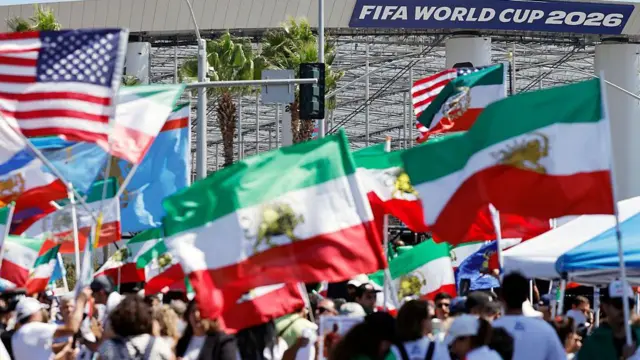
- Iranian fans display pre-revolutionary Lion and Sun flag despite FIFA ban
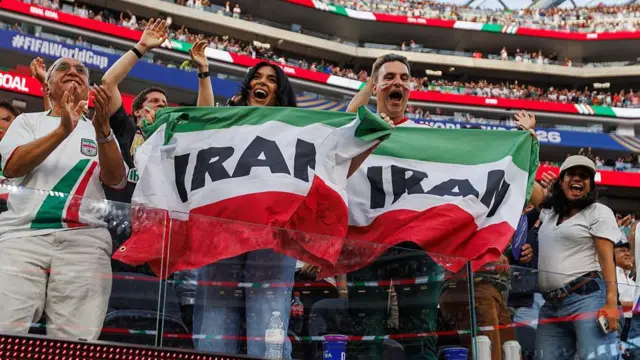
- National anthem met with jeers and cheers at June 16 match against New Zealand
- Iran's team relocated from Tucson to Tijuana due to visa and security concerns
- Football Federation of Iran filed complaint with FIFA on June 19
As Iran's national football team competes in the 2026 World Cup, supporters face a profound moral and emotional dilemma between national pride and opposition to their government. The tension reflects decades of geopolitical complexity surrounding Iranian sport and a nation divided by political ideology. In Los Angeles's Iranian diaspora community known as 'Tehrangeles,' the pre-revolutionary 'Lion and Sun' flag—now a symbol of resistance against the current Islamic Republic—is displayed widely despite FIFA's ban on politically symbolic flags. At Iran's June 16 match against New Zealand, nationalist anthems were met with both jeers and cheers, illustrating the conflicted sentiment among supporters. One Los Angeles-based Iranian-American woman stated: "We want to see our team and want it to win, but at the same time we despise the Islamic Republic, despise its government and its oppression." A carpet shop owner in Tehrangeles, Eric Saddith, expressed stronger opposition, saying "It is not my team. It does not represent Iran, and supporting it is the same as supporting the Revolutionary Guard."
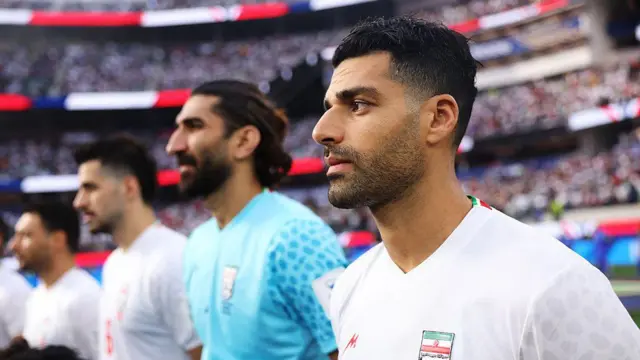
For others, the tournament offers emotional solace amid ongoing war and hardship. Elika, an Iranian-American woman, attended the match to honor her late father and to support Iranians seeking peace and respite from conflict. Forward Mehdi Taremi stated the team aims to represent all Iranians worldwide, yet political forces across the spectrum attempt to weaponize the national team for their own agendas. Within Iran itself, fans struggle with conflicting emotions; one woman named Neda reported feeling emotionally numb, while another identified as Bafi described watching the World Cup as a fantasy given ongoing daily bombardments and inflation. The World Cup coincides with recent conflict, as much of the tournament is held in a country that declared war on Iran in February 2026, intensifying the emotional complexity for many supporters.
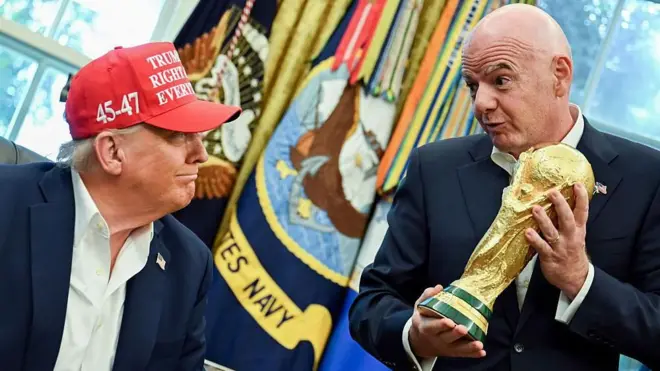
Political tensions have directly impacted Iran's World Cup logistics. Due to visa and security concerns, the team was relocated from Tucson, Arizona to Tijuana, Mexico. According to FIFA regulations, Iran must arrive the day before matches and depart immediately after, limiting preparation time and raising fairness concerns. The Football Federation of Iran filed a formal complaint to FIFA on June 19, arguing the arrangement violates principles of equal conditions for all participating teams. Andrew Giuliani, executive director of the White House FIFA Task Force, countered that Iran was aware of these conditions beforehand.
Iranian women's participation in football has long been restricted by the government, though recent changes have occurred. Women were prohibited from attending men's matches for decades after the 1979 Islamic Revolution. In 2019, Sahar Khodayari was arrested for attempting to enter a stadium; she later self-immolated in protest and died from her injuries, sparking international pressure for reform. Women were permitted to attend a domestic championship match in August 2022, though restrictions remained in other contexts. Recently, Iran's women's national team generated controversy when players refused to sing the national anthem at an Asian Cup match in Australia, leading to safety concerns upon their return and resulting in five players receiving humanitarian visas to Australia, with two choosing to remain.
Historically, Iranian football has been entangled with geopolitics. Since first competing in the World Cup in 1978, the team has experienced numerous politically charged moments. In 1998, Iran defeated the United States 2–1 in a match preceded by security concerns related to the countries' diplomatic rupture since 1980. President Bill Clinton had appealed for unity around the game. During the 2022 Qatar World Cup, Iran's domestic context was marked by the "Women, Life, Freedom" movement following Mahsa Amini's death in police custody; boycott sentiment was reportedly stronger then than in 2026.
Amid the polarization, some Iranian-American fans view the World Cup as a rare opportunity for cultural unity and emotional respite. Mahdis Keshavarz stated: "When they play, you cannot deny the fundamental emotional connection we have with each other." Ideene Dehdashti echoed this sentiment, describing the struggle of being Iranian in a football stadium as longstanding and expressing exhaustion with the politicization: "But this is really tiring. It is so exhausting. Why can't we enjoy this moment?" Media scholar Niki Akhavan of Catholic University of America noted that while cross-partisan fan communities exist, various actors—including the state apparatus itself—attempt to fracture Iranian unity and monopolize cultural symbols. The World Cup thus remains a battleground for conflicting visions of Iranian identity and national representation.
#Political division#diaspora#cultural unity#Iranian diaspora#geopolitics#Lion and Sun flag#political symbolism#Islamic Republic#Revolutionary Guard#Tehrangeles#World Cup#war impact on sports#protest#sports and politics#women's rights in sports#national identity#FIFA regulations#Iran-US relations#football#FIFA#Iran#geopolitical tensions#2026 World Cup#women's rights#Iran national football team#Los Angeles
Why This Matters
The 2026 World Cup exposes how national sports become arenas for competing political narratives and identity struggles. For Iranian fans and diaspora communities, the tournament crystallizes broader questions about state representation, cultural belonging, and whether supporting your national team requires endorsing the government that fields it—issues relevant to any country where politics and sport intersect. The practical complications (visa restrictions, FIFA logistics) and the historical pattern of weaponizing athletes underscore that major sporting events are never apolitical, and that fan communities navigating these tensions deserve recognition of the genuine emotional complexity they face.
Timeline & Sources
Jan 1, 1978
WireIran participates in World Cup for the first time
Jan 1, 1978
WireIran participates in first World Cup
Jan 1, 1979
WireIslamic Revolution; women banned from attending men's sporting events
Jan 1, 1979
WireIslamic Revolution occurs; women subsequently banned from attending men's sports events
Jan 1, 1980
WireIran and United States sever diplomatic relations
Jan 1, 1998
WireIran defeats United States 2–1 in World Cup match; thousands celebrate in streets
Jan 1, 2019
WireSahar Khodayari arrested for attempting to enter stadium; later self-immolates in protest and dies
Jan 1, 2020
WireElika's father dies
Jan 1, 2022
WireQatar World Cup held amid Women, Life, Freedom protests following Mahsa Amini's death
Jan 1, 2023
WireIran women's national team refuses to sing national anthem at Asian Cup in Australia; five players receive humanitarian visas
Jun 16, 2026
WireIran plays New Zealand; national anthem met with jeers and cheers; some Lion and Sun flags brought into stadium
Jun 16, 2026
WireIran plays New Zealand in first World Cup match; Lion and Sun flags brought into stadium despite FIFA ban
Jun 19, 2026
WireFootball Federation of Iran files formal complaint with FIFA regarding team logistics and visa restrictions
Jun 19, 2026
WireFootball Federation of Iran files official complaint with FIFA regarding unequal treatment
Jun 21, 2026
WireBBC reports on Iranian fans' conflicted emotions at World Cup
Entities
- Los Angeles
- White House FIFA Task Force
- Iran national football team (Team Melli)
- Tehran-geles (Tehrangeles)
- Human Rights Watch
- Iranian Revolutionary Guard
- Bill Clinton
- FIFA
- Lion and Sun flag
- Andrew Giuliani
- Mahsa Amini
- SoFi Stadium
- Niki Akhavan
- Football Federation of Iran
- Sahar Khodayari
- Tehrangeles (Los Angeles Iranian diaspora)
- Mehdi Taremi
- Revolutionary Guard (Iran)
- Iran