
Geo
Published Jun 18, 2026Updated Jun 231
69%
Russian Artist and Putin Critic Killed in Poland; Suspect Arrested
Russian artist and Putin critic Semyon Skrepetski was fatally shot in Poland's Biała Podlaska, leading to the arrest of a 36-year-old suspect carrying a Georgian passport. Prime Minister Donald Tusk described the killing as a political murder with possible Russian involvement, part of a broader pattern of targeted killings of opposition figures in NATO countries.
Quick Facts
- Russian artist shot and killed
- Suspect arrested
- Police and ABW coordinated detention
- Investigations into mastermind ongoing
- Victim shot five times, twice at point-blank range

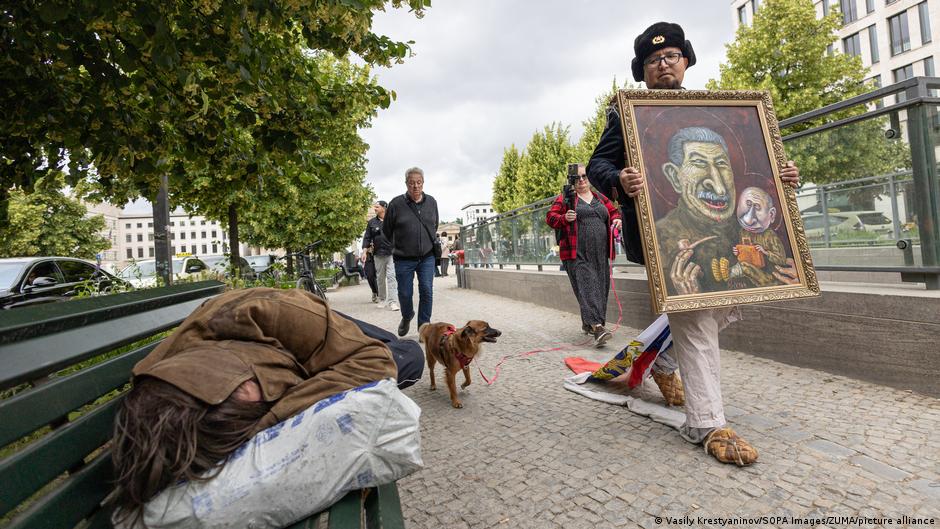

A Russian artist and vocal critic of Vladimir Putin was shot and killed in the Polish town of Biała Podlaska on Tuesday, June 18, 2026, prompting Prime Minister Donald Tusk to announce the arrest of a suspect and characterize the incident as a "political murder" with potential international dimensions. The victim, identified as Robert Kuzovkov, who used the artistic pseudonym Semyon Skrepetski, was shot five times at close range, including twice in the head after being initially downed. The suspect, a 36-year-old man carrying a Georgian passport, was detained by Lublin police and Poland's Internal Security Agency (ABW) on Thursday.
Tusk emphasized that investigations are ongoing to determine who ordered the killing, stating that if Russia was responsible, "this is also a very serious matter with an international dimension." He noted that two other Belarusian suspects had also been detained but not charged. Deputy Foreign Minister Władysław Bartoszewski indicated that Chechens were also potentially suspected, given Skrepetski's history of satirical attacks on Chechen leader Ramzan Kadyrov.
Skrepetski, born in Russia's Altai Republic, had been living in exile in Poland since 2021. He gained prominence for his provocative visual caricatures targeting Putin, Belarusian leader Alexander Lukashenko, Kadyrov, and Soviet leader Josef Stalin, though he also satirized figures within the Russian opposition, including Alexei Navalny. Three days before his death, he traveled to Berlin for Russia Day, where he staged a protest outside the Russian embassy. Poland's government had previously offered him protective security, which he declined.
The killing adds to a documented pattern of assassinations targeting Russian opposition figures, dissidents, and former intelligence operatives in NATO countries. Previous incidents include the 2019 murder of a Chechen rebel in Berlin and the 2018 poisoning of former Russian intelligence agent Sergei Skripal in Salisbury, England. The Kremlin has consistently denied involvement in such incidents. This murder occurs amid heightened tensions stemming from Russia's full-scale invasion of Ukraine.
Why This Matters
This killing exemplifies the escalating pattern of targeted assassinations against Russian dissidents and opposition figures in NATO countries, raising critical questions about international security, diplomatic accountability, and the safety of political exiles. For readers, it underscores the real-world dangers faced by those who publicly oppose authoritarian regimes and highlights the necessity for protective mechanisms and international cooperation in investigating cross-border political violence.
Timeline & Sources
Jan 1, 2018
WireFormer Russian intelligence agent Sergei Skripal poisoned in Salisbury, England
Jan 1, 2019
WireChechen rebel murdered in central Berlin
Jan 1, 2021
WireSemyon Skrepetski begins exile in Poland