Geo
Jun 22, 20261
69%
Finland and Baltic States Mobilise as Russia Expands Military Presence Along Borders
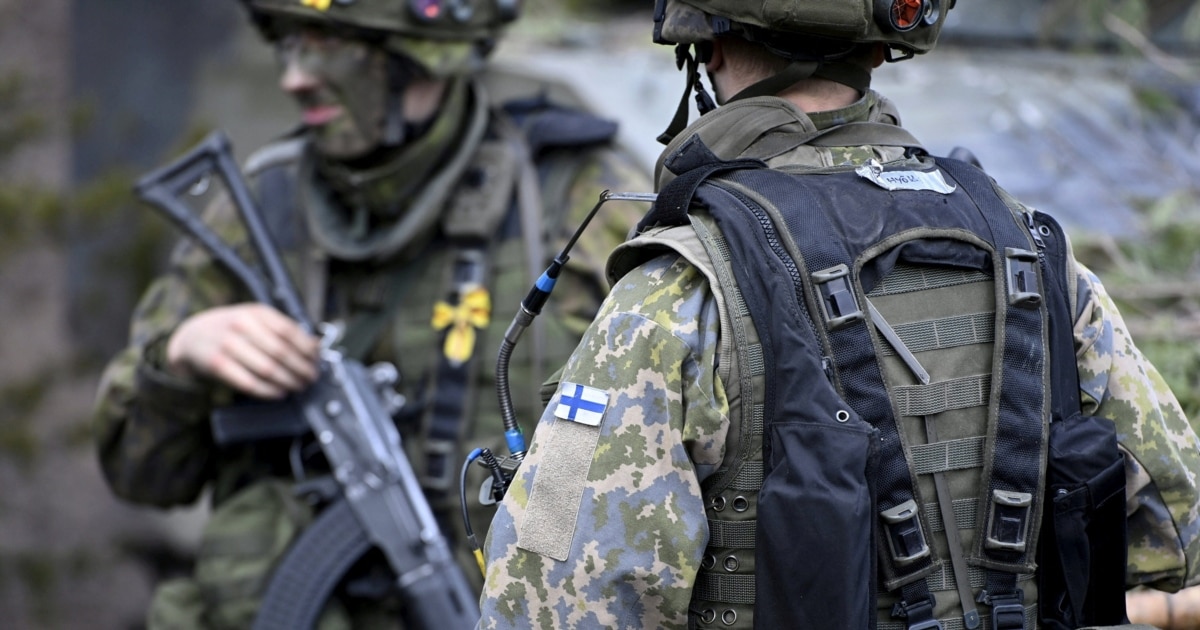
Finland and the Baltic states are responding to a significant Russian military build-up along their borders, which began following Finland's NATO accession in 2023. Russia has modernised and expanded military bases across the region, with capacity for approximately 115,000 troops, prompting NATO to establish its Northern Europe Land Component Command in Finnish Mikkeli and heightened defensive preparations among Nordic and Baltic nations.


Quick Facts
Who
Finland
What
Finland joined NATO in spring 2023
When
Spring 2023 (Finland NATO accession)
Where
Finland
- Finland joined NATO in spring 2023
- Sweden joined NATO in spring 2024
- Russia recreated the Leningrad Military District from spring 2024
- Russia expanded military infrastructure along Finnish and Baltic borders
- NATO established Land Component Command for Northern Europe in Mikkeli in autumn 2025
Following Russia's invasion of Ukraine, Finland and Sweden abandoned decades of military non-alignment to join NATO, with Finland joining in spring 2023 and Sweden in spring 2024. Both nations cited Russian military threats and potential invasion as their primary motivation. This strategic shift has repositioned the Nordic-Baltic region at the forefront of NATO's northeastern defence.
In response to Finland's NATO accession, Russia has significantly expanded its military infrastructure along its borders with Finland and the Baltic states since spring 2024. The Kremlin has been recreating the Leningrad Military District and concentrating forces near the Finnish and Baltic borders. Satellite imagery reveals extensive modernisation and expansion of Russian military facilities across the region, including new barracks, ammunition depots, and concentrations of military equipment—from the northernmost installations near the Norwegian border to facilities in Karelia near Finland and in Luga near Estonia. Defence analysts estimate that these upgraded military installations could accommodate up to 115,000 Russian service members across the northern European and Baltic sectors.
NATO formalised its response by establishing the Land Component Command for Northern Europe in Mikkeli, a Finnish town of just over 50,000 residents, from autumn 2025. The choice carries symbolic weight: Mikkeli served as the headquarters of Finnish Commander-in-Chief Carl Mannerheim during World War II and sits strategically only 300 kilometres from Saint Petersburg and 100 kilometres from the Karelian Isthmus. According to Yuri Lavikainen, a researcher at the Finnish Institute of International Relations, this military build-up was an expected Russian response to Finland's NATO membership.
Finland's defensive posture differs notably from that of the Baltic states. With wartime mobilisation capacity of 300,000 troops, Finland maintains considerably stronger defence capabilities than its Baltic neighbours and does not anticipate imminent direct invasion, though military leadership acknowledges the possibility. Finnish experts assess that any Russian deployment of 80,000 to 100,000 troops would be limited to conducting restricted operations. The Baltic states, conversely, express far greater alarm about potential Russian invasion, particularly given recurring incidents of Russian military drones violating their airspace.
Lithuanian officials frame Russia's military expansion as a continuation of Soviet-era strategic doctrine opposing the West. The divergence in threat perception reflects both geographic and military capacity disparities: while Finland can field formidable defence forces, the smaller Baltic states remain more vulnerable to direct military aggression.
Why This Matters
This military escalation fundamentally reshapes NATO's defensive strategy in Eastern Europe and directly affects the security calculus for Nordic and Baltic nations. For readers, understanding Russia's military build-up clarifies why NATO is repositioning forces, how regional tensions influence defence spending and domestic mobilisation plans, and why smaller nations like Estonia and Lithuania face asymmetric security challenges compared to larger Finland. The establishment of NATO's Northern Europe command signals a long-term commitment to regional deterrence that will shape geopolitical competition in this critical zone for years.
Timeline & Sources
Jan 1, 2022
WireRussia invades Ukraine
Jan 1, 2024
WireRussian military drones violate Finnish and Baltic airspace
Jun 22, 2026
WireReport on Russian military expansion and regional tensions published