
Today·Emerging
Follow-up 39m ago5
95%
New Zealand Election Deadlocked; Special Votes to Decide Government in November
New Zealand's October 26 election has produced a deadlock, with Labour and National nearly tied in the popular vote but National holding more parliamentary seats. The right-wing coalition led by Prime Minister Christopher Luxon holds a one-seat majority, but almost 400,000 special votes—historically favoring the left—will not be counted until November 27, potentially shifting the balance. The centrist Opportunity Party, winning seven seats for the first time, may emerge as a kingmaker in coalition negotiations.
Quick Facts
- General election held
- Labour and National nearly tied in popular vote
- Right-wing coalition holds 67 seats (one-seat majority)
- Left-wing bloc holds 57 seats
- Opportunity Party crossed 5% threshold for first time
Related Insights
Election 2026: People’s Debate November 5 2026 1News · YouTube
Why New Zealand could be headed for a four-way coalition after election | The World | ABC News ABC News (Australia) · YouTube
New Zealand Election 2026 Results: Labour and National Deadlocked #Shorts NewsPulse Hourly · YouTube
Party Vote National #nz #newzealand Christopher Luxon · YouTube
New Zealand Election Deadlock—Can One Seat Decide the Government? The JR Voice · YouTube
Editor-in-Chief LIVE | Paul Henry On The 2026 Election Duncan Garner | Editor-in-Chief · YouTube
Tape to Tape / THE DLES - 02 Nov 2026 - Unofficial Northernlion VOD Unofficial NL VODs · YouTube
New Zealand election, why you should pay attention. Guardian Australia · YouTube
Could Opportunity fall short despite strong polling? | Election 2026: The Podcast nzherald.co.nz · YouTube
Close contest expected in New Zealand election as leaders make final pitches | ABC NEWS ABC News (Australia) · YouTube
Election 2026! The last-gasp hot-take shootout The Spinoff · YouTube
Final 1News Poll before the Election NZ Media World · YouTube
Election Remains Close As Labour Pulls Out Ahead (Nov 5 2026 NZ General Election Prediction) Jurg's Take On Politics · YouTube
Mississippi Senate Down to Dozens & Monday Grid Vote | BOMJ Politics (November 7, 2026) BOMJ POLITICS · YouTube
New Zealand Election Deadlock, Central Vietnam Rain Evacuations, Miss Globe Crown | VietNet News VietNet News · YouTube
Why Small Parties Can Decide Who Governs New Zealand Doodle Brief · YouTube
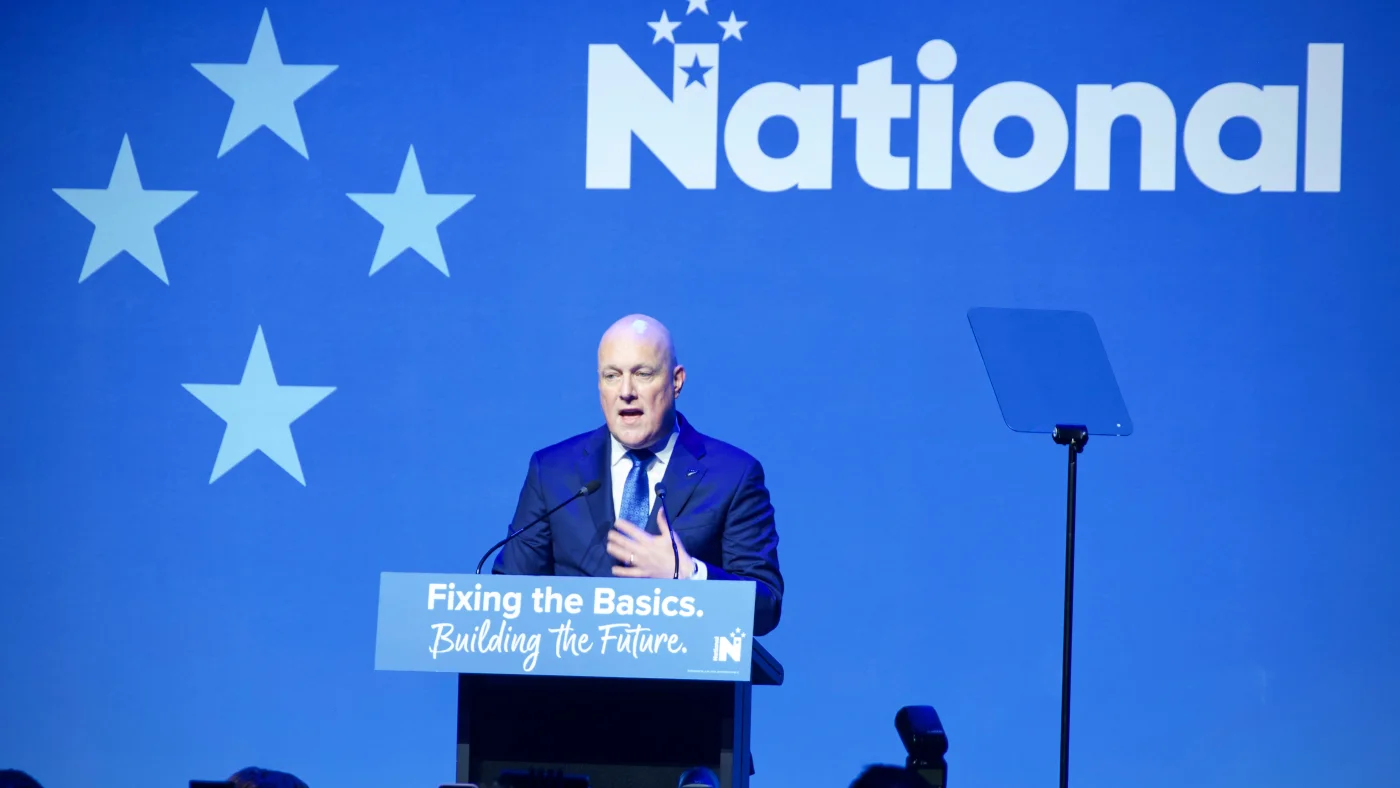

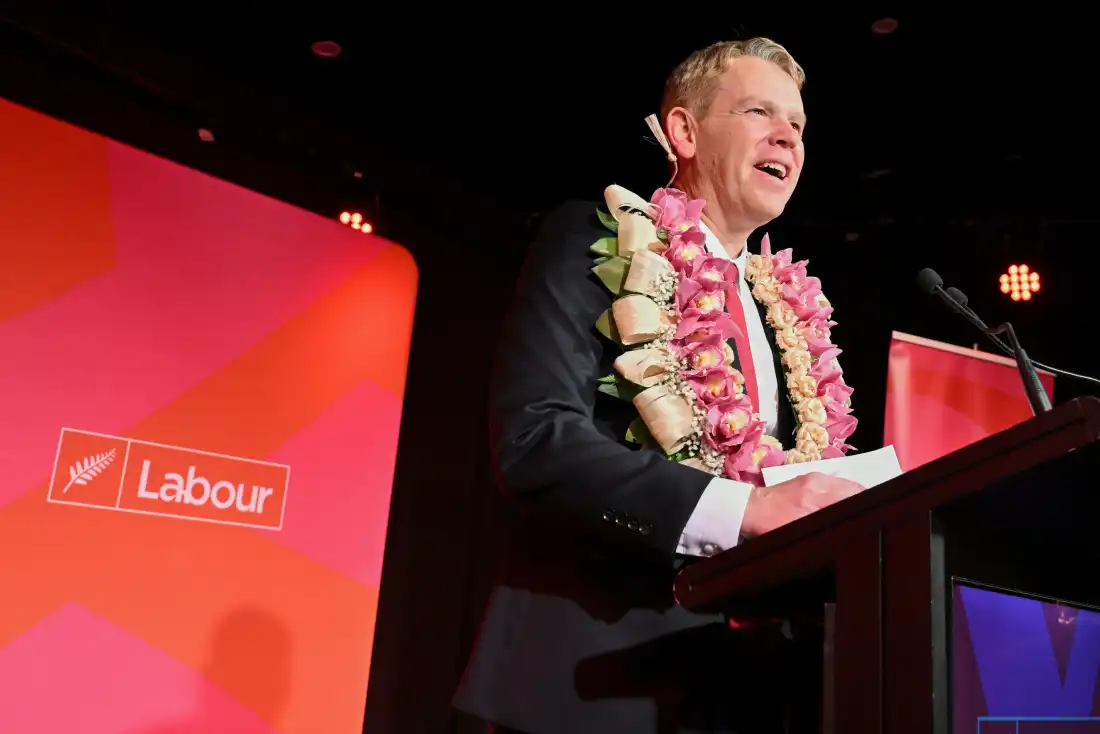
New Zealand's October 26 general election has left the country in political limbo, with neither the right-wing coalition nor the left-wing bloc able to claim a decisive victory. Preliminary results show Labour at 29.36% and National at 29.21% of the popular vote—the lowest combined major party vote ever recorded in New Zealand. However, National secured more parliamentary seats (42) than Labour (36) under the mixed-member proportional (MMP) voting system, because it won more individual electorate races. The right-wing coalition, comprising National, the libertarian ACT party, and nationalist New Zealand First, holds 67 seats in an expanded 131-seat parliament, giving it a razor-thin one-seat majority with 66 seats needed to govern. The left-wing bloc, including Labour (36 seats), the Greens (16 seats), and indigenous rights party Te Pāti Māori (5 seats), holds 57 seats.
The election outcome hinges on approximately 400,000 special votes—cast by overseas voters and those who voted outside their home electorate—which will not be counted until November 27. Historically, special votes skew left, and given the current razor-thin margins, a shift of even one or two seats could alter the balance of power. Prime Minister Christopher Luxon cautioned that the election was "too close to call" and stated the government would remain in caretaker mode until the final count. Coalition negotiations cannot begin until the Electoral Commission releases official results on November 27.
The election reflects significant public disillusionment with both major parties, driven by economic grievances including high living costs, stubbornly elevated unemployment (around 6% in Q3), and concerns about infrastructure and healthcare. Voters shifted substantially toward minor parties: the Greens achieved their best-ever result, as did ACT and the centrist Opportunity Party, which crossed the 5% threshold for the first time in its history, winning seven seats. Opportunity's leader, Qiulae Wong, a 38-year-old business consultant and political newcomer, has positioned the party as business- and climate-friendly centrists willing to work with either bloc, potentially granting it kingmaker status.
National's collapse from 38.1% in 2023 to 29.21% this year, combined with the loss of key senior lawmakers from the party list—including Finance Minister Nicola Willis, Justice Minister Paul Goldsmith, and Speaker Gerry Brownlee—signals substantial internal damage. Labour improved modestly by 2.2 percentage points and two seats but failed to secure a governing majority within its own bloc. Both party leaders, Christopher Luxon and Chris Hipkins, struggled to excite voters, with critics noting their campaigns focused on attacking each other rather than presenting transformative visions.
Parliament has expanded to 131 seats due to "overhang" seats—where parties won more electorate seats than their party vote share entitled them to. National holds five or six overhang seats, and Te Pāti Māori holds five. Prior to the election, Luxon explicitly ruled out negotiating with Wong, but he adopted a more conciliatory tone after Saturday's result, stating he wanted to "build a relationship" with her and "try and find common ground." Whether the right or left bloc can cobble together a majority, and what role Opportunity will play, will remain uncertain until the special vote count is finalized on November 27.
Why This Matters
New Zealand faces a government formation deadlock that will not resolve until November 27, when special votes are counted. The outcome affects which policy agenda—right-wing (National-ACT-NZ First) or left-wing (Labour-Greens-Te Pāti Māori)—will control the 131-seat parliament over the next term. Prime Minister Luxon's one-seat majority is vulnerable to the historically left-leaning special vote count; a shift of one or two seats could force either coalition to negotiate with the centrist Opportunity Party, introducing a new political actor into government formation and potentially reshaping policy priorities on economic, climate, and indigenous issues.
Timeline & Sources
Oct 26, 2026
WireGeneral election held in New Zealand
Nov 8, 2026
WirePreliminary election results released; right-wing coalition holds 67 seats (one-seat majority), left-wing bloc holds 57 seats
Nov 27, 2026
WireElectoral Commission to release final official results after counting special votes; coalition negotiations to begin
Sources
- New Zealand’s two major parties are flatlining as dispirited voters seek transformational changeThe GuardianMediaNov 8, 2026
- Who won New Zealand’s photo-finish election and why special votes could change everythingThe GuardianMediaNov 8, 2026
- Relative newcomer emerges as kingmaker after New Zealand election yields deadlockYahooMediaNov 8, 2026
- New Zealand in political limbo after knife-edge electionCNNMediaNov 7, 2026
- No clear winner in New Zealand election, as leaders prepare for weeks of talksNPRMediaNov 8, 2026