
Yesterday·Emerging
Follow-up 48m ago Major7
100%
EU Proposes Canada as First 'Associate Member' Amid U.S. Trade Tensions
The European Commission proposed Wednesday that Canada become the EU's first "associate member," deepening cooperation in technology, defense, and energy. U.S. President Trump called the plan "laughable" and threatened heavy tariffs or trade restrictions if the EU proceeds, citing concerns about Europe's intentions.
Quick Facts
- EU proposes Canada as first 'associate member'
- Von der Leyen outlined 'Alliance for the Future' framework
- Trump threatened tariffs and trade restrictions
- Canada formally applied to join British-led Joint Expeditionary Force
- EU-Canada summit scheduled for October 29-30 in Montreal
Related Insights
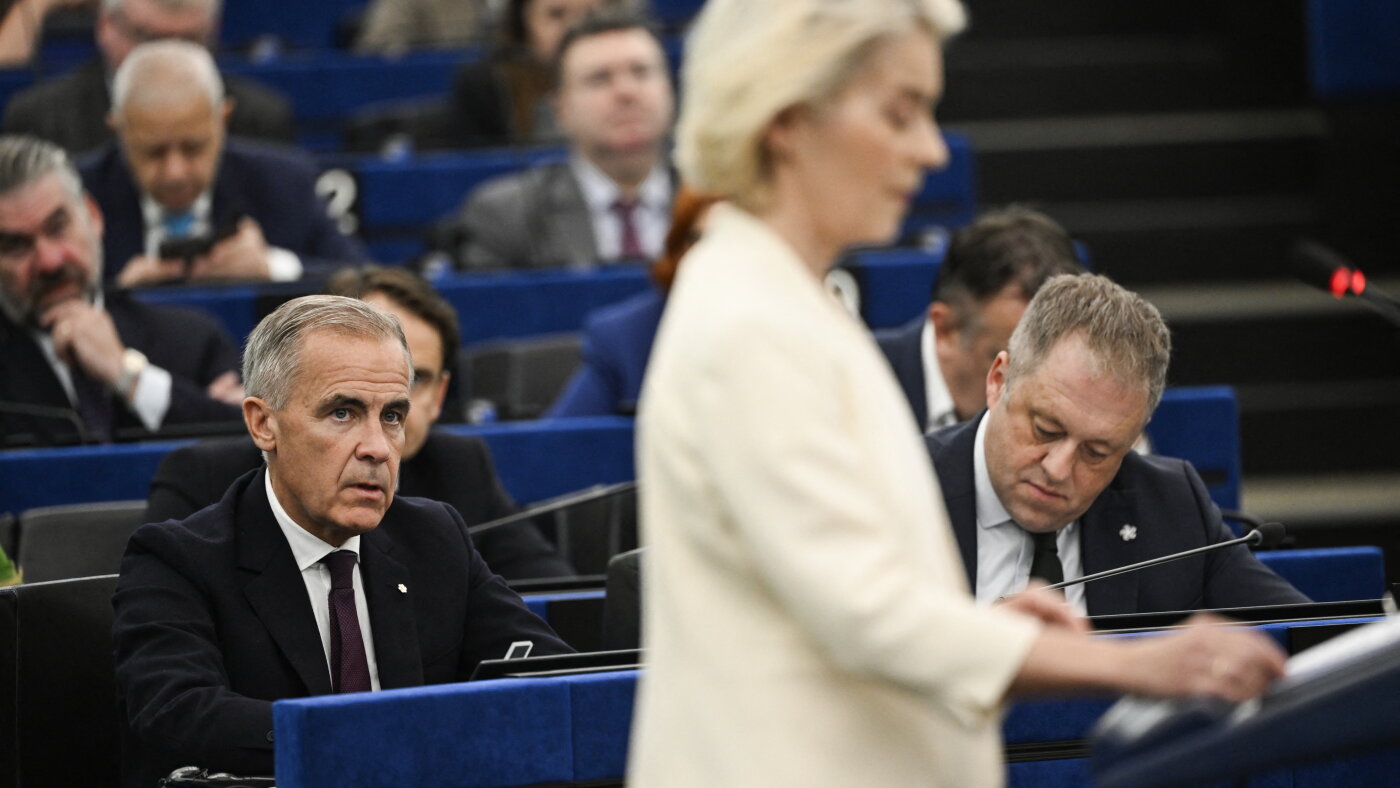
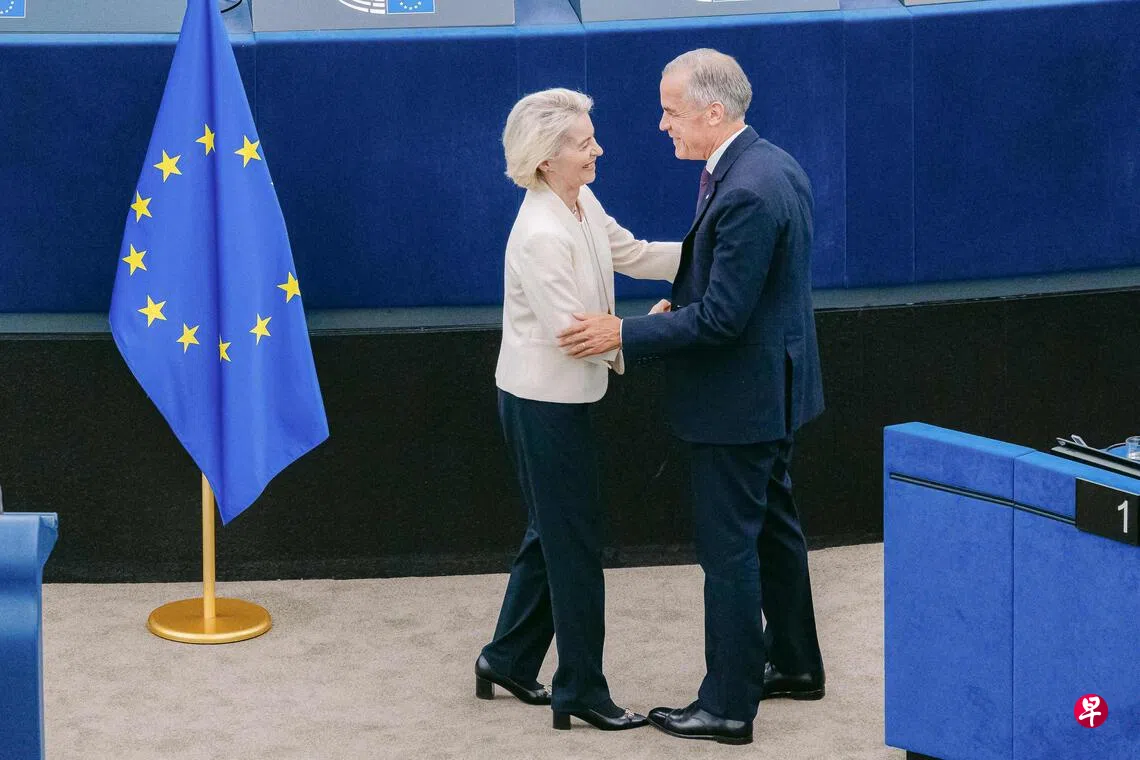

European Commission President Ursula von der Leyen proposed Wednesday that Canada become the European Union's first "associate member," a novel status that does not currently exist in EU treaties. The proposal, made during her annual State of the Union address in Strasbourg, marks a significant diplomatic gesture as both the EU and Canada seek to strengthen ties amid escalating trade tensions with the United States.
Von der Leyen outlined an "Alliance for the Future" spanning technology, defense, energy, critical minerals, artificial intelligence, and the Arctic. Canadian Prime Minister Mark Carney, who attended the address as a special guest, has consistently emphasized that Canada seeks closer partnership with Europe without full EU membership, which would require surrendering sovereignty. The proposal drew a standing ovation from the European Parliament, and Carney is scheduled to address lawmakers on Thursday.
U.S. President Donald Trump swiftly condemned the initiative, calling it "laughable" and warning of severe consequences. He told reporters: "If they do that, if I think it's at all a hostile act, I will put very serious tariffs or stop trading with Europe, on many things." Trump conditioned his response on European intentions, stating that heavy tariffs would follow if he perceived the move as hostile. He also described Canada as a "terrible trade partner" and suggested the U.S. could curtail trade with Europe in certain sectors.
The EU-Canada relationship has already deepened significantly. The two sides have a comprehensive free-trade agreement (CETA) in effect since 2016, which increased bilateral trade by over 80 percent. This year, Canada became the first non-European country permitted to join the EU's 150-billion-euro defense procurement program. Canada and the EU signed a security cooperation agreement in 2025 and are discussing closer collaboration on digital trade, payment systems, and energy standards.
The concrete meaning of "associate membership" remains undefined. EU officials acknowledge the term lacks legal foundation and would require formal negotiation and approval by all 27 EU member states. Some European diplomats suggest the terminology may not be final, with "Alliance for the Future" potentially serving as the operative description. Canada's ambassador-designate to the EU, Jonathan Wilkinson, indicated that nomenclature is secondary to substantive cooperation.
Canada's pivot toward Europe follows the breakdown of U.S.-Canada trade talks last month and reflects broader geopolitical repositioning. Ottawa has also formally applied to join the British-led Joint Expeditionary Force, a rapid-response military alliance of 10 northern European NATO countries. An EU-Canada summit is scheduled for Montreal on October 29-30 to discuss the proposed relationship in detail.
Why This Matters
The EU-Canada deepening partnership directly affects North American trade dynamics and defense alignment. Canada's formal application to join the British-led Joint Expeditionary Force, combined with expanded EU defense procurement access (granted 2025) and a proposed novel "associate member" status, signals institutional repositioning that may constrain U.S. leverage in North Atlantic affairs. Trump's conditional tariff threats introduce measurable trade policy uncertainty: any formal EU-Canada institutional agreement will now be evaluated against his stated threshold of perceived "hostility." The October 29-30 EU-Canada summit in Montreal will determine whether the "associate member" concept proceeds to formal negotiation among all 27 EU states—a process that could take months and reshape transatlantic supply chains and defense procurement.
Timeline & Sources
Jan 1, 2016
WireCETA free-trade agreement between EU and Canada enters into force
Jan 1, 2025
WireEU and Canada sign security cooperation agreement
Sep 16, 2026
WireTrump issues presidential memorandum on Canadian goods procurement review
Sep 16, 2026
WireCanada formally applied to join Joint Expeditionary Force
Related Signals
- GeoContinuation
Canada pursues 'unique alliance' with EU as US tariffs escalate
Follow-up 22h ago
- GeoRelated Company
Russian frigate fires flares at Danish helicopter; NATO shoots down drone over Lithuania
Follow-up 1d ago
- GeoRelated Topic
Russian Frigate Fires Flares at Danish Helicopter in Baltic Sea
Follow-up 1d ago
- GeoRelated Topic
NATO Shoots Down Drone Over Lithuania in First Such Interception
Follow-up 1d ago
- GeoRelated Topic
Russian frigate fires flares near Danish helicopter in Baltic Sea
Follow-up 1d ago
Sources
- EU rolls out red carpet to Canada to become its first 'associate member'NPRMediaSep 16, 2026
- Trump threatens to cut trade with EU over Canada association planxinhuaMediaSep 17, 2026
- 欧盟拟接纳加拿大为“准成员” 特朗普威胁削减与欧盟贸易往来zaobaoMediaSep 17, 2026
- Trump threatens trade with Europe if it makes Canada an associate member of the EUBusiness InsiderMediaSep 17, 2026
- 欧盟邀请加拿大成为“准成员国”,这意味着什么nytimes_cnMediaSep 17, 2026
- Carney to address EU Parliament after Trump scorns ‘associate membership’ planYahooMediaSep 17, 2026
- Trump threatens EU over ‘hostile’ Canada association planPunch NewspapersMediaSep 17, 2026