AI
Jun 18, 20261
69%
Ukrainian Strikes on Russian Oil Refineries Trigger Fuel Shortages Across 53 Regions
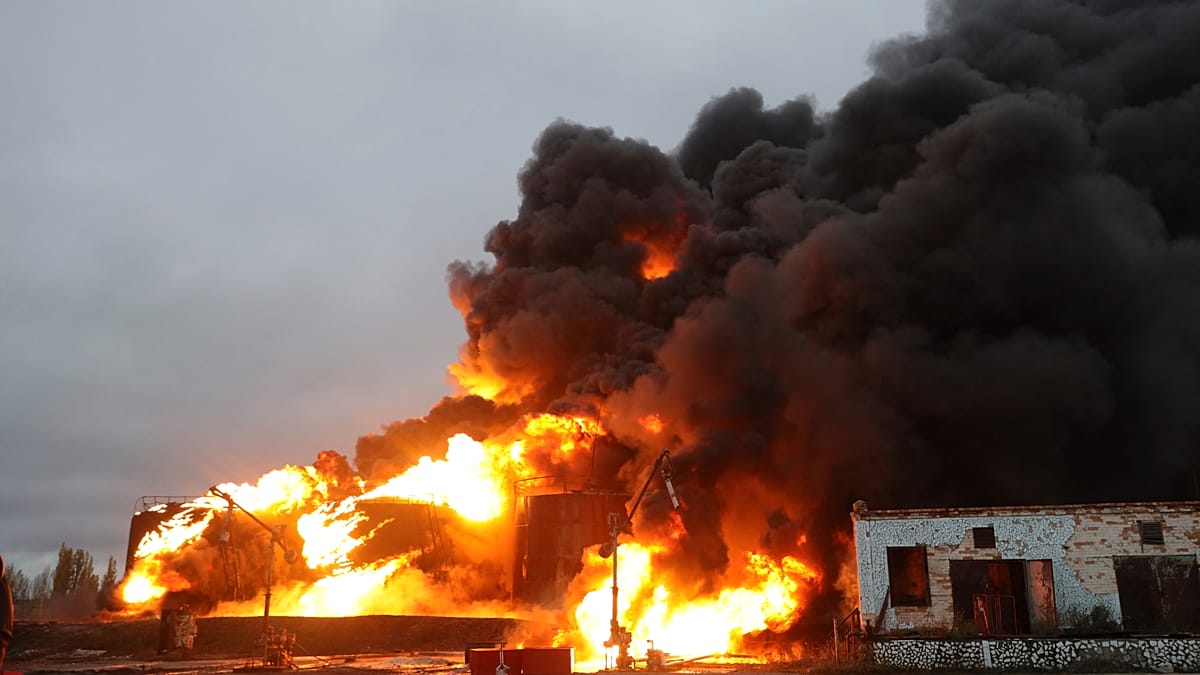
Ukrainian drone strikes on major Russian oil refineries, including those supplying the military, have caused fuel shortages across 53 regions of Russia. The attacks have led to a significant drop in refining capacity, price surges for jet fuel, and widespread federal limits on fuel sales at thousands of gas stations.




Quick Facts
Who
Volodymyr Zelenskyy
What
drone attacks
When
mid-2026
Where
53 regions of Russia
- drone attacks
- fuel supply disruptions
- refinery damage
- federal fuel sale restrictions
- rationing at airports
Ukrainian drone attacks on major Russian oil refineries, particularly those supplying the Russian military, have caused widespread fuel supply disruptions across 53 regions of Russia, according to Ukrainian President Volodymyr Zelenskyy and multiple international and Russian sources. The strikes have escalated from peripheral incidents to a systemic factor destabilizing Russia's fuel market by mid-2026.
In a social media post following a massive attack on Moscow-area targets, including the Kapotnya refinery, Zelenskyy described the operations as a "completely fair response to Russian strikes on our cities and communities" and "another important result of the work of our warriors on objects that ensure the Russian military machine." Kyiv has consistently pursued a policy of targeted strikes on Russian military-industrial complex facilities and strategically important economic sectors in response to Russia's full-scale invasion of Ukraine in February 2022.
Damage to key processing units, fires, and halted production lines have led to major disruptions in refining and logistics, resulting in fuel deficits in 53 regions, including Moscow, St. Petersburg, the Volga region, the South, Siberia, Crimea, and other temporarily occupied Ukrainian territories. International agencies, OSINT analytics, and Russian sources including Telegram channels of regional authorities and industry bodies confirm the scale of the crisis.
International sources report the largest decline in refining since the war began. According to Reuters, by late May most major refineries in central Russia were forced to cut or halt operations. Bloomberg estimates a 13% drop in May volumes—about 700,000 barrels per day. The International Energy Agency confirms primary processing losses of approximately 500,000 barrels per day. Jet fuel prices have surged 41% since the start of the year, with most of the increase occurring in mid-May, prompting airports to ration aircraft refueling.
Federal-level fuel sale restrictions have been implemented across dozens of regions, affecting at least 7,000 of Russia's nearly 29,000 gas stations. Major networks have imposed their own limits: Tatneft restricts sales to 30 liters of gasoline or 60 liters of diesel; Rosneft and Bashneft have banned sales into canisters and limit refueling to 90 liters; Lukoil has set a cap of 100 liters. Reuters reported one station in the Serpukhov district limited sales to 20 liters of gasoline or 40 liters of diesel, accepting only cash payments. These measures, while formally aimed at stabilizing the market, underscore the severity of the shortage.
Topics
Why This Matters
This development signals a structural shift in Russia's domestic energy stability—directly impacting civilian logistics, air travel, and military supply chains. For global energy markets, it underscores how drone warfare can systematically degrade a major energy producer's refining capacity, potentially influencing global diesel and jet fuel prices. Investors and analysts should monitor further escalations as they may force Russia to reduce crude exports to prioritize domestic refining needs.
Timeline & Sources
Jun 18, 2026
WireZelenskyy confirms strikes on Moscow region refinery and other targets; fuel shortages reported in 53 regions