
Oct 27·Geo
Follow-up 3h ago4
94%
King Charles III acknowledges slavery's legacy during Caribbean tour without apology
King Charles III has acknowledged the "great suffering and injustices of the past" during his Caribbean tour, but will not offer a formal apology or reparations for Britain's role in slavery, following UK government policy. The visit coincides with renewed international and regional demands for accountability, including a UN resolution on slavery as a crime against humanity and Jamaica's petition to the Privy Council for reparations.
Quick Facts
- King Charles III tours Caribbean nations
- King acknowledges slavery's legacy and historic suffering
- Buckingham Palace confirms no formal apology or reparations will be offered
- Small protests occur demanding reparations and return of artifacts
- UN resolution declares transatlantic slave trade gravest crime against humanity


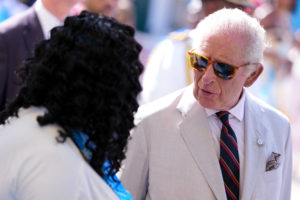
King Charles III has begun his nine-day Caribbean tour by acknowledging "the great suffering and injustices of the past" linked to Britain's role in the slave trade, but has ruled out offering a formal apology or reparations. Speaking at a youth rally in Nassau, Bahamas, on Tuesday, his first engagement as monarch in the region, the King described the country's culture as "born out of darkness" and said it was "only right" to acknowledge historic injustices. Buckingham Palace confirmed prior to the trip that the King would address colonial legacy and the impact of slavery but would follow UK government policy in declining to apologise or offer reparations.
The King's tour comes amid renewed international calls for accountability. A UN resolution tabled by Ghana has declared the transatlantic slave trade the gravest crime against humanity and called for reparatory justice. Jamaica has filed an unprecedented slavery reparations petition to the King, due to be heard by the UK-based Privy Council in March 2027. Caribbean leaders, historians, and activists have warned that the monarchy's response could determine the future of the Commonwealth, with some suggesting that insufficient action could accelerate moves to remove the King as head of state in several nations.
Small protests occurred during the King's arrival and first engagements, with demonstrators holding signs reading "pay us what you owe us" and "return artefacts you've stolen." Rastafarian leader Richmond McKinney, who organised protests, noted that calls for accountability have persisted for decades. Palace officials stated that the King's schedule will include visits to memorials and places of reflection related to slavery, and that slavery will be discussed at the Commonwealth Heads of Government Meeting (CHOGM) later in the tour. The King's programme will primarily focus on "modern partnerships and opportunities for the future," according to palace statements.
Historians and campaigners have questioned whether the King's approach is sufficient. Brooke Newman, author of "The Crown's Silence: The Hidden History of the British Monarchy and Slavery in the Americas," described the King's expected language as "hollow," noting that it does not create dialogue with descendants or move the issue forward. The monarchy's links to slavery extend back to 1563, when Queen Elizabeth I supported sea captain John Hawkins' plans to raid West African ports and transport captured Africans to Caribbean colonies, receiving a share of the profits. Nearly a century later, King Charles II and his brother—later King James II—invested in the Royal African Company, which expanded from trading gold and ivory to trafficking enslaved Africans.
The nine-day tour will include visits to the Bahamas and Guyana before concluding in Antigua and Barbuda for CHOGM. The King will deliver three significant speeches during the visit. His tour also emphasises climate change, reflecting his 50-year commitment to environmental issues and the particular vulnerability of low-lying Caribbean islands. This is the King's first visit to the Caribbean region as monarch, contrasting with a 2022 tour by the Prince and Princess of Wales that drew criticism over images of the couple greeting Jamaican children through a wire fence.
Why This Matters
King Charles III's Caribbean tour and statements on slavery acknowledge historical injustices but decline formal apology or reparations, affecting Commonwealth political stability as Jamaica pursues a UN Privy Council reparations petition (hearing scheduled March 2027) and several Caribbean nations reassess their constitutional ties to the British monarchy. The King's approach will be measured against renewed international pressure—including a UN resolution classifying the transatlantic slave trade as a crime against humanity—and regional demands for accountability, with implications for the Commonwealth Heads of Government Meeting and future membership commitments.
Timeline & Sources
Jan 1, 1563
WireQueen Elizabeth I supports sea captain John Hawkins' plan to raid West African ports and transport captured Africans; receives share of profits
Jan 1, 1973
WireKing Charles, as Prince of Wales, attends Bahamas independence celebrations
Jan 1, 2022
WirePrince and Princess of Wales conduct controversial Caribbean tour, sparking criticism over wire fence image with Jamaican children
Sources
- King acknowledges 'suffering of the past' as Caribbean tour beginsBBCMediaOct 27, 2026
- ‘We want a full apology for slavery’: Commonwealth at a crossroads as king heads to the CaribbeanThe GuardianMediaOct 27, 2026
- King acknowledges 'suffering of the past' as Caribbean tour beginsBBCMediaOct 28, 2026
- King Charles III can't escape Britain's role in slavery as he tours Caribbean nationsPBSMediaOct 28, 2026