
Yesterday·Emerging
Follow-up 3h ago Major3
96%
Xona launches GPS alternative with six satellites, scales manufacturing
Xona Space Systems is beginning beta testing of Pulsar, a commercial GPS alternative offering centimeter-level positioning, following SpaceX's launch of six satellites this month. The startup is hiring Waymo's Patrick Cadariu as COO and expanding manufacturing in California and Montreal to scale production toward a 258-satellite constellation by 2028.
Quick Facts
- SpaceX launch of six Xona satellites
- Beta testing of Pulsar navigation service
- Expansion of manufacturing operations
- Hiring of COO from Waymo
- FCC approval granted

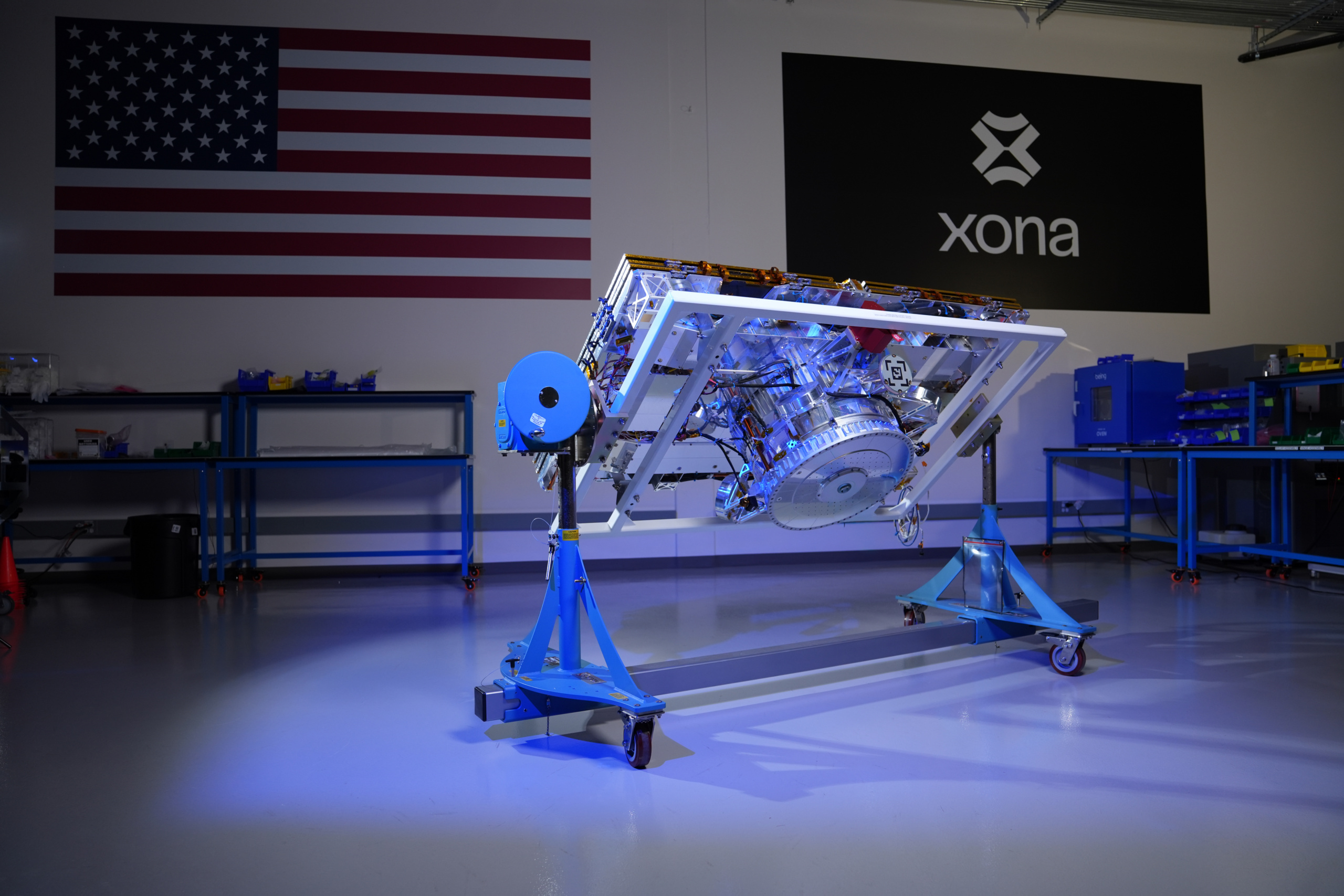

Xona Space Systems is preparing for commercial operations of its Pulsar navigation service following SpaceX's planned launch of six satellites this month. The startup, founded in 2019 by five Stanford aerospace engineers, is building a 258-satellite constellation designed to offer centimeter-level positioning accuracy—roughly 100 times more precise than GPS—along with stronger signals resistant to jamming and reception inside buildings and urban environments.
With FCC approval secured, Xona is shifting focus to manufacturing scale. The company has hired Waymo veteran Patrick Cadariu as Chief Operating Officer to oversee the transition from prototype development to mass production. Xona is expanding manufacturing operations across two locations: its headquarters in Burlingame, California, and a new 35,000-square-foot facility in Montreal announced in 2024 that will handle component vertical integration, mission operations, and customer support. The next generation of satellites is approximately 10% lighter than the initial design, and the company aims to reach production capacity of multiple satellites per week by the end of 2027.
The six satellites launching this month on SpaceX's Bandwagon-5 mission include four spacecraft built on Aerospace Labs' platform—similar to a prototype tested last year—and two entirely designed and manufactured by Xona. These latter two satellites form the foundation of the operational Pulsar constellation and are scheduled for initial operations in early 2027. Once in orbit, the satellites will pass overhead mid-latitude locations approximately eight times daily, enabling beta testing with real customers including TimeBeat, a company specializing in electronic timing synchronization.
Xona's business model targets hardware manufacturers and applications requiring precise navigation, such as autonomous vehicles and agricultural robots, rather than competing directly with GPS as a consumer service. The company has raised over $300 million in venture funding, including $20 million from the U.S. Space Force. CEO Brian Manning has stated the company aims to provide full coverage across the United States, Europe, Japan, and South Korea by 2028. Cadariu emphasized that scaling production while maintaining reliability and operational resilience—critical for a navigation service—remains the core challenge ahead.
Why This Matters
Xona's Pulsar constellation represents a competing infrastructure for navigation services with centimeter-level accuracy versus GPS's meter-level precision, targeting autonomous vehicles, agricultural robotics, and timing-critical applications. The hiring of a scaling executive and expansion of dual manufacturing sites signal a transition from prototype to production phase, with operational satellites scheduled for early 2027 and claimed full coverage across U.S., Europe, Japan, and South Korea by 2028. The company has secured over $300 million in venture funding and $20 million from the U.S. Space Force, indicating measurable investment in satellite-based positioning as a commercial and defense capability.
Timeline & Sources
Jan 1, 2019
WireXona Space Systems founded by five Stanford aerospace engineers
Jan 1, 2024
WireXona establishes operations in Montreal
Jan 1, 2025
WirePrototype satellite launched to test technology
Jan 1, 2028
WireFull Pulsar coverage expected across U.S., Europe, Japan, and South Korea