
Oct 6·Geo
Follow-up 3h ago Major7
98%
India protests escalate over 130 million voter list deletions
Nationwide protests across India are demanding the resignation of Chief Election Commissioner Gyanesh Kumar over a voter list revision that has removed over 130 million names. Opposition parties and the youth "Cockroach" movement allege the removals disproportionately affect opposition supporters, while the Election Commission insists the revision is necessary to ensure electoral integrity. The campaign has intensified following the detention of opposition leader Rahul Gandhi at a New Delhi protest.
Quick Facts
- Nationwide protests demanding resignation of election chief
- Special Intensive Revision (SIR) of voter lists
- Removal of over 130 million names from voter rolls
- Police detention of opposition leader Rahul Gandhi
- Demonstrations in New Delhi and Bengaluru
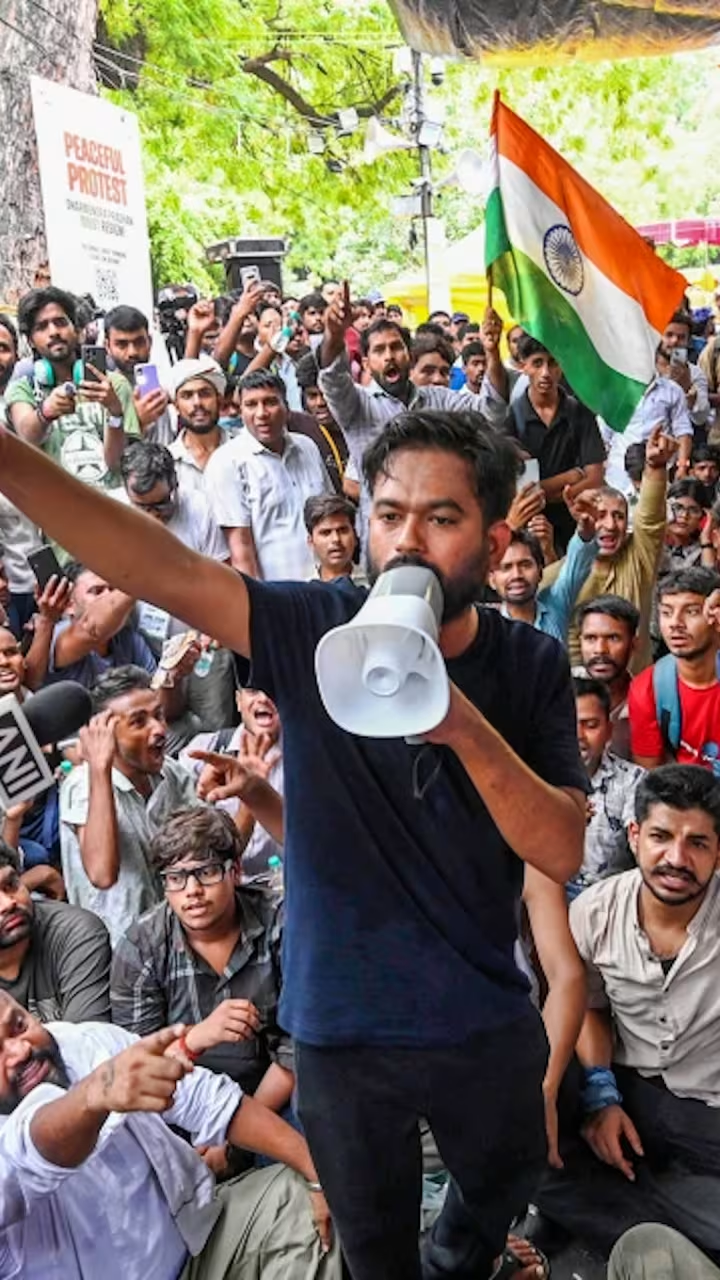
Nationwide protests have intensified across India as opposition parties, student groups, and the youth "Cockroach" movement demand the resignation of Chief Election Commissioner Gyanesh Kumar over a controversial revision of voter rolls. Demonstrations have spread to major cities including New Delhi and Bengaluru, with thousands participating in street marches and sit-ins. The campaign gained significant momentum after opposition leader Rahul Gandhi was briefly detained by police during a protest in New Delhi, with images of his detention circulating widely on social media.
The dispute centers on the Special Intensive Revision (SIR) of voter lists, which began in Bihar last year ahead of state elections and has since expanded to most of India's states and federally administered territories. The revision process requires voters to provide documents proving eligibility to remain on electoral rolls. The Election Commission states the exercise is necessary to remove duplicate and ineligible entries and ensure electoral integrity. According to Election Commission data, more than 130 million names have been removed so far—a figure larger than the populations of Japan and Mexico—with millions of people filing appeals against the deletions.
Opposition parties and protest groups allege the removals disproportionately affect voters supporting opposition candidates while preserving or adding voters favorable to Prime Minister Narendra Modi's Bharatiya Janata Party (BJP). They argue the document requirements are confusing and difficult to meet, particularly for poorer and vulnerable communities lacking older government records. Critics point to West Bengal's 2026 state elections, where approximately 9 million names (roughly 12 percent of the electorate) were removed before Modi's party won the state for the first time. The Election Commission and government deny any political motivation, characterizing the revision as targeting what they call "infiltrators."
Internal disagreements within the Election Commission have added to public skepticism. The Indian Express newspaper reported in September that two of three election commissioners formally objected to decisions involving voter list revisions, registration procedures, and digital systems. The Election Commission later characterized these as "differing views and deliberations" rather than formal written objections. Under Indian law, a majority vote of commission members is required to enact changes, making internal disputes potentially significant.
The "Cockroach" movement, which began as an online youth campaign in May, has led much of the mobilization. The movement previously organized nationwide demonstrations over exam paper leaks that resulted in the education minister's resignation in July. Protest organizers are demanding Kumar's resignation or removal, a criminal inquiry into his conduct, an immediate halt to the voter list revision, and a more independent appointment process for election commissioners. The movement has called for continued mass protests in New Delhi, with thousands expected to gather at Jantar Mantar, the capital's designated protest site.
The escalating demonstrations present a political challenge to Modi midway through his third term. Opposition parties are attempting to channel public anger into a broader national campaign, with Gandhi emerging as a prominent face of the protest movement alongside youth-led activism. The outcome of these demands remains uncertain as the government and Election Commission maintain their position on the revision's necessity and impartiality.
Why This Matters
Over 130 million voters face removal from rolls under an ongoing Special Intensive Revision process, affecting electoral eligibility in most Indian states ahead of future elections. The scale of deletions—larger than Japan's or Mexico's population—combined with contested allegations about differential impact on political affiliations, creates measurable uncertainty for voter participation and election administration. Opposition parties and youth movements are using the campaign to mobilize support amid broader political competition; the government's response will determine whether the revision continues and how electoral procedures are administered in future contests.
Sources
- Why people across India are taking to the streets againapnews.comWireOct 6, 2026
- India Sir Cjp Election Commission Gyanesh Protests 6d3dd66ebaa9bb1e2c6b688ffc576842apWireOct 6, 2026
- India Protestas Elecciones Padron F51210e07514433297ac8c89b0933dbaapWireOct 6, 2026
- India Sir Cockroach Election Commission Gyanesh Protests 6f8dda8a15b71b3797f453453b67f120apWireOct 8, 2026
- What to know about nationwide protests in India over voter list changesNPRMediaOct 6, 2026
- What to know about nationwide protests in India over voter list changesNBC NewsMediaOct 6, 2026
- Thousands protest in India’s Bengaluru as ‘Cockroach’ movement demands election chief resignNBC NewsMediaOct 9, 2026