Science
Jun 22, 2026 Major3
100%
Interstellar Comet 3I/Atlas May Be Up to 12 Billion Years Old, Study Finds
New research indicates that interstellar comet 3I/Atlas could be as old as 12 billion years, making it nearly three times older than the solar system and one of the oldest objects ever observed. Its unique chemical composition, including high deuterium levels, points to an origin in an extremely cold and ancient environment, likely during the universe's 'cosmic noon' period of intense star formation.

Quick Facts
Who
Martin Cordiner
What
published study in Nature
When
June 22/23, 2026 (study publication)
Where
James Webb Space Telescope (space)
- published study in Nature
- analyzed deuterium and carbon isotopes
- estimated comet age up to 12 billion years
- detected high deuterium-to-hydrogen ratio
- observed comet during perihelion
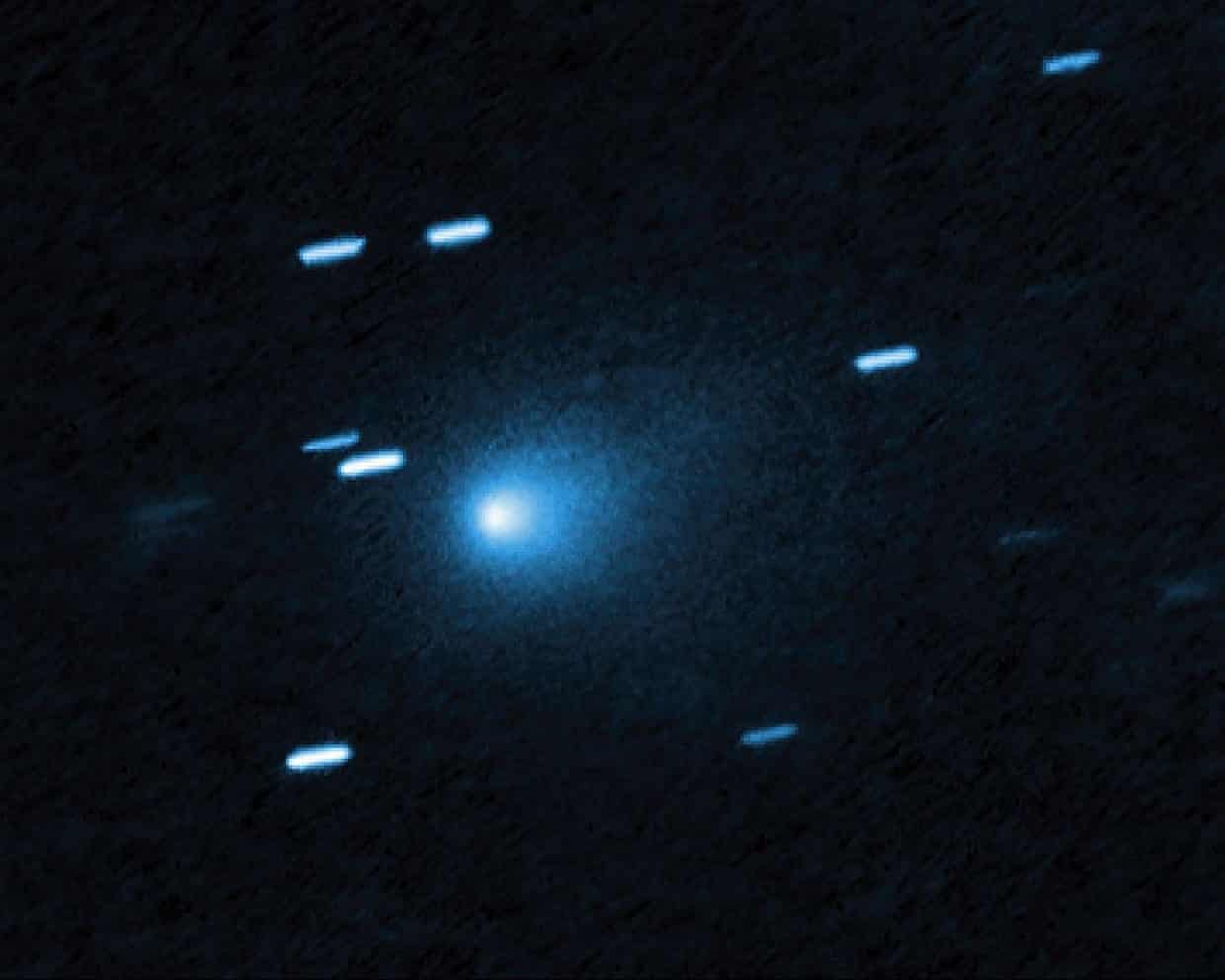
New research suggests that an interstellar comet that passed through our solar system last year could be nearly three times older than the solar system itself, making it potentially one of the oldest objects ever observed in our cosmic neighborhood. The comet, designated 3I/Atlas, is only the third confirmed interstellar object ever detected, and its unique chemical composition has provided scientists with unprecedented insights into the early universe.
A study published on June 22, 2026, in the journal Nature, led by astrochemist Martin Cordiner of NASA's Goddard Space Flight Center, analyzed observations from the James Webb Space Telescope (JWST) and the Atacama Large Millimeter/submillimeter Array (ALMA) in Chile. The results revealed that 3I/Atlas has an unusually high abundance of deuterium—a heavy isotope of hydrogen—with a deuterium-to-hydrogen ratio of 0.98 percent, more than 10 times higher than that found in comets within our solar system. This extreme enrichment typically occurs only in extremely cold environments, suggesting the comet formed at temperatures below -243 degrees Celsius (-405.4 degrees Fahrenheit).
Further isotopic analysis of carbon in 3I/Atlas showed a high ratio of carbon-12 to carbon-13, indicating that the comet formed from material that had not been heavily enriched by generations of stellar births and deaths. This points to an origin during the universe's 'cosmic noon' period of intense star formation, approximately 10 to 12 billion years ago. The study's authors estimate the comet could be up to 12 billion years old, making it significantly older than our 4.5-billion-year-old solar system.
"This was a unique opportunity to study an ancient object from the distant galaxy, probably pre-dating our Sun and solar system," Cordiner told the European Space Agency. "On the one hand, we get direct insight into that distant time and place, and on the other, we learn something about how unusual our own solar system may be." The high deuterium levels imply the comet's ice formed in a deeply frozen environment, likely far from the warmth of a star, and that its water was not reprocessed into the type of ice familiar on Earth.
The comet was first spotted on July 1, 2025, by the NASA-funded ATLAS (Asteroid Terrestrial-impact Last Alert System) telescope, and it prompted widespread interest, including speculation from Harvard professor Avi Loeb that it might be an alien spacecraft. However, both NASA and the SETI Institute have dismissed this possibility, with SETI reporting no evidence of extraterrestrial technology. As 3I/Atlas now leaves the solar system forever, astronomers anticipate that future surveys, particularly with the Vera C. Rubin Observatory in Chile, will discover many more such interstellar visitors, offering further opportunities to understand the galaxy's history.
Topics
Why This Matters
Understanding 3I/Atlas's ancient origins reshapes our knowledge of the early universe and planetary formation processes. The comet's high deuterium levels reveal conditions in the cosmic noon era, offering direct evidence of how our solar system differs from other planetary systems. For readers, this discovery demonstrates how modern telescopes like JWST unlock secrets of objects billions of years old, advancing fundamental questions about where Earth's water and organic materials came from and whether our solar system is typical or exceptional.
Timeline & Sources
Jan 1, 2017
WireFirst interstellar object 1I/'Oumuamua detected.
Jan 1, 2019
WireSecond interstellar object 2I/Borisov detected.
Jul 1, 2025
WireComet 3I/Atlas first observed by ATLAS telescope.
Jun 22, 2026
WireStudy published in Nature revealing comet's age up to 12 billion years.
Entities
Sources
- Interstellar comet may be oldest object seen in our solar system, scientists sayThe GuardianMediaJun 22, 2026
- Webb finds clues to ancient origin of Comet 3I/ATLASEuropean Space AgencyMediaJun 23, 2026
- The Chemistry of Interstellar Comet 3I/ATLAS Is Unlike Anything We've Ever SeenScienceAlertMediaJun 22, 2026