
Today·Emerging
Follow-up 3h ago6
95%
Atlético Madrid hosts Osasuna in LaLiga matchday 6; Atletico seeks rhythm after recent loss
Atlético de Madrid hosts Osasuna on matchday 6 of LaLiga on Wednesday, 16 September at the Riyadh Air Metropolitano. Atlético seek to build on a recent 1–0 away victory over Real Sociedad, while Osasuna arrive after two consecutive defeats and with key midfield injuries, including Moi Gómez ruled out with a thigh muscle injury.
Quick Facts
- LaLiga matchday 6 fixture
- Atlético seeking to maintain form after 1–0 victory over Real Sociedad
- Osasuna coming off two consecutive defeats (5–2 to Alavés, 0–2 to Espanyol)
- Squad rotations announced for both teams due to fixture congestion
- Osasuna midfielder Moi Gómez ruled out with thigh muscle injury
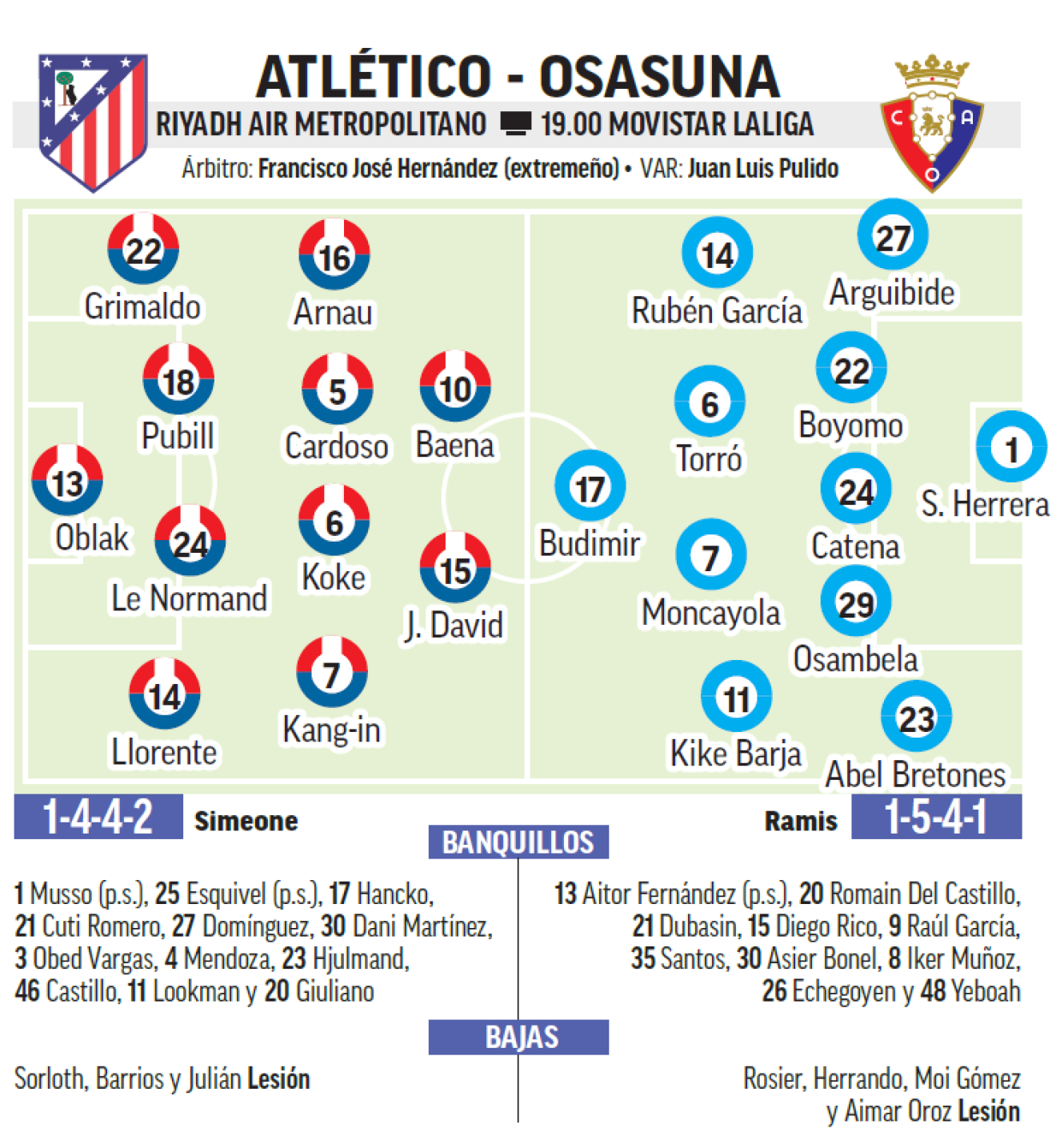
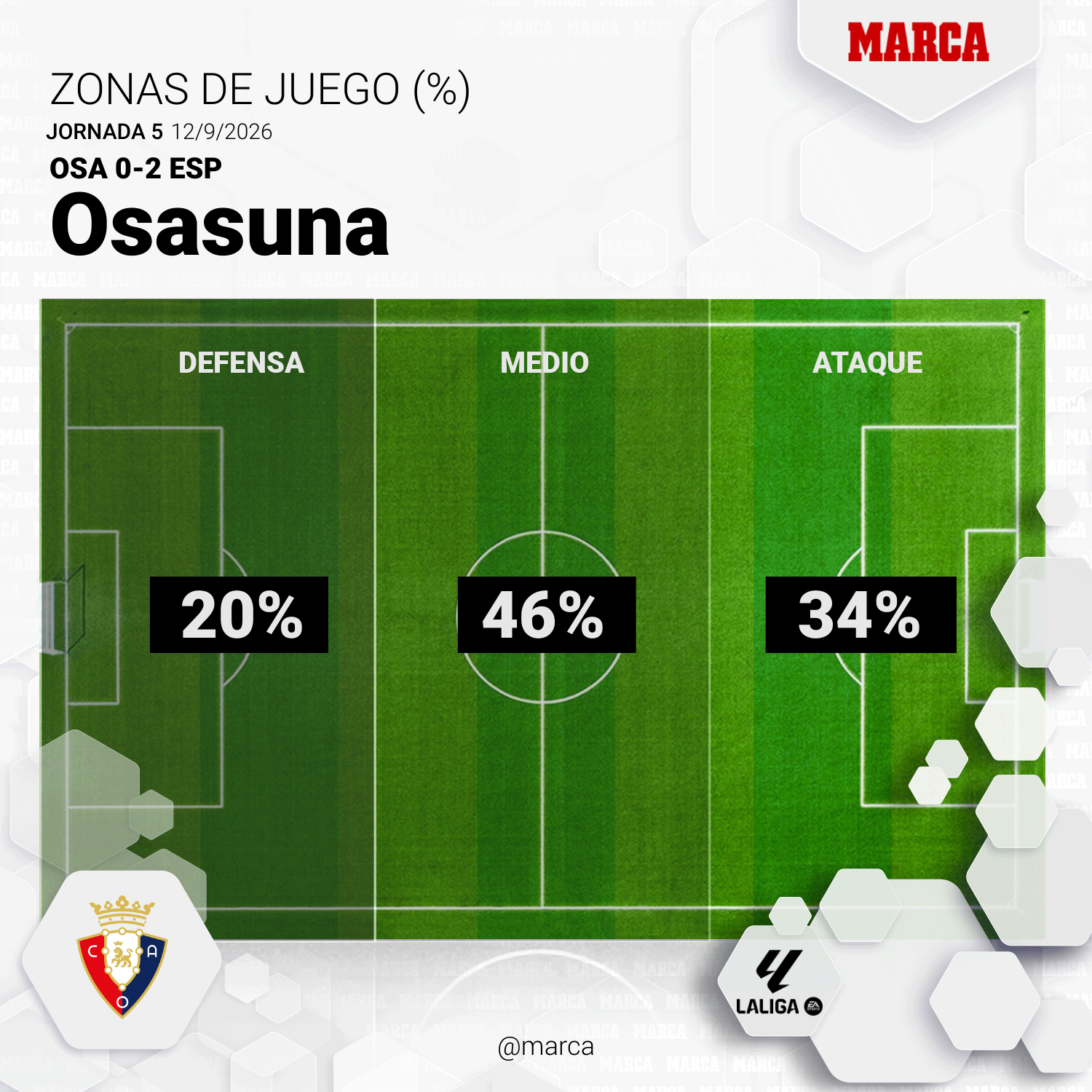
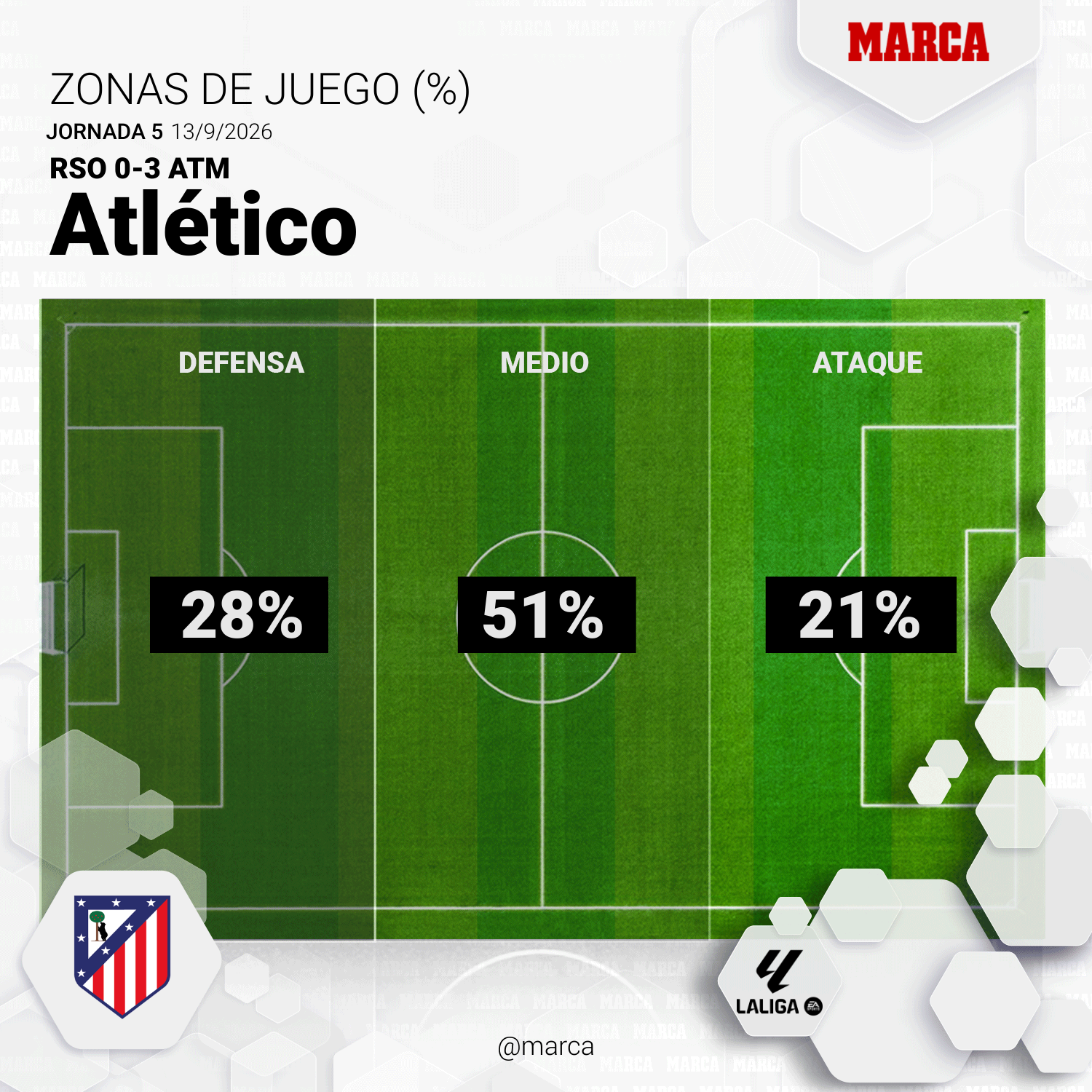
Atlético de Madrid will host CA Osasuna on Wednesday, 16 September 2026, at the Riyadh Air Metropolitano in Madrid for matchday 6 of the 2026–27 LaLiga EA Sports season. The match is scheduled for 14:00 local time (19:00 in one source, reflecting a timing discrepancy in reported kick-off hours). Referee Francisco José Hernández Maeso, a Spanish-born official who has previously directed three Atlético matches with two victories and one draw for the Madrid club, has been assigned to oversee the contest.
Atlético arrive seeking to consolidate recent form after a hard-fought 1–0 away victory against Real Sociedad, with Grimaldo scoring from the penalty spot in the closing stages. The Madrid club aims to maintain momentum at home before facing Real Madrid in the derby the following weekend. However, the team suffered a 3–0 home defeat to Athletic Bilbao prior to the Real Sociedad win and remains without key forwards Julián Álvarez (returning to squad availability after illness), Alexander Sorloth, and midfielder Pablo Barrios. Head coach Diego Simeone has made squad rotation choices, including the absence from the starting eleven of players such as Giuliano Simeone, Marc Pubill, and David Hancko to manage physical demand from a demanding fixture schedule.
Osasuna, currently eighth in the standings, arrives in Madrid weakened by two consecutive defeats: a 5–2 loss to Alavés and a 0–2 home loss to Espanyol. The visiting squad is further hindered by injuries to key midfield personnel, including Aimar Oroz and Moi Gómez (ruled out with a confirmed thigh muscle injury), complicating their creative options. Despite this adversity, Osasuna have found form in attacking moments, with striker Ante Budimir having scored four goals in five recent matches. Manager Luis Miguel Ramis has indicated the team will employ a balanced defensive approach while seeking to take advantage of rare offensive opportunities.
Historically, Atlético dominate the direct matchup: in 46 all-time encounters, Madrid have won 27, drawn 5, and Osasuna have won 14, with a goals tally of 66–41 in Atlético's favour. In 23 home meetings, Atlético have won 15, drawn 4, and lost 4, with a goal difference of 36–17. In the previous 2025–26 season, Atlético won both fixtures (1–0 at home, 2–1 away). The most common scoreline across meetings has been a 1–0 Atlético victory. Betting markets price an Atlético home win at 1.36, a draw at 5.00, and an Osasuna win at 9.00.
The confirmed starting eleven for Atlético de Madrid is: Oblak (goalkeeper); Llorente, Le Normand, Romero, Grimaldo (defence); Kang-In Lee, Koke, Cardoso (midfield); Lookman, Baena, Jonathan David (attack). For Osasuna: Aitor Fernández (goalkeeper); Arguibide, Boyomo, Rockson, Santos, Bretones (defence); Torró, Osambela, Moro, Dubasin (midfield); Raúl García (attack). Jonathan David makes his first start for Atlético, while Osasuna have opted for Aitor Fernández in goal, with Budimir on the bench.
Topics
Why This Matters
Atlético Madrid seeks to consolidate recent form and maintain momentum before facing arch-rivals Real Madrid in the following weekend's derby, a fixture with high competitive stakes in the Spanish league title race. Osasuna, weakened by injuries to key midfield personnel and two consecutive defeats, face a difficult away fixture that will test their ability to create offensive chances without their usual creative playmakers. Betting markets reflect significant disparity in perceived outcome likelihood (Atlético 1.36, draw 5.00, Osasuna 9.00), indicating market confidence in a home victory. The result will impact both teams' positions and momentum heading into subsequent fixtures.
Timeline & Sources
Sep 14, 2026
WireAtlético de Madrid suffered 3–0 defeat to Athletic Bilbao
Sep 15, 2026
WirePre-match squad announcements and team sheets released
Sep 16, 2026
WireOsasuna suffered 5–2 loss to Alavés and 0–2 loss to Espanyol in prior matches
Sep 16, 2026
WireAtlético de Madrid vs Osasuna matchday 6 fixture scheduled to begin at Riyadh Air Metropolitano
Sep 21, 2026
WireAtlético de Madrid faces Real Madrid in derby (following weekend)
Sources
- 🚨XIs confirmados: El Metropolitano exige regularidad previa a la gran citaYahooMediaSep 16, 2026
- Atlético - Osasuna, en directo | Última hora de LaLiga EA Sports hoy en vivoMARCAMediaSep 16, 2026
- Convocatoria y árbitro del Atleti - OsasunaVAVEL.comMediaSep 16, 2026
- Atlético de Madrid x Osasuna: odds, palpites e onde assistirLANCE!MediaSep 16, 2026
- Palpite Atlético de Madrid x Osasuna - LaLiga - 16/09/26MetrópolesMediaSep 16, 2026
- Atlético de Madrid x Osasuna: Palpites, odds e apostas – La Liga – 16/09/2026NETVASCOMediaSep 14, 2026