Emerging
Published Jun 23, 2026Updated Jun 24 Major4
100%
China's LineShine Supercomputer Tops Global Rankings, Marking First Chinese Lead Since 2017
China's LineShine supercomputer, developed in Shenzhen, has claimed the top position in the global TOP500 rankings with 2.198 exaflops of performance, surpassing the U.S. El Capitan system and marking the first Chinese-led ranking since 2017. The system uniquely operates using conventional CPUs rather than specialized AI chips, demonstrating China's technological autonomy in computing system design. Experts note the achievement reflects progress in conventional computing architecture rather than necessarily signaling AI leadership, with LineShine ranking fourth in AI-specific benchmarks.
Quick Facts
- LineShine supercomputer claimed top position in TOP500 rankings
- Surpassed U.S. El Capitan system by over 20% in performance
- Achieved 2.198 exaflops performance rating
- Operates using conventional CPUs without GPU processors
- Ranked fourth in AI-specific benchmark tests
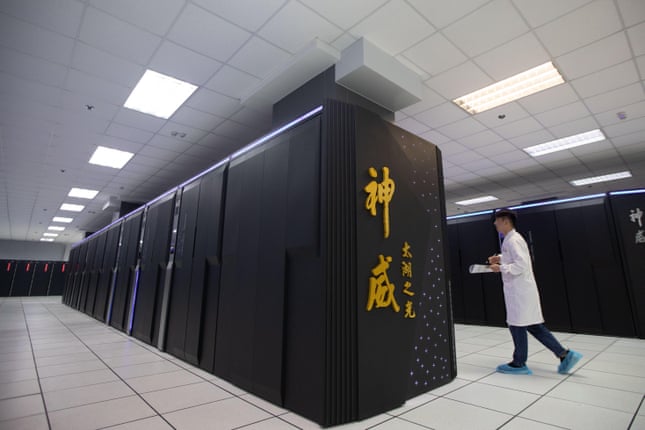
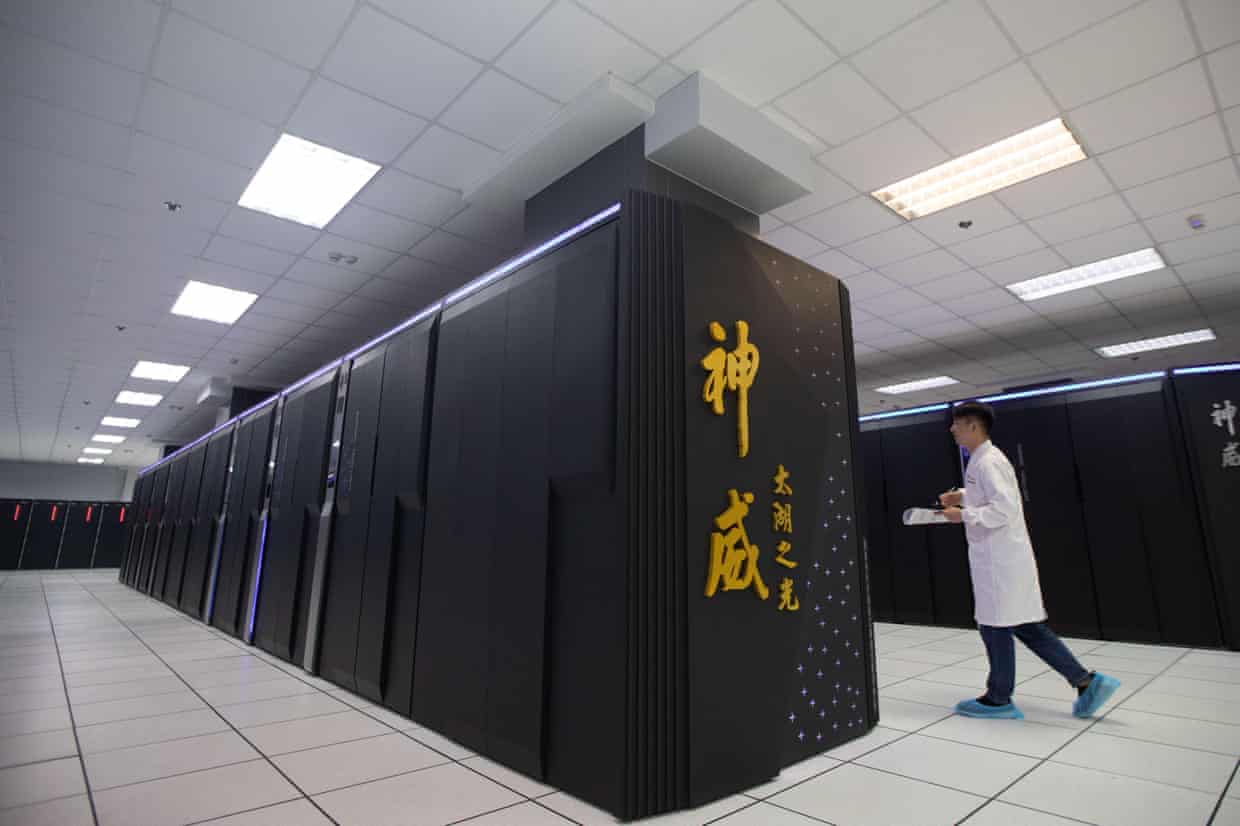
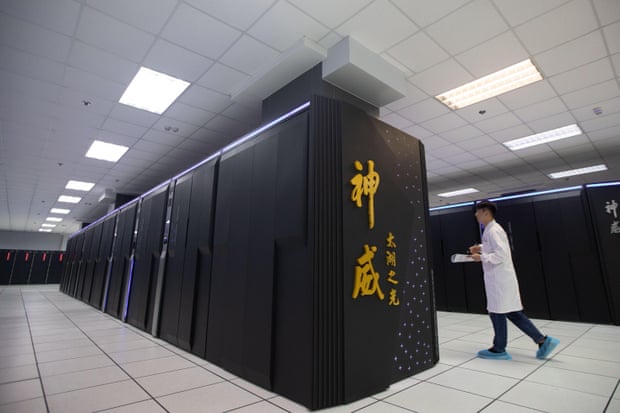
China has reclaimed the top position in the global TOP500 supercomputer rankings with LineShine, a system developed by the National Supercomputing Center in Shenzhen. The achievement, announced on Tuesday at the ISC2026 conference in Hamburg, marks the first time since 2017 that a Chinese supercomputer has led the rankings. LineShine achieved a performance of 2.198 exaflops, enabling it to perform more than 2 quintillion calculations per second, surpassing the U.S. El Capitan supercomputer at Lawrence Livermore National Laboratory in California, which has held the top position since November 2024.
A distinctive feature of LineShine is its reliance entirely on conventional CPUs rather than specialized graphics processing units (GPUs) commonly used in high-performance computing. The system comprises approximately 14 million processor cores distributed across 90 hardware cabinets and requires 42.2 megawatts of electricity to operate. The processor design is based on instruction sets licensed from Arm Holdings, a British company owned by SoftBank. According to Jack Dongarra, a Tennessee professor and TOP500 organizer, this architecture represents a novel approach that could demonstrate a path toward better integration of artificial intelligence with traditional scientific computing tasks.
Experts have noted important nuances regarding the achievement. While LineShine ranks first in the TOP500 benchmarks, it places only fourth in AI-specific performance metrics that more closely resemble contemporary artificial intelligence workloads. Analysts and researchers emphasize that the achievement reflects China's desire to demonstrate technological autonomy and self-sufficiency in computing system design, rather than necessarily indicating leadership in the global AI competition. The submission itself carries geopolitical significance; China had paused TOP500 submissions after 2023, and the decision to submit LineShine now signals intent to gain international recognition for domestic semiconductor and system design capabilities.
The ascendancy of LineShine has intensified ongoing U.S.-China technological competition. U.S. officials and security analysts have expressed concerns about potential loopholes in export controls governing standard CPUs and semiconductor manufacturing equipment. Researchers suggest that China's success using conventional processors rather than GPUs may demonstrate a pathway to circumvent existing U.S. trade restrictions on advanced chips. In response to such developments, the Trump administration has announced initiatives including the Genesis Plan, aimed at enhancing American supercomputing capabilities through collaboration between national laboratories and private companies to accelerate AI and scientific research.
The TOP500 rankings remain one of the most closely watched indicators of national technological capability, historically dominated by the United States. However, foreign systems have periodically achieved top positions; Japan, for instance, led the rankings from 2020 to 2022. The current rankings place El Capitan second, followed by other U.S. systems at Tennessee and Illinois national laboratories. Germany's Jupiter supercomputer ranks fifth. Beyond the top five, only a few other systems worldwide have achieved exascale performance, underscoring the technological significance of LineShine's achievement.
Why This Matters
LineShine's top position signals China's renewed capability to design advanced computing systems using conventional processors, which may enable circumvention of existing U.S. semiconductor export controls and reshape global technological competition. For readers, this matters because supercomputing leadership directly impacts national competitiveness in AI research, climate modeling, and military applications—areas critical to geopolitical influence. The achievement has already prompted the Trump administration to announce the Genesis Plan to accelerate U.S. supercomputing, potentially affecting R&D funding, tech partnerships, and international trade policy in the coming years.
Timeline & Sources
Jan 1, 2017
WireLast Chinese supercomputer held top position in TOP500 rankings
Jan 1, 2023
WireChina paused submissions to TOP500 rankings
Jun 23, 2026
WireLineShine announced as world's fastest supercomputer at ISC2026 Hamburg conference
Jun 24, 2026
WireReporting and analysis of LineShine achievement published globally