
Yesterday·Geo
Follow-up 3h ago Major6
100%
Pakistan Suspends Khyber Pakhtunkhwa Government, Imposes Emergency Rule
Pakistan's President Asif Ali Zardari imposed emergency rule in Khyber Pakhtunkhwa province on October 11, suspending its PTI-led government following a federal cabinet recommendation citing the province's "deliberate disengagement" from counterterrorism efforts. The move, which places the province under the governor's authority, comes as the opposition PTI leads a march demanding the release of jailed former Prime Minister Imran Khan and follows failed government-opposition talks over security policy.
Quick Facts
- Emergency rule imposed under Articles 232 and 234
- Provincial government suspended
- 11-member advisory council formed to run provincial affairs
- Pakistan Army deployment authorized in aid of civil power
- Internet and mobile services disrupted in parts of Peshawar
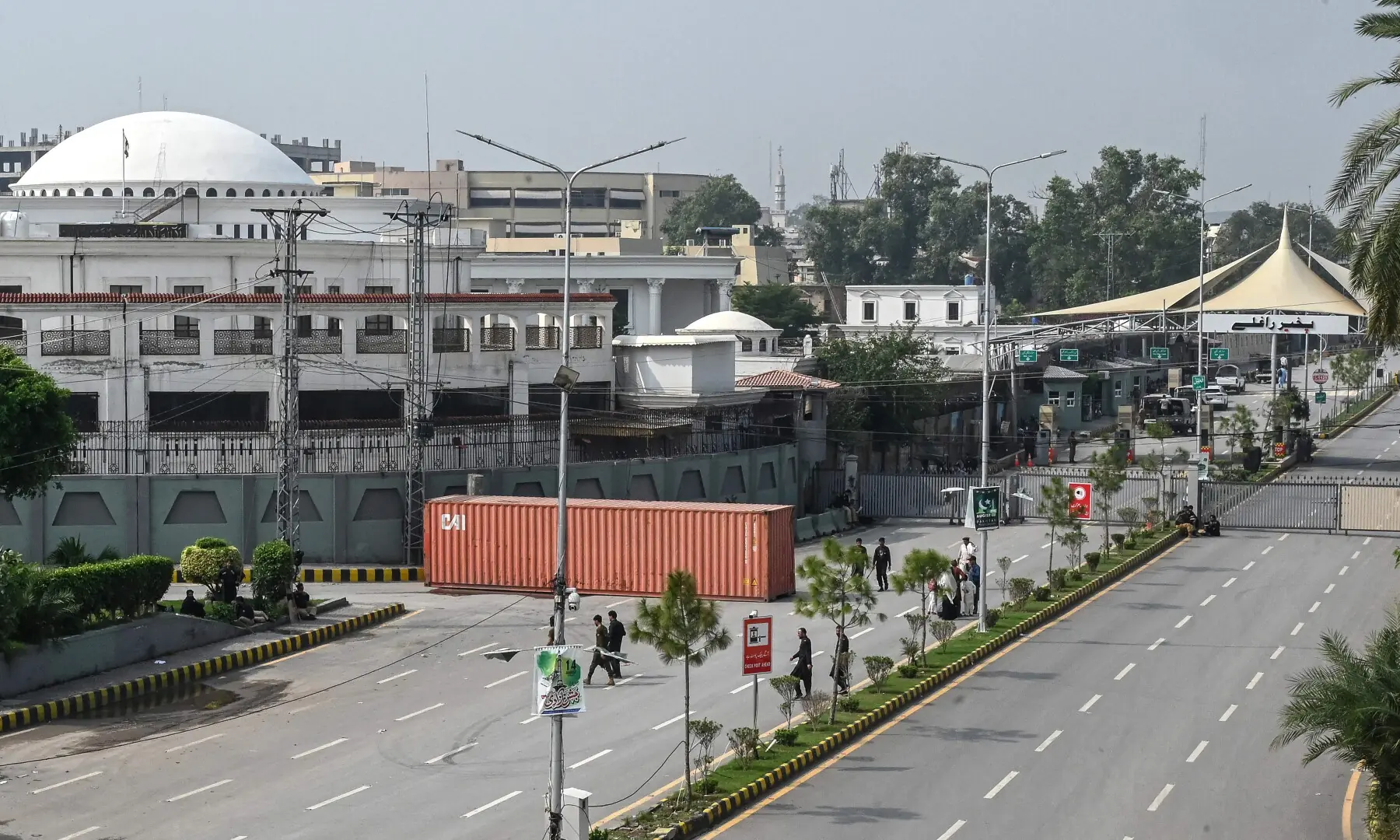

Pakistan's President Asif Ali Zardari imposed emergency rule and suspended the provincial government of Khyber Pakhtunkhwa on Sunday, October 11, invoking Articles 232 and 234 of the constitution. The decision followed a federal cabinet recommendation citing the provincial government's "deliberate disengagement from the fight against terrorism." Prime Minister Shehbaz Sharif chaired the emergency cabinet meeting that led to the recommendation, which the president approved within hours.
The emergency suspension places Khyber Pakhtunkhwa under the authority of the provincial governor, who will oversee an 11-member advisory council to run provincial affairs. The arrangement is initially set for six months. The move grants sweeping administrative powers to the federal government and authorizes the deployment of Pakistan Army troops in the province. Internet and mobile services were disrupted in parts of Peshawar, and authorities placed shipping containers to block roads and deployed additional security forces across the capital Islamabad and neighboring Rawalpindi.
The emergency came amid escalating political tensions between the federal government, led by the Pakistan Muslim League-Nawaz (PML-N), and Khyber Pakhtunkhwa's government run by the Pakistan Tehreek-e-Insaf (PTI) party of imprisoned former Prime Minister Imran Khan. The provincial Chief Minister Sohail Afridi has been leading a long march through Khyber Pakhtunkhwa to demand Khan's release; officials claimed Afridi was taken into custody following the emergency declaration. Government-opposition talks on October 3 failed to resolve disagreements over counterterrorism policy and other political demands.
The PTI and government representatives have been at odds over multiple issues. The Interior Minister alleged that delays in decision-making and poor coordination had allowed militants to gain ground; Law Minister Azam Nazeer Tarar stated militant violence in the province had increased by 196% in recent years. The federal government has accused the provincial government of neglecting counterterrorism efforts while focusing on Khan's release and has opposed the PTI's calls for dialogue with the Afghan Taliban and resistance to military operations.
PTI spokesperson Zulfiqar Bukhari condemned the emergency as a "disguised coup" and a removal of "the only legitimately elected government of Pakistan," stating it would lead to "further bloodshed, instability and collateral damage." He alleged the federal government never intended genuine negotiations. Chief Minister Afridi rejected the move as illegal and vowed not to accept it, stating that if the emergency proceeded, the march would redirect toward Islamabad's D-Chowk. Khan, imprisoned since August 2023 on corruption and other charges he and his party describe as politically motivated, retains substantial popular support despite his incarceration.
Why This Matters
Pakistan's constitutional suspension of an elected provincial government affects 40+ million residents in a strategically critical region facing documented increases in militant violence. The emergency grants federal authority over security operations, military deployment, and provincial administration for six months initially. The move reshapes power distribution between Pakistan's federal government and the only opposition-led province, with measurable impacts on counterterrorism coordination, political detention policy, and federal-provincial resource allocation. International observers and neighboring governments monitor Pakistan's constitutional stability and internal security capacity.
Sources
- Pakistan Khan March Khyber Pakhtunkhwa 3fee40be73c3f5632f2be3204e9c47f8apWireOct 11, 2026
- Pakistan Politica Khan Protestas 29f7bd45d86f82010ecae29cdb2af3a8apWireOct 11, 2026
- CM Afridi says will not accept 'illegal move' of governor's rule or emergency in KPDawnMediaOct 10, 2026
- Emergency, governor's rule imposed in KP as president approves cabinet decisionDawnMediaOct 11, 2026
- Pakistan imposes emergency rule in province governed by Imran Khan’s partyAl JazeeraMediaOct 11, 2026
- Pakistan imposes emergency in opposition-ruled Khyber Pakhtunkhwa provinceArab News PKMediaOct 11, 2026