Geo
Jun 19, 20261
69%
Kazakhstan's Trade Surplus Shrinks as Import Surge and Declining Exports Pressure Tenge
Kazakhstan's trade surplus contracted by 24 percent in early 2026 as imports accelerated 11.3 percent while exports grew only 5 percent, driven by falling oil revenues and strong domestic demand. Analysts project a 7 billion dollar current account deficit that will continue pressuring the tenge, even as exports to Asian markets expand significantly.




Quick Facts
Who
Halyk Finance
What
Trade surplus contraction
When
January–April 2026
Where
Kazakhstan
- Trade surplus contraction
- Import acceleration outpacing export growth
- Mineral and fuel export decline
- Currency pressure on tenge
- Geographic reorientation toward Asian markets
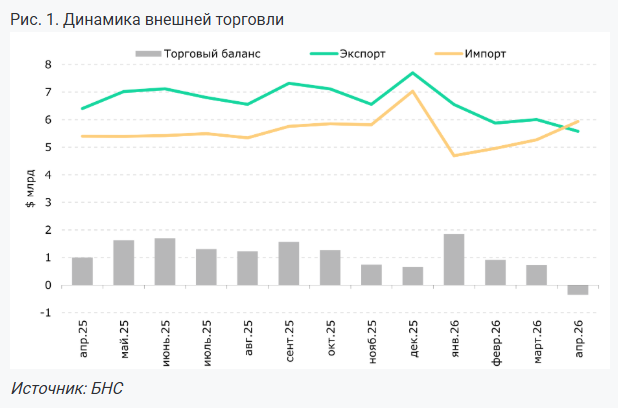
Kazakhstan faces mounting external trade pressures in 2026, marked by a substantial contraction in its trade surplus and structural economic imbalances that threaten currency stability. In the first four months of 2026, the trade surplus declined by nearly 24 percent to 3.1 billion dollars, despite overall external trade turnover reaching 44.9 billion dollars. Exports grew only modestly at 5 percent to 24 billion dollars, while imports surged 11.3 percent to 20.9 billion dollars, with April alone recording a trade deficit of 400 million dollars.
The deterioration reflects two interconnected challenges: declining energy revenues and robust domestic demand. Oil and fuel exports fell sharply by 13.3 percent to 11.2 billion dollars, and mineral products overall dropped 4.6 percent to 13.8 billion dollars, together accounting for approximately 44 percent of export earnings. Meanwhile, machinery and equipment purchases—the largest import category at 9.2 billion dollars—climbed 13.2 percent, alongside rising imports of chemicals and food products. Assan Kurmanbekov, a macroeconomics expert at the Asan analytical centre, warned that even with Brent crude oil forecast at 85 dollars per barrel, Kazakhstan faces a projected current account deficit of 7 billion dollars for 2026, maintaining downward pressure on the tenge exchange rate.
Geographic trade patterns also shifted markedly, with Asia's share of Kazakhstan's external trade expanding to 36.8 percent from 32 percent year-on-year. Exports to Asian markets surged 48 percent, driven by exceptional growth to China (up 38.2 percent), Turkey (up 54.8 percent), Uzbekistan (up 44 percent), and South Korea (up over 1,000 percent). These gains, along with increased shipments of agricultural products (up 38.8 percent), metals (up 23 percent), and chemicals (up 17.2 percent), only partially offset the decline in commodity exports, illustrating Kazakhstan's limited ability to substitute lost energy revenues through non-traditional sectors.
Why This Matters
Kazakhstan's shrinking trade surplus and widening current account deficit pose direct risks to exchange rate stability and economic resilience. For investors and businesses operating in or trading with Kazakhstan, the projected 7 billion dollar current account shortfall signals sustained currency weakness that will affect import costs, debt servicing, and profit repatriation. The structural shift—falling energy revenues without sufficient non-commodity export growth—indicates structural economic vulnerability rather than cyclical weakness, making medium-term currency depreciation likely and requiring hedging or strategy adjustments for regional trade flows.
Timeline & Sources
Jan 1, 2026
WireAnalysts project full-year current account deficit of 7 billion dollars with sustained tenge pressure; Brent crude forecast at 85 dollars per barrel