
AI
Published Jun 25, 2026Updated Jun 27 Major4
89%
Herculaneum Scroll Decoded for First Time Using AI and X-Ray Technology
Researchers have successfully decoded PHerc. 1667, a carbonized Herculaneum scroll, using AI and X-ray imaging, becoming the first to fully read a Herculaneum papyrus end-to-end since its burial by Mount Vesuvius in 79 AD nearly 2,000 years ago. The scroll contains a Stoic philosophical treatise on ethics spanning approximately twenty-two columns of text dating to the second or third century BC. This breakthrough, emerging from the Vesuvius Challenge competition, demonstrates a replicable virtual unwrapping technique that promises to unlock the intellectual contents of hundreds of fragile scrolls that have long remained physically preserved but unreadable.
Quick Facts
- Virtual unwrapping of carbonized papyrus scroll PHerc. 1667
- Recovery and transcription of approximately 22 columns of Stoic philosophical text
- X-ray phase-contrast microtomography scanning
- Machine learning identification of faint ink traces
- Independent confirmation of readings from PHerc. Paris 4 using higher-resolution imaging
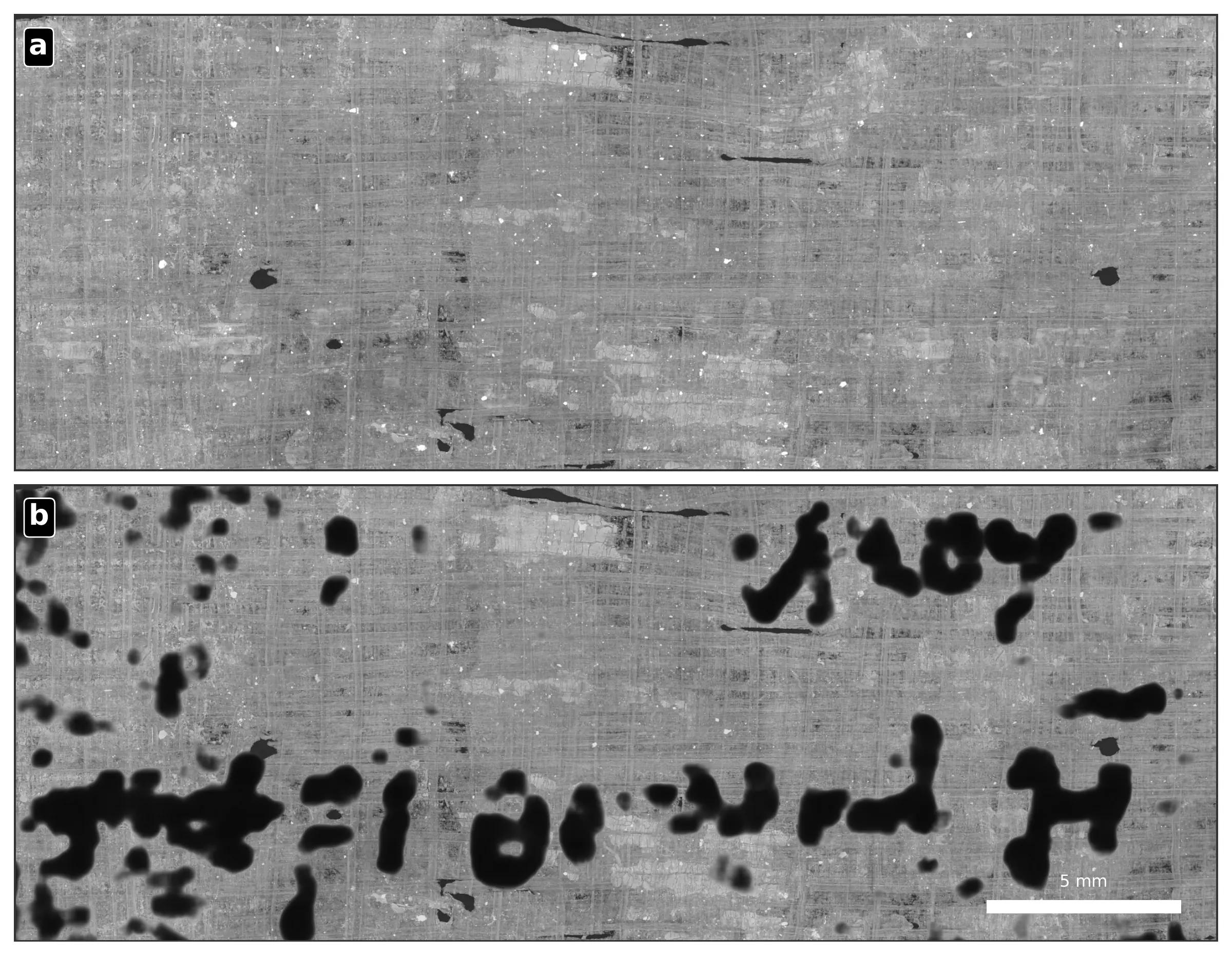
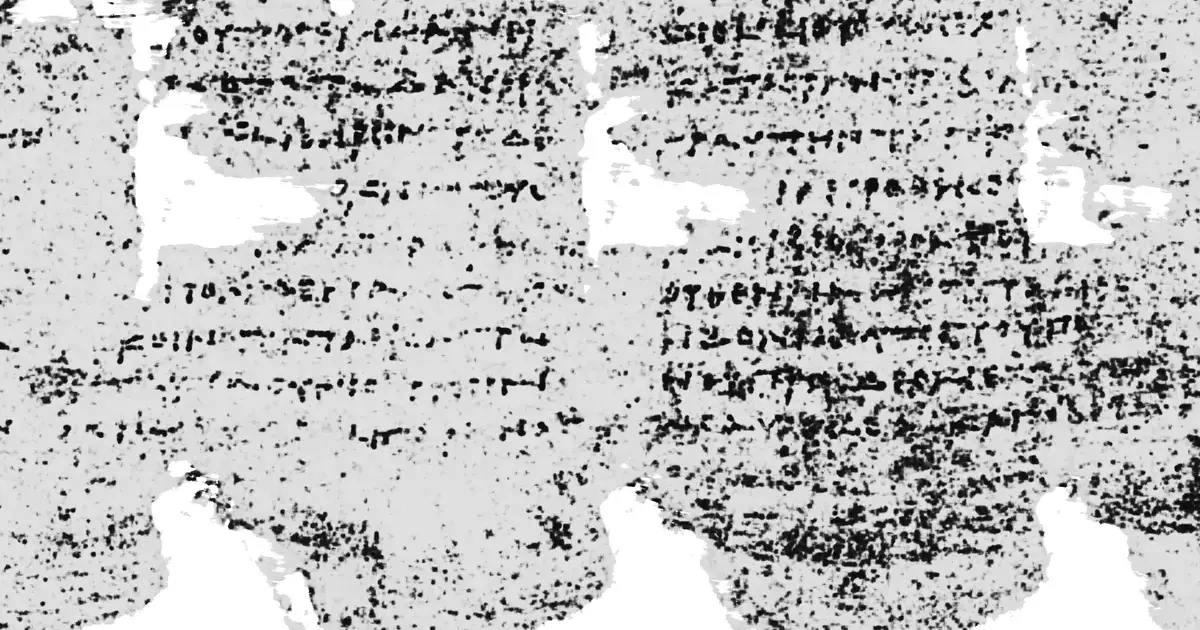
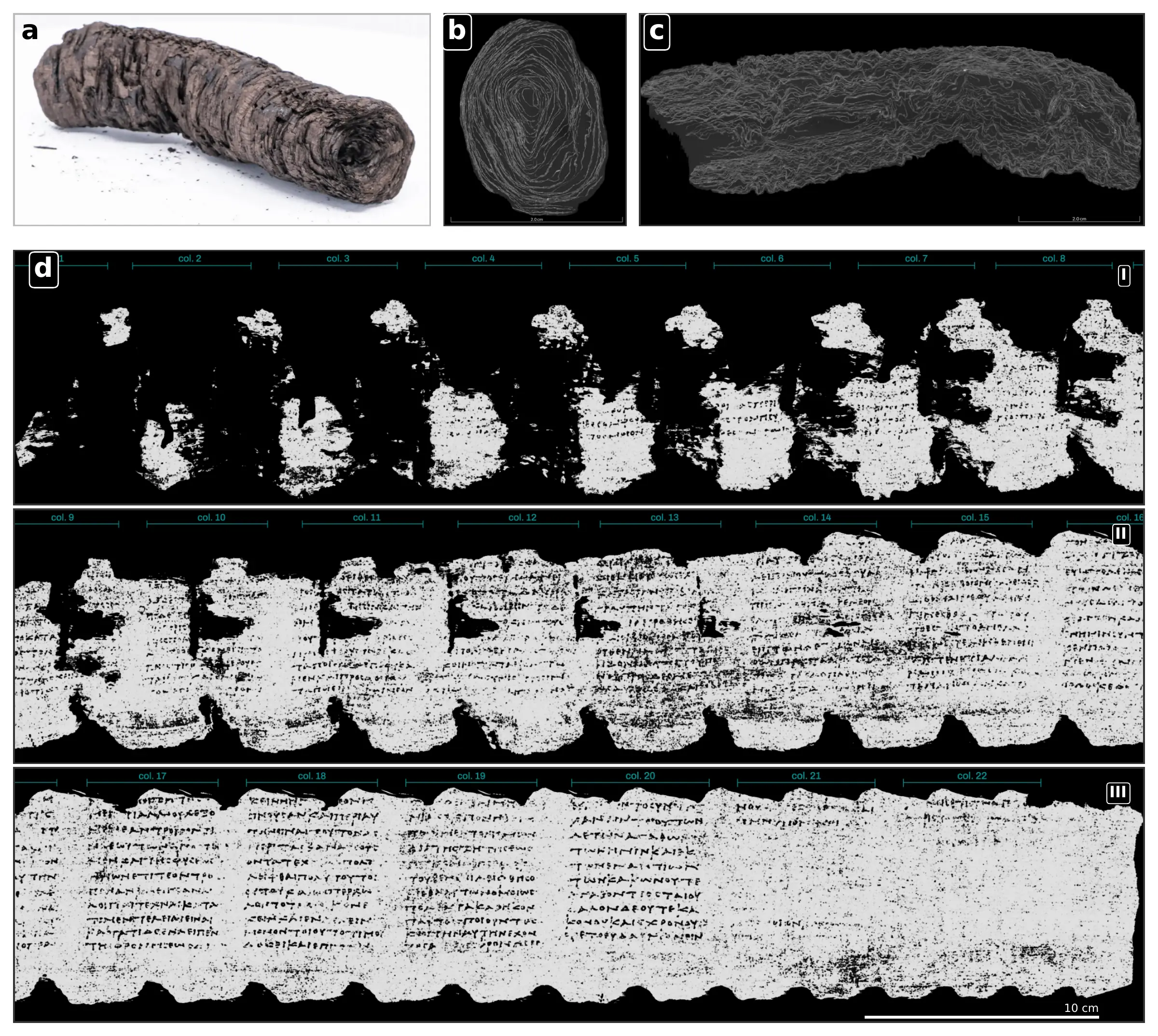

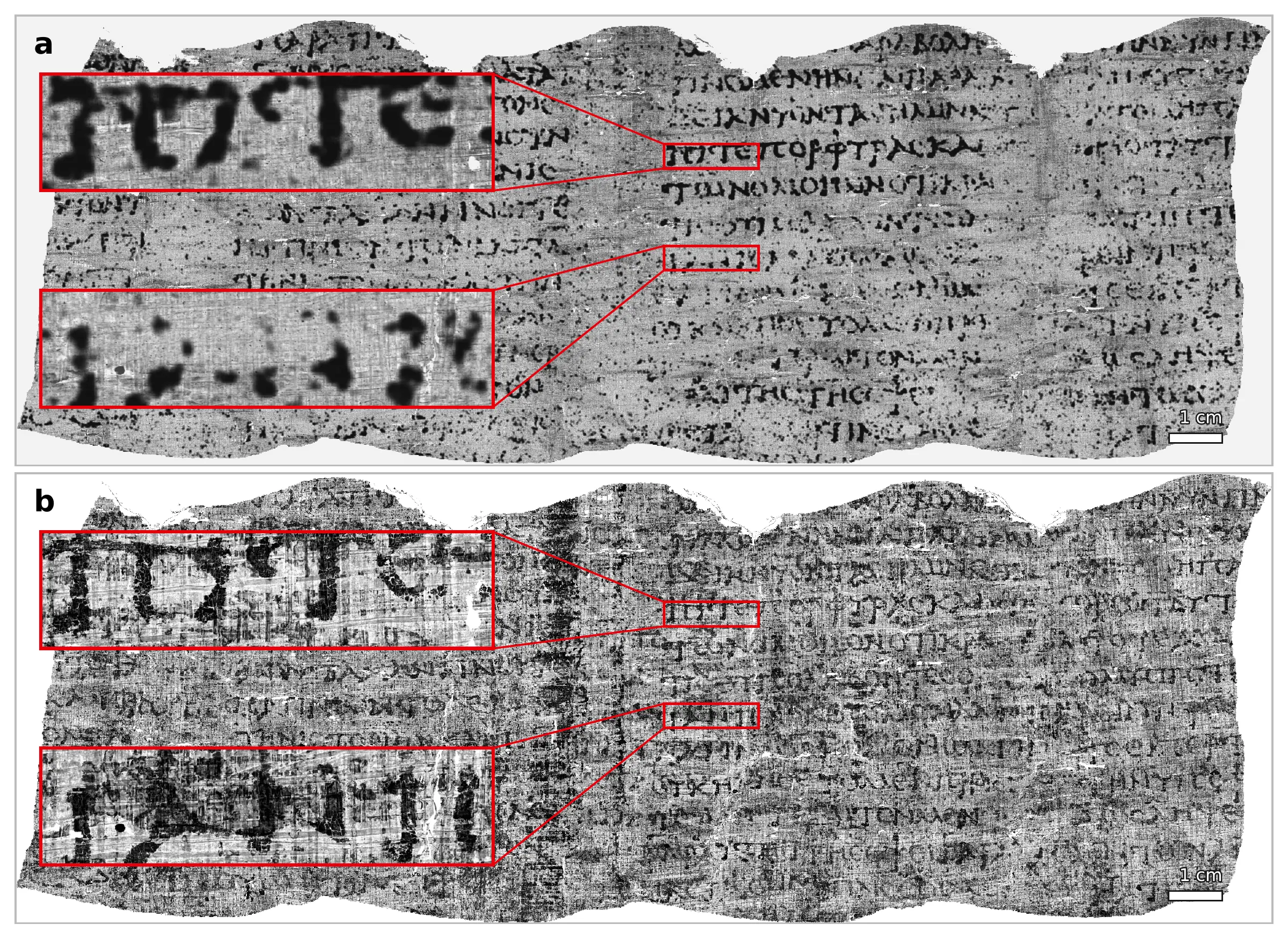
Scientists have successfully decoded PHerc. 1667, a carbonized papyrus scroll from Herculaneum, using advanced X-ray imaging and artificial intelligence, marking the first complete digital unwrapping and reading of a Herculaneum scroll in nearly 2,000 years. The scroll, discovered in an ancient Roman villa believed to have belonged to Julius Caesar's father-in-law, survived the eruption of Mount Vesuvius in 79 AD but remained physically too fragile to open without destruction. Using high-resolution phase-contrast X-ray microtomography at the European Synchrotron Radiation Facility in Grenoble and machine learning algorithms trained to identify faint ink traces, researchers recovered and transcribed the lower portions of approximately twenty-two columns of text, revealing a philosophical treatise on Stoic ethics dating to the second or third century BC.
The recovered text discusses key Stoic concepts including "horme" (impulse) and "phronesis" (practical wisdom), with passages warning against excessive impulse and emphasizing the importance of understanding human nature and moral progress. The identification of Aristocreon—nephew and disciple of the Stoic philosopher Chrysippus—in the final preserved column, combined with the language and themes throughout, firmly places the work in a Stoic philosophical context. Although the papyrus damage creates gaps in the text, sustained arguments across multiple columns can now be followed continuously for the first time, a transformational shift from previous fragmentary readings of isolated words and patches.
This breakthrough emerged from the Vesuvius Challenge, an initiative launched in 2023 by University of Kentucky computer scientist Brent Seales and entrepreneurs Nat Friedman and Daniel Gross to encourage worldwide researchers to decipher the scrolls without physical unwrapping. Alongside the complete reading of PHerc. 1667, researchers have recovered more than seventy columns of text from a second scroll (PHerc. Paris 4) using higher-resolution imaging that makes ink directly visible in three-dimensional X-ray data, and have identified the title and author of a third scroll (PHerc. 139) as "Philodemus, On Gods, Book 8," revealing an eighth book of Philodemus's work previously unknown to scholarship.
The methodology has proven replicable and scalable, validated through independent confirmation that readings match across different data sources. Federica Nicolardi, an assistant professor in papyrology at the University of Naples Federico II who led the papyrological team, emphasized that the scroll was previously deemed unreadable when partially opened in the 1980s, receiving a readability score of zero. The virtual unwrapping reveals an area measuring approximately 1.5 meters (4.9 feet) across columns, allowing scholars to read complete philosophical arguments rather than fragmentary evidence.
The discovery unlocks intellectual access to texts that have been physically preserved but intellectually inaccessible for nearly two millennia. Of the approximately 1,800 papyri discovered in the Herculaneum library during the 18th century, only about 10 percent have been successfully read thus far, with more than 600 scrolls remaining unopened. Researchers now believe the entire collection can be deciphered using the refined virtual unwrapping technique, and the University of Kentucky has announced a new $1 million prize offering to anyone able to decipher a complete scroll by June 2027, aiming to accelerate the decoding of this unique surviving classical library.
Why This Matters
This breakthrough transforms access to one of history's rarest intellectual archives: nearly 1,800 ancient scrolls buried by Mount Vesuvius in 79 AD. Until now, fewer than 10 percent have been successfully read. The virtual unwrapping technique eliminates the destructive dilemma of physical conservation versus scholarship—scholars can now recover complete philosophical arguments from carbonized texts without opening them, accessing centuries-old knowledge that informs our understanding of Stoic ethics and Roman intellectual life. With over 600 unread scrolls remaining, this replicable methodology could unlock thousands of pages of ancient Greek and Latin texts within years, fundamentally expanding our knowledge of classical thought.
Timeline & Sources
Jan 1, 1969
WirePhysical unwrapping attempt made on PHerc. 1667
Jan 1, 2023
WireThree students use machine-learning algorithms to extract ancient Greek letters from virtually unwrapped scroll; win $1 million Vesuvius Challenge prize; breakthrough sparks rapid methodological advancement
Jun 25, 2026
WireResearch team announces complete virtual unwrapping and reading of PHerc. 1667 and recovery of text from PHerc. Paris 4 and PHerc. 139
Jun 26, 2026
WireMajor breakthrough announced at conference in Naples, Italy; media outlets report complete scroll decoding achievement
Sources
- A Herculaneum scroll has been read for the first timescrollprize.orgMediaJun 25, 2026
- Scientists reveal secrets of ancient scrolls burned by Mount Vesuvius nearly 2,000 years agoNBC NewsMediaJun 26, 2026
- Papyrus scroll burnt to a crisp during Vesuvius eruption deciphered with help of AICNNMediaJun 26, 2026
- Scientists decipher new secrets from ancient scrolls scorched by Vesuvius eruption: "Finally able to read them"CBS NewsMediaJun 26, 2026