
Sep 16·Geo
Follow-up 2h ago4
91%
Bank of Japan raises policy rate to 1.25% in September
The Bank of Japan raised its policy rate to 1.25 percent on September 18, accelerating the pace of increases to every three months as it responds to rising inflation risks from oil prices, yen weakness, and AI-driven cost pressures. The decision aligns with simultaneous rate increases by the Federal Reserve and European Central Bank, the first synchronized move among major economies in 20 years.
Quick Facts
- Policy rate raised from 1.0% to 1.25%
- Third rate increase in three months
- Shortest interval between rate hikes since March 2024
- Decision made by policy committee majority vote
- Synchronous rate increases by U.S. and European central banks


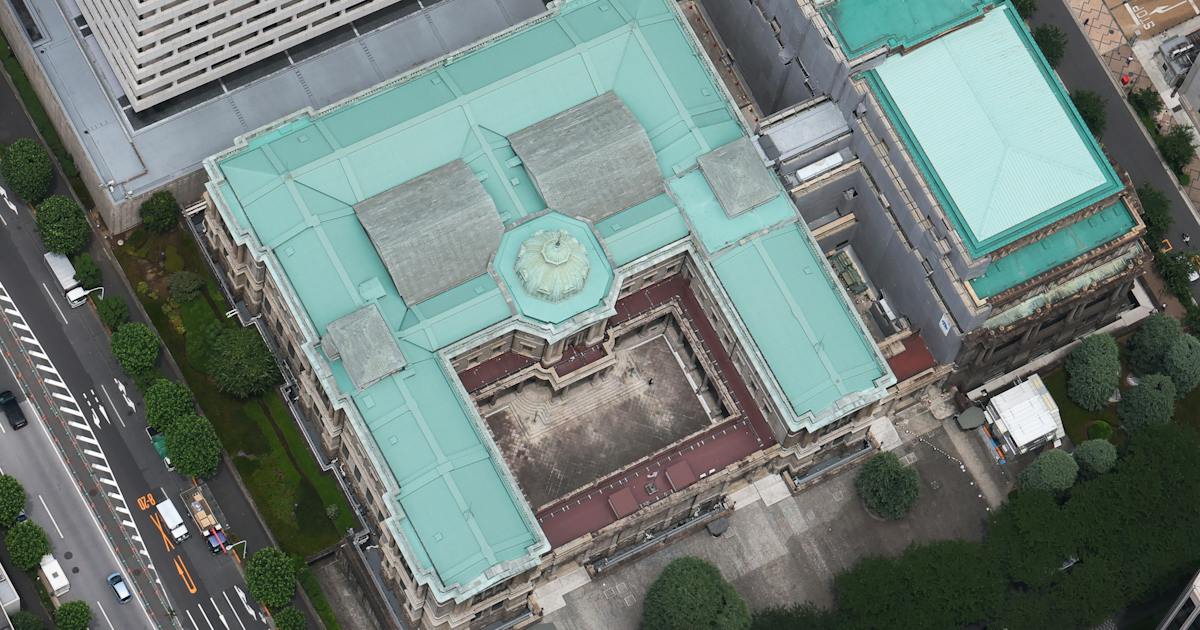
The Bank of Japan decided on September 18 to raise its policy interest rate to 1.25 percent from 1.0 percent, marking the third increase in three months since June and the shortest interval between rate hikes since the central bank began unwinding its massive stimulus program in March 2024. The decision reflects growing concern about inflation risks, particularly as underlying inflation approaches the Bank's 2 percent price stability target.
The rate increase comes as multiple economic pressures push inflation upward. Rising oil prices stemming from Middle East tensions, semiconductor cost increases driven by artificial intelligence-related demand, and yen weakness are all contributing to upward price pressures. The Bank noted that wholesale prices have exceeded 7 percent year-on-year for three consecutive months through June, and consumer prices excluding fresh food and special factors have exceeded the 2 percent target for five consecutive months through July. The Bank's leadership stated that underlying inflation has "come quite close to 2 percent," necessitating precautionary measures against overshooting.
Despite accelerating the pace of rate increases, the Bank characterized the current financial environment as still accommodative. At 1.25 percent, the new policy rate exceeds the lower bound of the Bank's estimated neutral rate range of 1.1 to 2.5 percent, raising questions about whether further increases represent a continuation of "normalization" from abnormally low rates or a shift toward active monetary tightening to suppress demand. The Bank emphasized that the underlying strength of the economy—supported by AI-related investment, government household support measures, and continued accommodative financial conditions—can absorb rate increases without severe damage to growth.
The September decision places Japan in step with major central banks globally. The European Central Bank raised rates on September 10, and the U.S. Federal Reserve did the same on September 16, marking the first synchronized rate increase among the U.S., Japan, and Europe in two decades. Market expectations had firmly priced in the September increase, though future rate-hike frequency remains uncertain. Analysts cautioned against assuming a mechanical three-month cycle, with some describing market expectations as "somewhat ahead of themselves." The Bank's forward guidance and the pace of future increases will likely depend on incoming inflation and economic data.
Why This Matters
The Bank of Japan's acceleration to a three-month rate-hike cycle, combined with synchronized moves by the Federal Reserve and ECB, signals a coordinated shift in global monetary policy. This affects borrowing costs for multinational firms, cross-border capital flows, and currency valuations across major economies. The Japanese rate now exceeds the estimated neutral rate floor (1.1%), raising questions about whether further increases will slow domestic demand growth, particularly in sectors dependent on low financing costs and government stimulus. Investors and exporters face uncertainty about future yen strength and competitive positioning.
Timeline & Sources
Sep 10, 2026
WireEuropean Central Bank raises interest rates
Sep 16, 2026
WireU.S. Federal Reserve raises interest rates
Sep 18, 2026
WireBank of Japan announces policy rate increase to 1.25%