
Today·Emerging
Follow-up 1h ago Major10
96%
Serbian President Vučić Resigns to Run for Prime Minister
Serbian President Aleksandar Vučić resigned on September 27, 2026, to contest parliamentary elections on October 25 as a prime minister candidate, circumventing a two-term presidential limit. Acting National Assembly Speaker Ana Brnabić assumes presidential duties temporarily. Vučić's bid faces competition from the student-backed Student List coalition in what analysts describe as a tight, referendum-like race.
Quick Facts
- Vučić formally resigned as president
- Vučić announced candidacy for prime minister in parliamentary elections
- Brnabić assumes acting presidential duties
- Snap parliamentary elections scheduled
- Presidential election to be held within three months of resignation


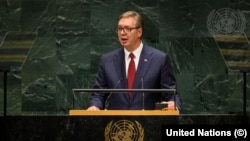

Serbian President Aleksandar Vučić formally resigned on September 27, 2026, announcing his departure during a televised address from the presidential palace in Belgrade. The resignation, announced to the nation and formalized in writing, transfers presidential duties to National Assembly Speaker Ana Brnabić, a senior member of Vučić's Serbian Progressive Party (SNS). Under Serbia's constitution, a presidential election must be held within three months—before December 27.
Vučić's decision to step down enables him to contest snap parliamentary elections scheduled for October 25 as a candidate for prime minister, a position he cannot hold while serving as president. The move circumvents a constitutional two-term limit on the presidency, which would otherwise have prevented him from seeking further political office after his second term ends in May 2027. Vučić, who has held either the office of prime minister or president for the past 12 years, will head the SNS electoral list in the parliamentary contest.
The resignation comes against a backdrop of sustained anti-government and anti-corruption protests that intensified following the November 1, 2024, train station canopy collapse in Novi Sad that killed 16 people. These demonstrations have given rise to the Student List coalition, a youth-backed movement led by 56-year-old cardiologist Ilija Srdanović, which has emerged as a significant political challenger. Sociological polling indicates that the SNS and Student List remain the two leading political forces, though different surveys offer varying predictions about the parliamentary election outcome.
Analysts describe the October 25 contest as a tight race with a referendum-like atmosphere. Vučić has intensified campaigning in recent weeks, conducting televised tours across the country, inaugurating infrastructure projects, announcing social assistance measures, and visiting voters' homes. The SNS faces accusations from opposition parties and nongovernmental organizations of fomenting violence during student protests, while authorities have employed police force and detentions against demonstrators—charges the government disputes. The Student List campaign has employed grassroots methods, with student groups touring the country by bicycle to promote themes of rule of law and anti-corruption.
On September 26, one day before his formal resignation, Vučić spoke by telephone with Russian President Vladimir Putin, informing him of the impending resignation and discussing bilateral relations, the Balkan situation, and the status of the NIS energy company. The leaders emphasized the inadmissibility of external interference in Serbia's electoral processes. Following his resignation, Vučić will serve as an ordinary citizen during the parliamentary campaign. The presidential election itself is not expected to be held until after the October 25 parliamentary vote, and candidates for the presidency have not yet been publicly announced.
Why This Matters
Vučić's resignation and switch to prime minister candidacy resets Serbia's constitutional term limits, enabling him to retain executive office beyond May 2027. The October 25 parliamentary election determines control of Serbia's government and policy direction for the next term. The outcome will affect Serbia's domestic reform agenda, anti-corruption enforcement, and approach to bilateral relations with regional and external actors. Presidential elections must follow within three months, reshaping Serbia's political leadership structure during a period of sustained public protest over governance and accountability.
Timeline & Sources
Nov 1, 2024
WireTrain station canopy collapse in Novi Sad kills 16 people; triggers sustained anti-government protests
Sep 5, 2026
WireSerbian Progressive Party nominates Vučić as head of electoral list and candidate for prime minister
Oct 25, 2026
WireSnap parliamentary elections scheduled
Dec 27, 2026
WireDeadline for presidential election (three months after resignation)
Sources
- Serbia Election Vucic Resigns Students Dc1ac38b8f442bb7e32c339dc7fad069apWireSep 27, 2026
- Президент Сербии Вучич объявил об отставке, но надеется стать премьеромBBCMediaSep 27, 2026
- Urgent: Serbian President Vucic to submit resignationxinhuaMediaSep 27, 2026
- Serbian President Vucic to submit resignationxinhuaMediaSep 27, 2026
- Xinhua News | Serbian President Vucic to submit resignationxinhuaMediaSep 27, 2026
- Союзник России в Европе неожиданно ушел в отставкуURA.RUMediaSep 27, 2026
- Президент Сербии Александр Вучич объявил об отставкеРадио СвободаMediaSep 27, 2026
- Президент Сербии Александр Вучич ушел в отставку в преддверии выборовИнтерфаксMediaSep 27, 2026
- Вучич объявил об отставке с поста президента СербииВедомостиMediaSep 27, 2026
- Vucic announces resignation as Serbian presidenttassMediaSep 27, 2026