Emerging
Jun 22, 20261
60%
GM Deploys 50 Robots at Detroit Factory as 1,300 Workers Remain Laid Off
General Motors installed 50 robots at its Detroit EV factory while 1,300 workers remain laid off, prompting the UAW to warn of automation threatening worker jobs and wages. The deployment reflects broader industry trends toward robotic manufacturing, creating tension between corporate automation strategies and union concerns about worker displacement.
Quick Facts
Who
General Motors (GM)
What
Installation of approximately 50 FANUC robot arms
When
March 2026 (temporary layoffs began)
Where
Factory Zero, Detroit, Michigan
- Installation of approximately 50 FANUC robot arms
- Robots designed to attach vehicle components during assembly
- 1,300 workers remain laid off following March layoffs
- 1,200 additional permanent layoffs in October 2025
- UAW protests against automation without worker recall
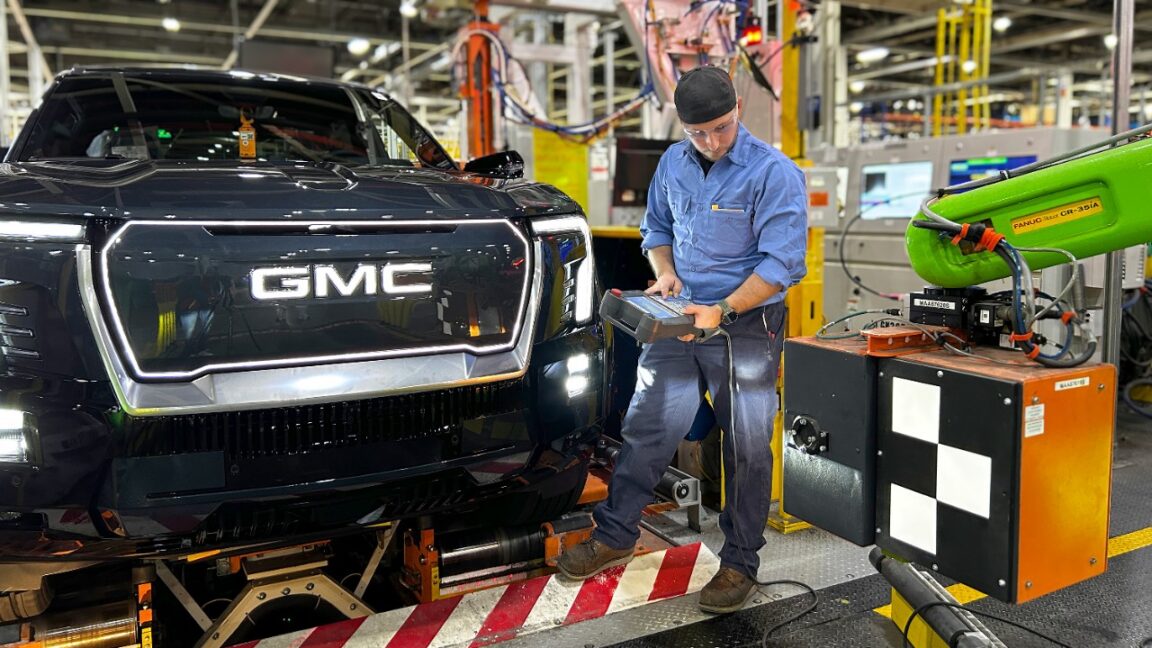
General Motors has installed approximately 50 robot arms at its Factory Zero plant in Detroit, Michigan, escalating tensions with the United Auto Workers union over automation and job security. The FANUC-manufactured robots are designed to attach vehicle components during the assembly process, but their deployment comes as more than 1,300 workers remain out of work following layoffs that began in March and were originally described as temporary.
Union leadership has expressed sharp criticism of the automation investment, arguing that GM could have recalled laid-off workers instead. James Cotton, president of UAW Local 22, stated that over 1,000 union members remain "laid off indefinitely," while Andrew Bergman, a laid-off worker and union organizer, contended that corporate leaders are prioritizing profits over worker welfare. "Technological development has the capability of making work safer for the working class and enabling workers to have a shorter work week without losing pay," Bergman said. "But in the bosses' and billionaires' hands it's used to pad profits and lay off workers."
The robot installation follows permanent layoffs of another 1,200 workers at Factory Zero in October 2025, highlighting an accelerating trend of automation across the US automotive industry. Competitors including Stellantis, Ford, and Hyundai are similarly expanding robotic deployment, with Hyundai planning to introduce Boston Dynamics' Atlas humanoid robots at its Georgia facility by 2028.
The divergence in perspectives on automation became particularly stark during simultaneous events held in Detroit in June. While corporate leaders at the Reindustrialize Summit touted how robots could "empower our industrial base with superhuman manufacturing," UAW President Shawn Fain warned at the UAW Constitutional Convention against "the threat of humanoid robotics and mass automation" undermining worker employment and wages at a time of rising wealth inequality.
Why This Matters
This deployment signals accelerating automation in automotive manufacturing without corresponding worker protections, directly impacting 1,300+ laid-off workers and setting precedent for industry-wide job displacement. For readers in manufacturing regions, this demonstrates the urgency of automation policy debates—particularly as humanoid robots enter production facilities by 2028. Union pushback suggests growing political pressure on corporate automation strategies, which could influence labor negotiations and regulations affecting manufacturing employment.
Timeline & Sources
Jan 1, 2028
WireHyundai plans to deploy Atlas humanoid robots at Georgia EV facility (target)