
Oct 8·Science
Follow-up 2h ago Major3
100%
Webb Telescope Locates Most Distant Fast Radio Burst, 11 Billion Light-Years Away
Astronomers have identified the host galaxy of FRB 20240304B, the most distant fast radio burst ever detected, located 11 billion light-years away using the James Webb Space Telescope and MeerKAT telescope. The burst originated when the universe was only 3 billion years old, and its surprisingly small, actively star-forming host galaxy provides evidence favoring a magnetar origin over a neutron star merger explanation.
Quick Facts
- Identified host galaxy of most distant fast radio burst (FRB 20240304B)
- Used James Webb Space Telescope's NIRCam to detect host galaxy
- Used NIRSpec to measure galaxy redshift at 2.148
- Detected burst with MeerKAT telescope in South Africa
- Measured burst originated 11 billion light-years away
Related Insights
Something Just Shouted Across 11 Billion Years GizModern · YouTube
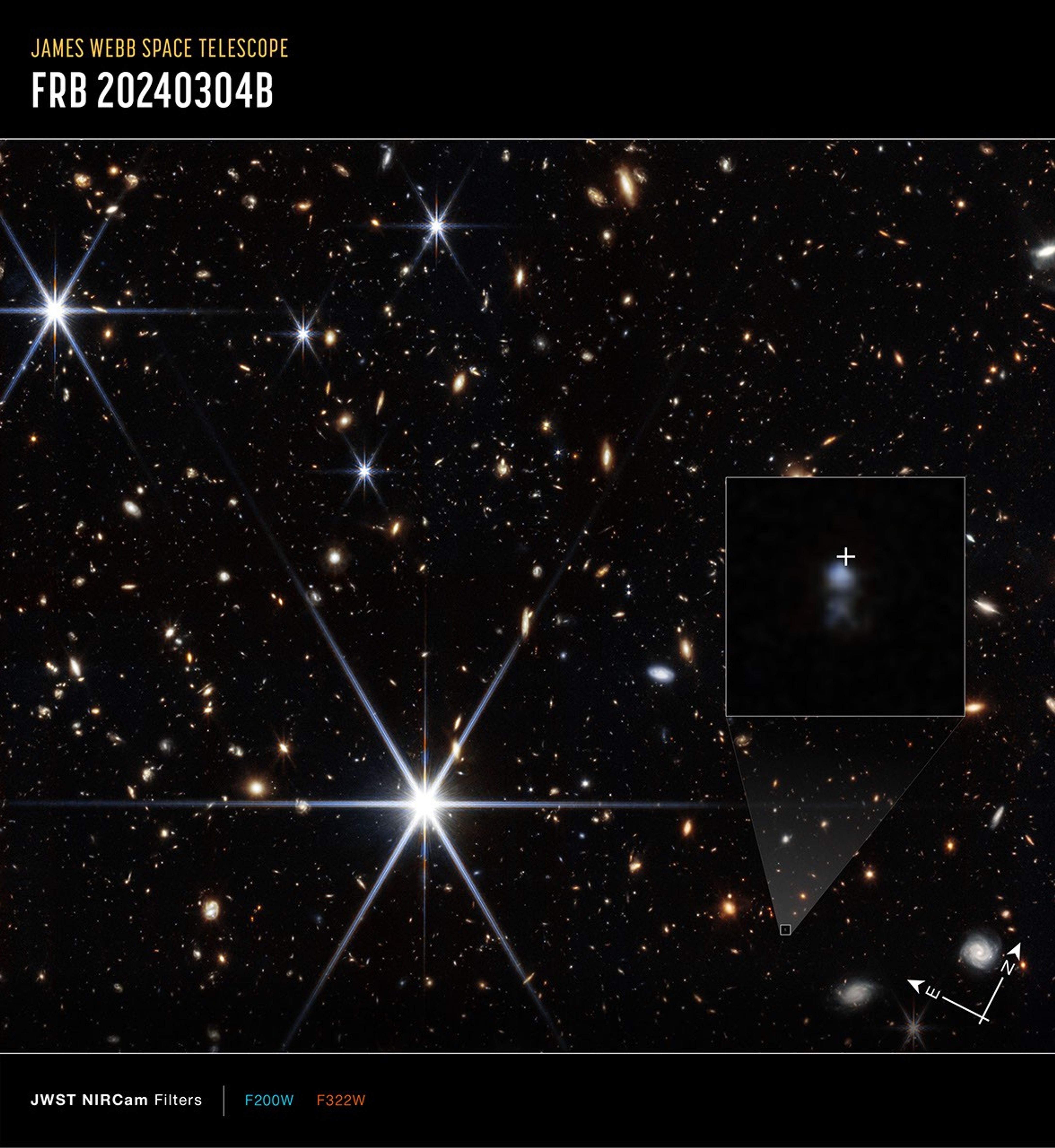
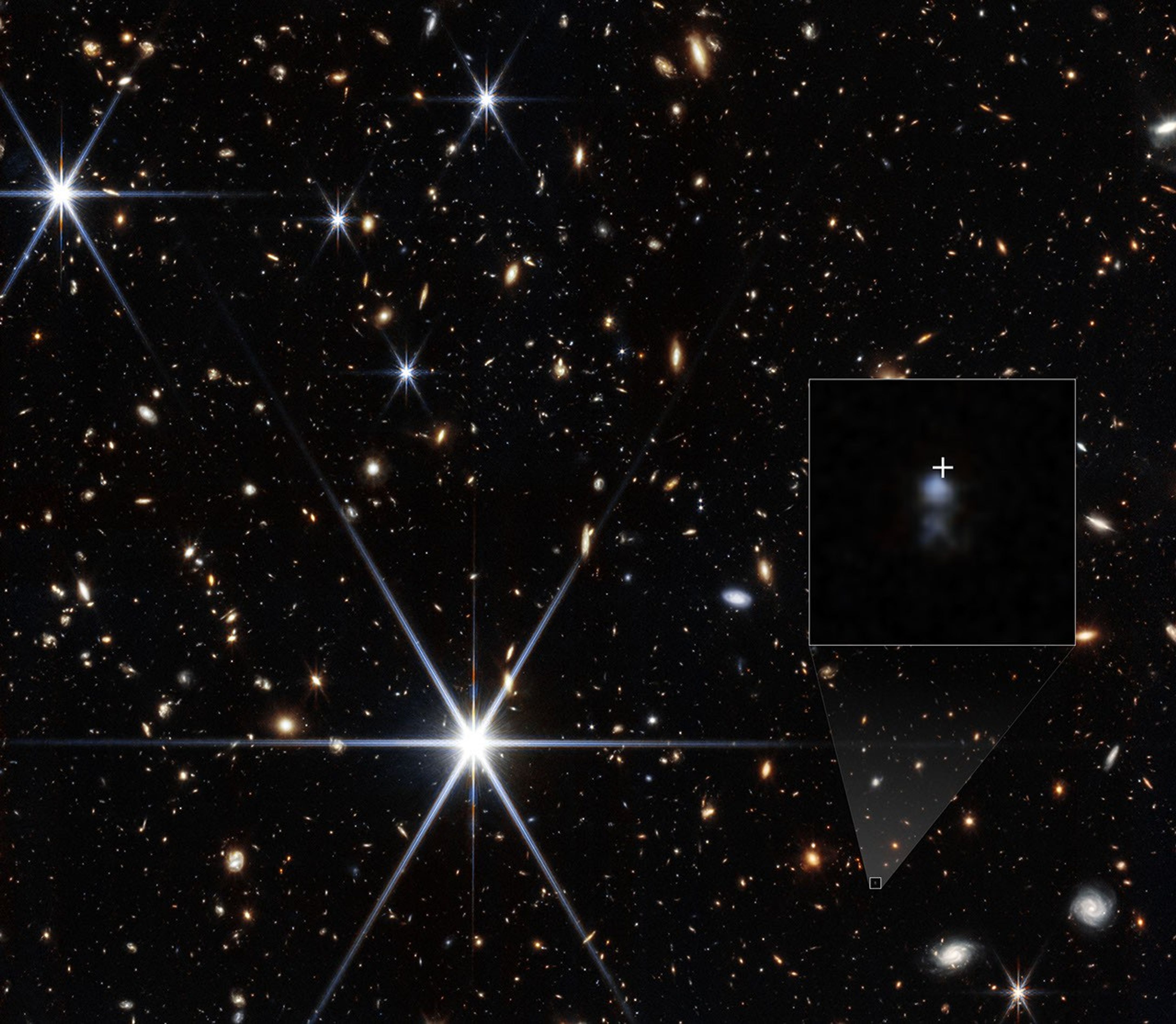
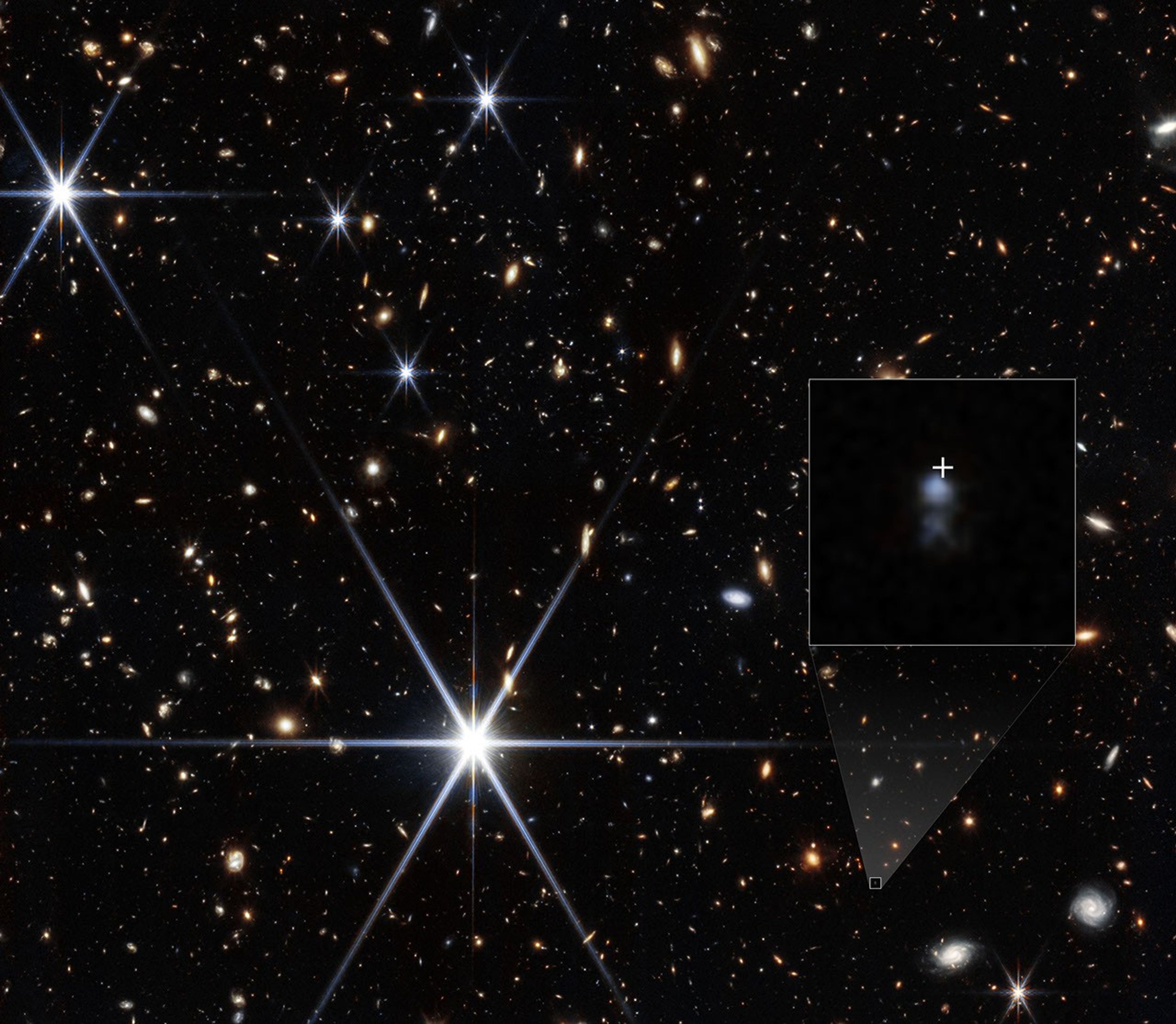
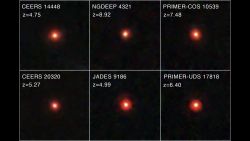
Astronomers have identified the host galaxy of the most distant fast radio burst ever detected, using NASA's James Webb Space Telescope and South Africa's MeerKAT radio telescope. The burst, designated FRB 20240304B, was detected on March 4, 2024, and originated approximately 11 billion light-years away when the universe was only about 3 billion years old—more than double the distance of the previous record holder. The finding, published in Science on October 8, 2026, offers new insights into the nature and origins of these mysterious cosmic phenomena that have puzzled astronomers since their discovery in 2007.
Using the MeerKAT telescope's MeerTRAP project, researchers initially detected the burst's radio signature. The James Webb Space Telescope's Near-Infrared Camera identified the host galaxy, and its Near-Infrared Spectrograph measured the galaxy's redshift at 2.148, confirming the burst originated when the universe was roughly 3 billion years old. The discovery is significant because the host galaxy differs markedly from typical FRB sources: it is approximately 1,000 times less massive than expected, yet exhibits extremely active star formation. Researchers estimate that the majority of the galaxy's stars may have formed within just 30 million years during "cosmic noon," a period when star formation across the universe peaked.
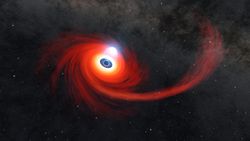
The characteristics of this host galaxy provide evidence favoring one theoretical explanation for FRB origins over another. One leading theory proposes that FRBs originate from magnetars—highly magnetic neutron stars created in supernova explosions—which could produce bursts relatively quickly in young, actively star-forming environments. An alternative theory suggests FRBs result from the merger of two neutron stars, a process expected to take billions of years and therefore occur in older, more evolved galaxies. Manisha Caleb of the University of Sydney, lead author of the study, stated that the findings make a neutron star merger origin "very unlikely" for this particular burst, as the young, metal-poor, star-forming nature of the host galaxy aligns better with the magnetar hypothesis.
Beyond determining the FRB's origin, the discovery demonstrates the scientific value of FRBs as cosmic probes. As these millisecond-long radio bursts travel billions of light-years to Earth, they pass through gas and dust in galaxies and the intergalactic medium, allowing scientists to measure the universe's matter distribution and map unseen matter. The burst's 11-billion-year journey means it has travelled through approximately 80 percent of cosmic history, providing a unique probe of galactic evolution and gas dynamics across billions of years. The study represents a collaboration between institutions including the University of Sydney, University of Manchester, and Swinburne University, and underscores the combined capability of ground-based and space-based observatories in advancing astrophysical understanding.
Why This Matters
Detection of the most distant fast radio burst extends astronomers' observational window into the early universe's structure and composition. The small, actively star-forming host galaxy challenges existing models of FRB sources and narrows the favored physical mechanism (magnetar versus neutron star merger), with direct implications for understanding neutron star formation rates and timescales across cosmic history. FRBs serve as probes of intergalactic matter distribution; this 11-billion-light-year signal samples roughly 80% of cosmic history, enabling measurement of galactic evolution and gas dynamics in epochs otherwise difficult to study directly.
Timeline & Sources
Jan 1, 2007
WireFast radio bursts first discovered
Mar 4, 2024
WireFRB 20240304B detected by MeerKAT telescope
Mar 4, 2024
WireFRB 20240304B detected by MeerKAT telescope
Oct 8, 2026
WireStudy identifying FRB 20240304B host galaxy published in Science journal
Oct 8, 2026
WireStudy identifying FRB 20240304B's host galaxy published in Science journal
Sources
- Astronomers detect mysterious burst of energy from a galaxy far, far awayThe GuardianMediaOct 8, 2026
- Webb Measures Distance to Farthest Fast Radio Burst, Suggesting OriginnasaMediaOct 8, 2026
- James Webb Space Telescope helps detect the most distant Fast Radio Burst ever seen — and scientists are surprised by its sourceSpaceMediaOct 8, 2026