
Sep 25·Market
Follow-up 2h ago Major2
97%
SpaceX Launches 14th Starship Test Aiming for First Orbital Flight
SpaceX will attempt its 14th Starship test flight on Monday, aiming to achieve the first orbital flight and complete six orbits over 10 hours. The mission is critical for SpaceX's satellite deployment plans and NASA's lunar Artemis program, following hardware and software improvements made after the previous test's booster landing failure.
Quick Facts
- 14th full-scale Starship test flight
- Attempt to reach Earth orbit for the first time
- Complete six orbits over 10-hour flight
- Deploy 26 Starlink V3 satellites
- Attempt splash down in Pacific Ocean west of Chile
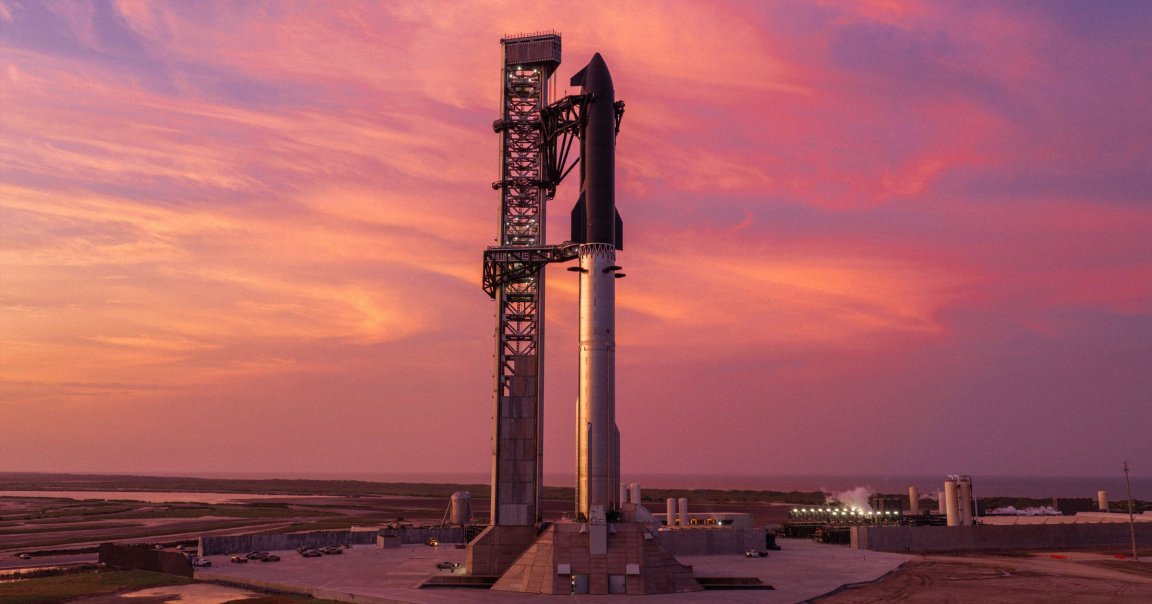




SpaceX is preparing to launch its 14th full-scale Starship test flight on Monday, pending regulatory approval, marking what the company describes as a critical milestone in the spacecraft's development. If successful, the mission will be the first time a Starship reaches Earth orbit and travels further than any previous test. The flight plan calls for Starship to complete approximately six orbits around the planet at an altitude of 171 miles over a 10-hour duration, before attempting to splash down in the Pacific Ocean west of Chile.
The test flight carries significant stakes for SpaceX's broader ambitions. Successfully demonstrating orbital flight capabilities is essential for SpaceX's plans to deliver satellites at regular cadence and is a key component of NASA's Artemis 3 mission, currently scheduled for 2027, which aims to return astronauts to the lunar surface. The mission will also deploy 26 Starlink V3 satellites to expand network capacity and user speeds.
SpaceX has made hardware and software modifications to the Super Heavy booster following its most recent test in July, which saw only 10 of the booster's 13 Raptor engines relight during landing, causing a hard impact and explosion. The company modified engine filtering hardware and enhanced relight reliability software. The upcoming Starship will use an upgraded heatshield for reentry and will reuse two heatshield tiles recovered from the previous test, marking the first tile reuse for Starship. SpaceX completed a full wet dress rehearsal earlier in the week to validate countdown procedures.
The mission reflects SpaceX's strategy to transition from its Falcon 9 rocket to the much larger Starship platform, which can theoretically deliver roughly ten times as many satellites per launch. However, the company faces substantial engineering challenges, including reliably entering orbit and executing controlled landings for both the spacecraft and booster. Success on Monday would demonstrate progress toward these goals, though significant development work remains before Starship can support crewed missions.
Why This Matters
Achieving orbital flight represents a measurable technical milestone that directly affects SpaceX's commercial satellite deployment schedule and NASA's Artemis 3 lunar mission timeline (currently scheduled 2027). Success validates booster reusability and thermal protection improvements, while failure delays both SpaceX's Starlink expansion and NASA's crewed lunar return program by months or longer. The mission outcome will inform investor confidence in Starship's development trajectory and SpaceX's capacity to meet contracted government and commercial payloads.
Timeline & Sources
Sep 25, 2026
WireSpaceX completes full wet dress rehearsal for upcoming 14th test flight
Sep 29, 2026
WirePlanned 14th Starship test flight, pending regulatory approval
Jan 1, 2027
WireNASA's Artemis 3 mission scheduled
Jan 1, 2028
WireArtemis lunar landing target mentioned as early 2028