
Oct 26·Science
Follow-up 5d ago Major7
100%
Hunter's Moon peaks October 26 with Saturn nearby
October's Hunter's Moon reached peak illumination on October 26, 2026, with Saturn visible nearby during optimal sunset viewing on October 25–26. The moon, named for its historical role in providing extended evening light for hunting after harvest season, remained visibly full through October 28 under clear skies across North America.
Quick Facts
- Hunter's Moon reached peak illumination
- Saturn positioned near the moon
- Moon displayed orange-reddish glow at moonrise
- Moon appeared full through October 28
- Orionid meteor shower occurred during period
Related Insights
POV: The Sky in October 2026 🌌 | Orionids Meteor Shower, Saturn & Hunter’s Moon Amigos Academy · YouTube
October full moon and Saturn sighting forecast WBAL-TV 11 Baltimore · YouTube
Catch a glimpse of Saturn during the full Hunter Moon this weekend KVUE · YouTube
Sky Tonight: Moon, Planets, Meteor Showers & Bright Stars — Oct 24, 2026 SpaceWeatherDaily · YouTube
Full Moon in Taurus Square Pluto: Oct 25–26, 2026 Astrology Forecast Underworld Astrology · YouTube
Sky Tonight: Moon, Planets, Meteor Showers & Bright Stars — Oct 25, 2026 SpaceWeatherDaily · YouTube
Sky Tonight: Moon, Planets, Meteor Showers & Bright Stars — Oct 26, 2026 SpaceWeatherDaily · YouTube
The Earth's Full Address in The Universe | Physics for Sleep · Ep. 03 #universe #physics #cosmos MeYouandTheUniverse · YouTube
October’s Hunter’s Moon Lights up the Night Sky Tonight DripCast · YouTube
🔥 Wow Moon Saturn conjunction #vlogging #vlogger #vlogs Harry Parry Plus2 · YouTube
Tonight's Hunter's Moon: When to Look #Shorts 30 Seconds · YouTube

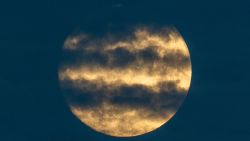

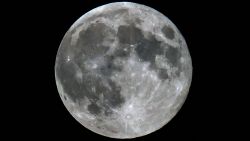

October's full moon, known as the Hunter's Moon, reached peak illumination at 12:11–12:12 a.m. EDT on October 26, 2026. The moon displayed optimal viewing conditions around sunset on October 25–26, when observers across North America witnessed it rising in the eastern sky with a distinctive orange-reddish glow as it appeared low on the horizon. Saturn was positioned below and to the left of the moon during this period, though the bright moonlight made it challenging to observe the planet clearly.
The Hunter's Moon derives its name from historical hunting traditions in the Northern Hemisphere. According to the Old Farmer's Almanac, the name originated because the full moon rose soon after farmers cleared summer harvests, leaving fields bare and making game such as deer and other wildlife easier to spot. The extended evening light provided by the bright moon allowed hunters to track animals longer into the night and prepare food supplies for the coming winter. Indigenous North American peoples have used alternative names for this lunar event, including Falling Leaves Moon, Freezing Moon, Migrating Moon, and Drying Rice Moon.
The moon appeared full through October 28 as it entered its waning gibbous phase, with negligible visual differences across multiple evenings. Clear skies were forecast across North America, including New England and the Philadelphia region, offering excellent viewing conditions for stargazers. The Orionid meteor shower, produced by dust and debris from Halley's Comet, provided additional celestial activity during this period, though peak viewing had occurred the previous week when cloudy conditions limited visibility in some regions.
Looking ahead to the remainder of 2026, the next two full moons—the Beaver Moon on November 24 and the Cold Moon on December 23—were forecast to be supermoons. These occur when a full moon reaches or approaches perigee, its closest distance to Earth during its 27-day elliptical orbit. According to NASA, supermoons can appear approximately 30 percent brighter and up to 14 percent larger than the smallest full moon of the year. The December 23 supermoon was expected to be the closest and brightest of the year.
Why This Matters
The Hunter's Moon provides a measurable astronomical reference point for October 2026. Peak visibility on October 25–26 affects stargazing conditions across North America during this period. Saturn's proximity to the moon and the Orionid meteor shower create overlapping celestial events affecting amateur astronomy schedules. Forecasted supermoons in November and December extend lunar observation windows through year-end, with December's supermoon predicted to be the year's closest and brightest.
Timeline & Sources
Oct 25, 2026
WireHunter's Moon begins rising in eastern sky around sunset
Oct 25, 2026
WireHunter's Moon visible at sunset with orange-reddish glow near eastern horizon (approximately 5:45 p.m. local time)
Dec 23, 2026
WireCold Moon supermoon reaches peak illumination at 8:28 p.m. EST (closest and brightest supermoon of 2026)
Dec 23, 2026
WireCold Moon supermoon reaches peak at 8:28 p.m. EST (brightest of 2026)
Sources
- Stunning photos capture October's Hunter's Moon around the worldBBCMediaOct 26, 2026
- Here’s what to know about tonight’s Hunter’s MoonThe Boston GlobeMediaOct 26, 2026
- October's 'Hunter's Moon' stalks into the autumn sky tonight: Here's what you need to knowSpaceMediaOct 25, 2026
- Get a glimpse of the Hunter's Moon and Saturn tonight in Philly region's skyNBC10 PhiladelphiaMediaOct 25, 2026
- 10月の夜空を彩る「ハンターズムーン」、土星も見られる可能性も(CNN.co.jp)Yahoo!ニュースMediaOct 27, 2026
- October full 'Hunter's Moon' dazzles in spectacular photos from around the worldSpaceMediaOct 26, 2026
- October Hunter's Moon 2026: What it means for your zodiac signABC News - Breaking News, Latest News and VideosMediaOct 27, 2026