
Oct 20·Geo
Follow-up Oct 21 Major4
100%
Russia Proposes Extending Citizenship Residency Requirement to 8 Years
Russian lawmakers from the LDPR party have proposed extending the residency requirement for citizenship from 5 to 8 years and increasing the residence permit requirement from 1 to 2 years. LDPR leader Leonid Slutsky cited rising visa violations and national security concerns, though legal experts argue the longer timeline lacks international justification.
Quick Facts
- Draft law submitted to extend citizenship residency requirement from 5 to 8 years
- Proposal to extend residence permit requirement from 1 to 2 years
- Applications for residence permits permitted after 8 months of second-year residence
- Amendments to Law on Citizenship and Law on Legal Status of Foreign Citizens
- Over 8,000 residence permits annulled in Q1 2026
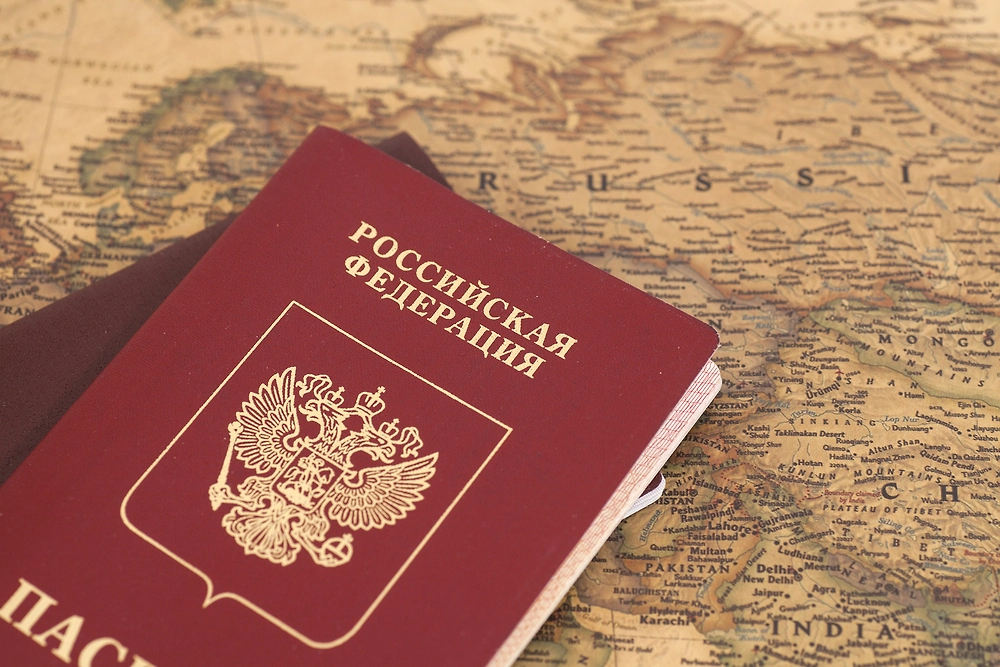


Russian lawmakers from the LDPR faction have submitted a draft law to the government proposing to increase the minimum residency period for obtaining Russian citizenship from 5 to 8 years. The proposal would amend two federal laws: the Law on Citizenship of the Russian Federation and the Law on the Legal Status of Foreign Citizens in the Russian Federation.
Under the current system, foreigners must reside in Russia for five years after obtaining a residence permit to qualify for citizenship. The draft law would extend this period to eight years. Additionally, the proposal seeks to increase the residency requirement for obtaining a residence permit (ВНЖ) from one to two years, with applications permitted no earlier than eight months into the second year of residence.
LDPR leader Leonid Slutsky cited increased visa violations and national security concerns as justification for the reform. According to Slutsky, Russia annulled over 8,000 residence permits in the first quarter of 2026—a 90 percent increase compared to the same period in 2025—citing false information and actions threatening national security. He stated that Russian citizenship "is a privilege; a person must have a strong connection to the country and bear responsibility toward it." Slutsky argued that the additional years would allow the state to conduct more thorough checks on foreigners' legal status and give applicants time to improve their Russian language proficiency and understanding of Russian culture and laws.
The proposal has drawn criticism from legal experts. Alexander Dobrovinskiy, a lawyer and head of the Moscow law firm "Alexander Dobrovinskiy and Partners," argued that the eight-year requirement is unjustified. He noted that international practice—including most European countries and the United States—considers five years the optimal integration period. Dobrovinskiy contended that Russia should focus on qualitative assessment criteria, such as tax compliance and absence of legal violations, rather than mechanically extending residency periods. He suggested stricter controls on language proficiency, mandatory residence within the country (with limited foreign travel), and careful review of lawfulness.
This proposal follows earlier cost increases: in July 2026, Russia raised state fees for citizenship applications from 4,200 to 50,000 rubles—more than a 12-fold increase. Residence permit fees rose from 6,000 to 30,000 rubles, and temporary residence permits increased nearly eightfold to 15,000 rubles. In September 2026, Russia terminated the acquired citizenship of over 1,000 individuals; according to the Interior Ministry, approximately 72 percent of those decisions were linked to criminal convictions, 11 percent to violations of military registration obligations, and the remainder to national security threats or document falsification.
Why This Matters
The proposal directly affects foreign nationals seeking Russian citizenship and residence permits, creating a measurable increase in processing timelines and associated costs. If enacted, applicants would face 8 years of residency before eligibility—compared to the current 5-year standard in most European and North American countries. The change follows July 2026 fee increases (12-fold rise in citizenship application costs) and September 2026 mass revocations of acquired citizenship, signaling a tightening of naturalization policy with implications for labor migration flows and demographic statistics in Russia.
Timeline & Sources
Oct 20, 2026
WireLDPR deputies submit draft law to government proposing to extend citizenship residency requirement from 5 to 8 years
Related Signals
Sources
- В Госдуме посчитали, сколько надо прожить в РФ, чтобы стать россияниномКлопс - новости КалининградMediaOct 20, 2026
- Срок проживания в РФ для получения гражданства предложили увеличитьPiter.tvMediaOct 21, 2026
- Российское гражданство хотят сделать менее доступным: паспорт может стать испытанием на терпениеПравда.РуMediaOct 20, 2026
- В Госдуме предложили увеличить срок проживания для гражданства РФ до восьми летLife.ruMediaOct 20, 2026