
Oct 20·AI
Follow-up 15h ago Major3
96%
HPE's Spaceborne Computer-4 to run AI on Moon in late 2026
HPE's Spaceborne Computer-4 will launch aboard Astrolab's FLIP rover to the Moon's south pole in late 2026, conducting the first tests of large language models and high-performance computing on the lunar surface. The computer will process imaging and lidar data to enable autonomous navigation, run performance benchmarks, and test AI-driven terrain analysis without relying on Earth-based GPS or real-time ground control. The mission aims to demonstrate how onboard AI processing can support future autonomous operations on the Moon and beyond.
Quick Facts
- HPE Spaceborne Computer-4 deployment on lunar rover
- First large language models run on Moon's surface
- Autonomous navigation tests without GPS
- High-performance computing benchmarks (HPL and HPCG)
- Lidar and imaging data processing
Related Insights
HPE Spaceborne Computer-4 Is Going to the Moon on Astrolab's FLIP Rover StorageReview · YouTube
Why do spacecraft run on old processors? why dot exe · YouTube
First AI Supercomputer Going to the MOON! 🌕 Trend Wave Daily · YouTube
HPE Plans Moon Computer Tests on FLIP Rover | 30 Seconds Focus 30 Seconds · YouTube
AI Is Moving to the Moon — in a 2.6-Pound Box AINewsToday · YouTube
NASA Is Putting an AI Supercomputer on the Moon AI Mind Vault · YouTube
A Computer Bound for the Moon | 30 Seconds Focus 30 Seconds · YouTube

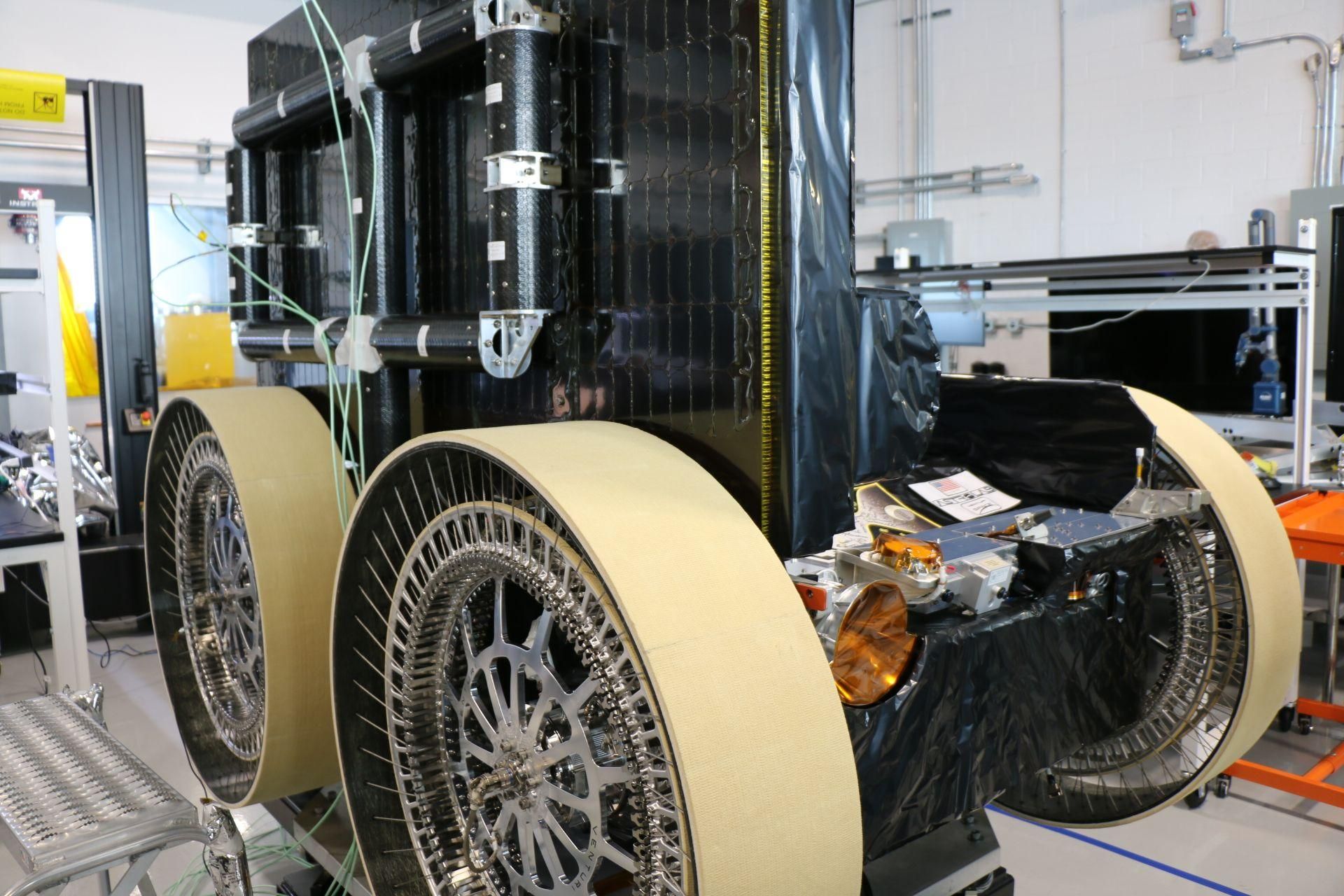
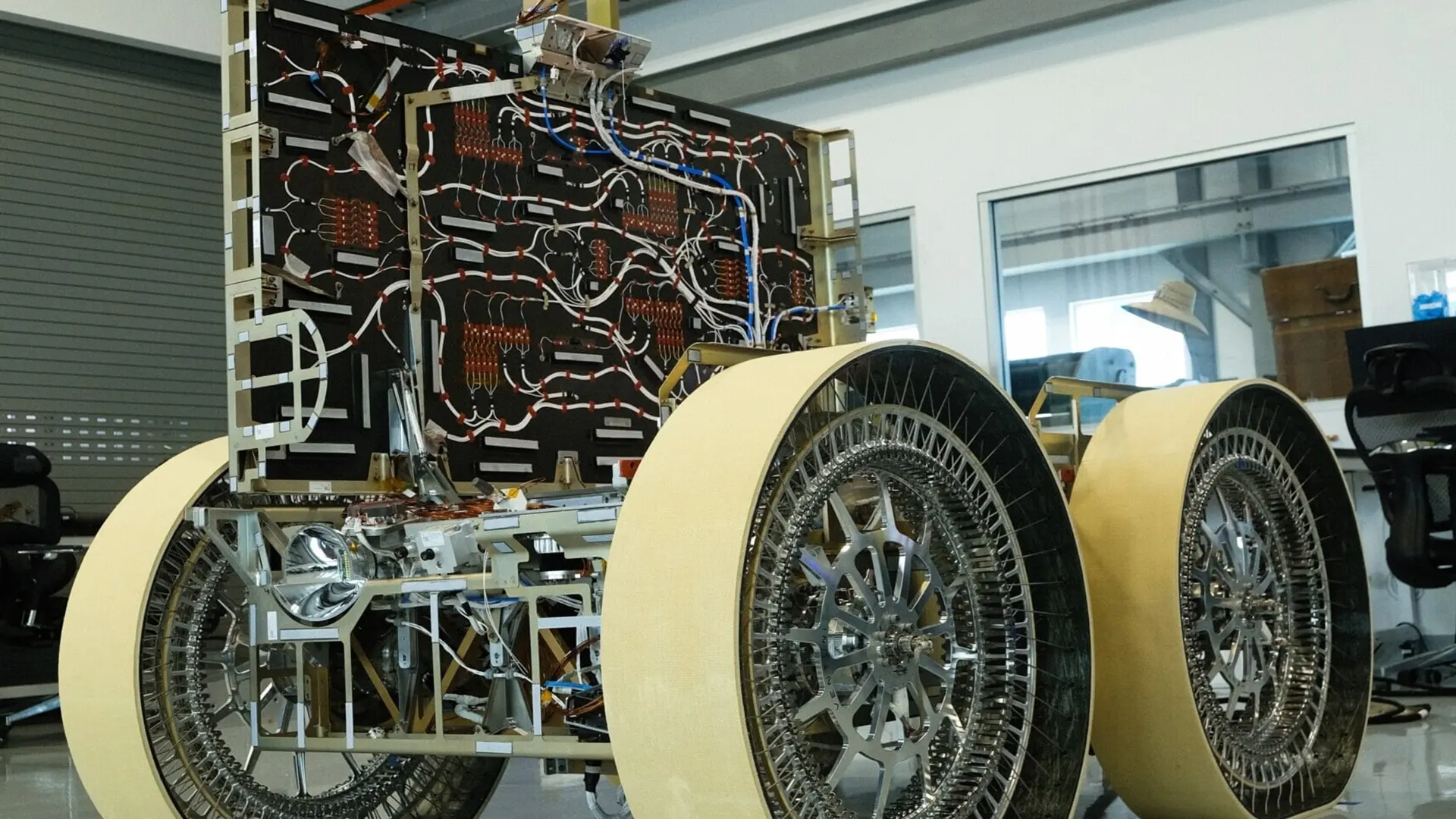
Hewlett Packard Enterprise (HPE) will send its Spaceborne Computer-4 to the Moon aboard Astrolab's FLIP rover as part of NASA's commercial lunar cargo program, targeting launch in late 2026. The mission, designated Griffin-1 and managed by Astrobotic, will deliver the compact computing system to the Moon's south pole, where it will conduct the first experiments running large language models (LLMs) and high-performance computing on the lunar surface.
The Spaceborne Computer-4 is designed to operate in extreme conditions without fans, using a heat-conductive aluminum casing and low-power 64-bit CPU paired with a GPU capable of parallel computing tasks. The system will draw power from the FLIP rover's batteries and solar panels, with data stored on Kioxia solid-state drives. The computer has been configured to monitor itself against radiation damage caused by cosmic particles, automatically reducing power and speed when radiation levels spike to protect the electronics.
During the mission, the computer will process imaging data and lidar measurements to enable autonomous navigation without GPS—a critical capability on the Moon where satellite navigation is unavailable. The rover will run specialized LLM experiments to prove the technology can operate reliably in the lunar environment, analyze visual data for terrain mapping, and test localization software originally developed by NASA's Jet Propulsion Laboratory for Mars rovers. HPE will also conduct HPL and HPCG performance benchmarking tests, which the company describes as the first such computational benchmarks performed on the lunar surface. NASA plans a separate FLUID experiment to test distributed machine learning using three neural network models trained on Earth, lunar, and International Space Station data, with cybersecurity monitoring provided by Deloitte's Silent Shield system.
HPE has previously deployed three Spaceborne computers to the International Space Station in milder conditions; Spaceborne-2 and Spaceborne-3 successfully ran Meta's Llama 3.2 LLM aboard the ISS as part of the Space Llama initiative in 2025. The FLIP rover, weighing 480 kilograms and fitted with deformable wheels designed to survive at least 150 hours of lunar night, will carry 20 scientific payloads in total. The mission aims to demonstrate how onboard AI processing can reduce dependence on transmitting all data back to Earth, addressing communication delays—which can reach up to 20 minutes on Mars—that have historically caused rover losses. Success could enable future rovers and human missions to operate with greater autonomy.
Why This Matters
This mission represents the first operational deployment of large language models and high-performance computing on the lunar surface, testing technologies critical for future autonomous lunar and deep-space exploration. Success will demonstrate reduced dependence on Earth-based data transmission and real-time ground control, addressing communication delays that historically have caused rover failures on Mars. The benchmarking and AI-processing results will inform design requirements for next-generation autonomous systems for both robotic and human lunar missions.
Timeline & Sources
Jan 1, 2021
WireHPE Spaceborne-2 computer deployed to International Space Station
Jan 1, 2024
WireHPE Spaceborne-3 computer deployed to International Space Station
Jan 1, 2025
WireSpace Llama initiative: Spaceborne-2 and Spaceborne-3 run Meta's Llama 3.2 LLM aboard ISS
Related Signals
Sources
- Astrolab’s upcoming rover will run the first LLMs on the moonmit_technology_reviewMediaOct 20, 2026
- Hewlett Packard отправит на Луну компьютер для испытания ИИ и автономной навигацииКомпьютерраMediaOct 21, 2026
- На Луну впервые отправят суперкомпьютер с искусственным интеллектом24 КаналMediaOct 21, 2026