
Oct 29·Science
Follow-up 2d ago3
95%
NASA's Swift telescope to reenter Earth's atmosphere after 22-year mission
NASA's Swift space telescope will reenter Earth's atmosphere in the coming weeks after 22 years in orbit. A private rescue mission launched to extend the spacecraft's life failed due to propulsion and control system problems, leaving the telescope unable to maintain its orbit against atmospheric drag.
Quick Facts
- Neil Gehrels Swift Observatory completes 22-year mission
- Final scientific observation conducted
- Rescue mission by private spacecraft LINK attempted and failed
- Atmospheric drag causes orbital decay
- Spacecraft expected to reenter Earth's atmosphere
Related Insights
விண்வெளியில காத்தே இல்லையா? அப்போ இந்த NASA டெலஸ்கோப் ஏன் விழுது? 😮 #NASA #Swift #Space Adhu Eppadi? · YouTube
NASA ends Swift telescope mission after 22 years #NASA #Space saidline · YouTube
NASA's Swift Telescope Rescue Mission Failed - Now It's Falling Back to Earth Drift Theory · YouTube
NASA's Swift Telescope Is Falling 🛰️ #shorts FactBlast · YouTube
NASA's Swift Telescope Is Falling Back to Earth Subatomic Secrets · YouTube
NASA's Swift Observatory Ends: 22 Years of Cosmic Explosions Historiae Orbis Terrarum · YouTube
NASA Just Switched Off Swift. Now the Telescope Is Falling Back to Earth (3D) #Shorts Slow Cosmos · YouTube
NASA's Swift Telescope Is Falling Out of the Sky #shorts Redshift Notes · YouTube
This NASA Telescope Has Weeks to Live OddCosmos · YouTube
How the Sun Brought Down a NASA Telescope #shorts Redshift Notes · YouTube
NASA's Swift Is Falling to Earth. Its $30 Million Rescue Robot Got Within 15 km #swift #nasa spaceforsleep · YouTube
NASA's Swift telescope is falling to Earth #shorts Scroll Brief · YouTube
It Watched the Universe Explode for 22 Years — Now It's Falling to Earth 🔭 #nasa Daily Viral Documentary · YouTube
NASA's Swift Telescope Ends After 22 Years of Cosmic Discovery Historiae Orbis Terrarum · YouTube
NASA built Swift to last 2 years. It worked for almost 22 meteor-scatter · YouTube
Swift Telescope: Built for 2 Years, Lasted 20, Now Falling Orbit Files · YouTube
NASA Tried to Save This Telescope With a Robot. It Failed. Redshift Notes · YouTube
How NASA's Swift Caught the Universe's Fastest Explosions Cosmos on Record · YouTube
This NASA Telescope Watched the Universe Explode for Decades. Now It's Coming Down Drift Theory · YouTube
Swift stopped observing. Its data remains. Signal & Context · YouTube


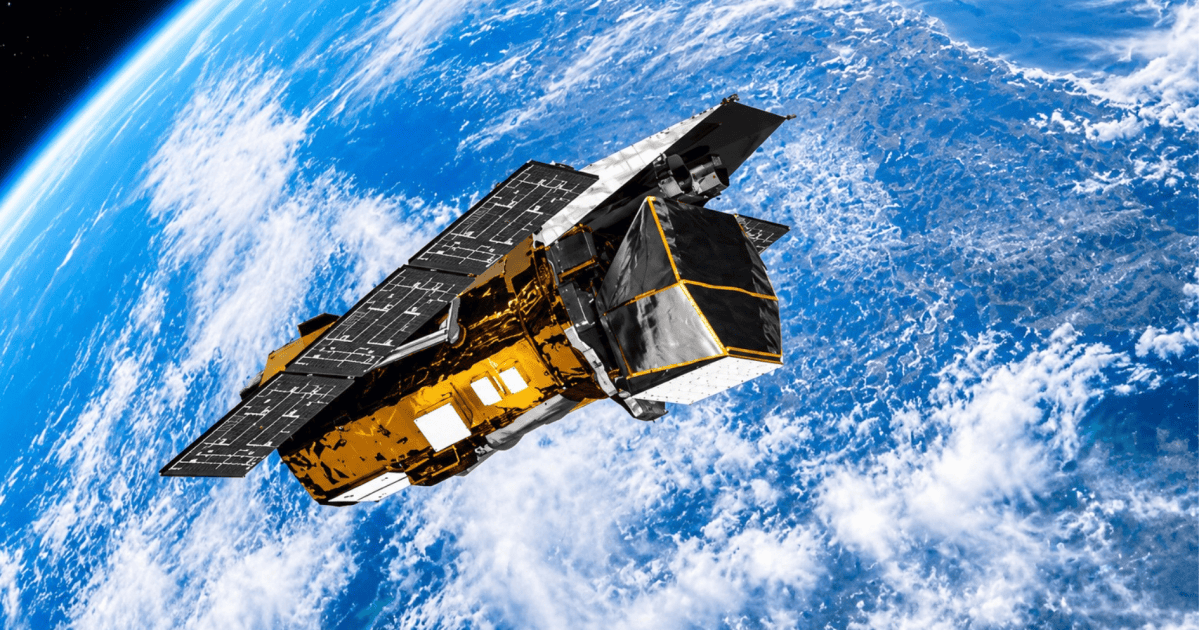
The Neil Gehrels Swift Observatory, a NASA space telescope launched in November 2004, is expected to reenter Earth's atmosphere within weeks after more than 22 years in orbit. The spacecraft made its final scientific observation on October 20 at an altitude of approximately 275 kilometers, where atmospheric drag began compromising its ability to maintain stable instrument orientation. NASA has not announced a precise date or location for reentry, as the telescope lacks propulsion systems to control its descent.
A rescue mission to extend Swift's operational life failed in August 2026. The private robotic spacecraft LINK, operated by Arizona Katalyst Space Technologies, was launched on July 3 with the goal of docking with Swift using robotic arms and boosting it to a higher orbit. However, LINK encountered problems with its propulsion and attitude control systems, preventing the maneuver. The spacecraft managed only to approach Swift and photograph it before the mission was abandoned.
Swift's orbital inclination of approximately 20.6 degrees relative to the equator means reentry debris could potentially affect Brazil and other equatorial regions, though NASA emphasizes no precise prediction is possible. Small variations in atmospheric density, solar activity, and spacecraft behavior can alter the reentry trajectory. Most of Swift's approximately 1.5-ton mass is expected to burn up during atmospheric reentry, though some components may survive.
Over its 22-year operational life—far exceeding its original two-year mission design—Swift observed over 2,000 gamma-ray bursts, more than 1,400 supernovas, and contributed data to approximately 7,000 scientific papers. The telescope also studied black holes, asteroids, and comets, and conducted an X-ray survey of the entire sky. NASA officials described Swift's data archive as "extraordinary" and predicted it will drive scientific discoveries for decades.
Why This Matters
Swift's uncontrolled reentry within weeks creates measurable operational impacts: debris from its approximately 1.5-ton mass may affect equatorial regions including Brazil, though most is expected to burn up during reentry; the failed rescue by LINK spacecraft demonstrates technical limits in orbital servicing for aging satellites; Swift's 22-year data archive—encompassing over 2,000 gamma-ray bursts, 1,400+ supernovas, and 7,000 scientific papers—will continue generating research output for decades, though the loss of active observations ends its real-time contribution to astronomy.
Timeline & Sources
Jul 3, 2026
WireLINK rescue spacecraft launched to dock with Swift and boost its orbit
Oct 20, 2026
WireSwift conducts final scientific observation at 275 km altitude
Oct 23, 2026
WireNASA announces Swift mission ended
Sources
- Partes de telescópio espacial desativado da Nasa podem atingir o Brasil ao cair do espaçoCNN BrasilMediaOct 29, 2026
- Telescópio da Nasa deve cair na Terra nas próximas semanas; missão de resgate fracassouG1MediaOct 27, 2026
- Telescópio da Nasa vai cair na Terra após fracasso em missão de resgateMetrópolesMediaOct 28, 2026