
Science
Published Aug 10, 2026Updated Aug 11 Major6
98%
Global ocean temperatures hit record high for July 2026 amid El Niño
Global ocean surface temperatures hit a July record of 20.96°C in 2026, driven partly by developing El Niño conditions in the tropical Pacific. Western Europe simultaneously experienced record heat, severe drought, and exceptional wildfire activity, with major rivers disrupted, power plants offline, and an estimated €2 billion in crop losses.
Quick Facts
- Global ocean surface temperatures reached record high for July
- Record sea surface temperatures recorded on Atlantic coast and western Mediterranean
- Severe marine heatwaves developed across European waters
- Widespread drought across western and central Europe
- Major wildfires across European Union


The European Union's Copernicus Climate Change Service reported that global ocean surface temperatures reached a record high in July 2026. The average sea surface temperature outside polar regions (between 60 degrees north and south latitude) reached 20.96°C, surpassing the previous July record of 20.89°C set in 2023. Developing El Niño conditions in the tropical Pacific contributed to the exceptionally warm waters, with forecasts indicating further strengthening in the coming months. Globally, July 2026 was the joint second-warmest July on record, tied with 2024, with average surface air temperatures 1.47°C above pre-industrial levels (1850–1900 baseline).
Western Europe simultaneously experienced severe heat and drought conditions. The region's June–July period was the hottest on record, with average temperatures reaching 21.62°C—2.79°C above the 1991–2020 average and exceeding the previous record set in 2022. Record sea surface temperatures emerged along the Atlantic coast and western Mediterranean, where widespread strong and severe marine heatwaves developed. This was the third consecutive month of exceptional heat across western Europe. According to climate scientist Samantha Burgess, persistent high-pressure systems trapped heat over the region while dry soils reduced natural cooling capacity, creating conditions where "heat and drought increasingly reinforc[e] one another."
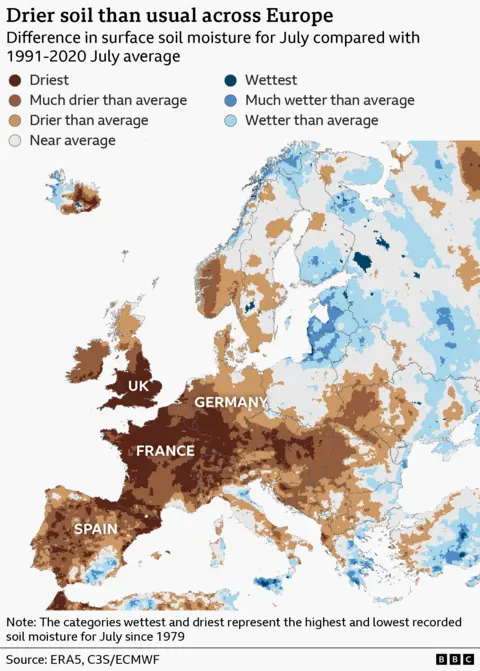
The drought and heat triggered cascading impacts across Europe's economy and infrastructure. France, Spain, and parts of Germany and the UK recorded exceptionally low rainfall and soil moisture. Major rivers—including the Seine, Rhine, and Danube—experienced significantly below-average flows, disrupting water supplies, irrigation, river transport, and power generation. Hungary's sole nuclear power plant shut down for the first time in its 44-year history due to insufficient cooling water, while two coal-fired power plants in Poland were forced offline. Early estimates suggest June heat alone cost grain farmers €2 billion in lost crops.
Wildfire activity reached exceptional levels across the European Union, with approximately 500,000 hectares burned since the start of 2026. Persistent hot, dry, and windy conditions created favourable conditions for large, high-intensity wildfires, particularly in southern Europe, while extending the fire season northward. The combination of heat and drought was expected to result in more than 10,000 heat-related deaths, with particularly severe mortality linked to intense heat at the end of June. Emissions and smoke from large wildfires reached higher into the atmosphere, affecting air quality thousands of kilometres away.
Why This Matters
Record ocean and air temperatures across Europe are disrupting critical infrastructure (nuclear and coal-fired power plants offline, river transport halted), affecting food supply (€2 billion in crop losses), and straining energy and water systems across the EU. El Niño strengthening signals sustained temperature anomalies in coming months. Measurable impacts: 500,000 hectares burned since January 2026; major rivers (Seine, Rhine, Danube) below-average flows; heat-mortality forecast exceeding 10,000 deaths.
Timeline & Sources
Aug 10, 2026
WireCopernicus Climate Change Service publicly announces July temperature records and El Niño development
Sources
- World’s seas have hit hottest temperature on record for July, say scientistsThe GuardianMediaAug 10, 2026
- Ocean heat records broken as hottest July temperature recordedBBCMediaAug 10, 2026
- World’s seas have hit hottest temperature on record for July, say scientistsAOL.co.ukMediaAug 10, 2026
- 欧盟机构:7月全球海洋表面温度创新高zaobaoMediaAug 10, 2026
- 世界の7月の海面水温が過去最高、エルニーニョ強まる見通し EU機関日本経済新聞MediaAug 10, 2026
- Global ocean temperatures hit record July high as El Nino developscgtnMediaAug 10, 2026