
Yesterday·Emerging
Follow-up 2h ago Major4
100%
Boeing wins $20 billion Navy contract for sixth-generation F/A-XX fighter jet
Boeing has been awarded a $20 billion full-scale development contract to build the Navy's F/A-XX, a sixth-generation carrier-based strike fighter intended to replace aging Super Hornet and Growler aircraft beginning in the 2030s. The selection, announced September 29, 2026, represents a major turnaround for Boeing's defense division and positions the company to lead both Navy and Air Force sixth-generation fighter development. Defense analysts raised execution concerns given Boeing's simultaneous management of multiple major aircraft programs.
Quick Facts
- Boeing selected to develop F/A-XX sixth-generation carrier fighter
- Contract for full-scale development and production of test aircraft
- Aircraft designed to replace F/A-18E/F Super Hornet and EA-18G Growler
- F/A-XX to integrate with manned and unmanned systems including Collaborative Combat Aircraft
- Boeing previously selected for Air Force F-47 program in March 2025
Related Insights
Boeing Wins $20B Navy Contract for Sixth-Gen Fighter Jet AI Anchor Real News · YouTube
Beware of Images Beware of images · YouTube


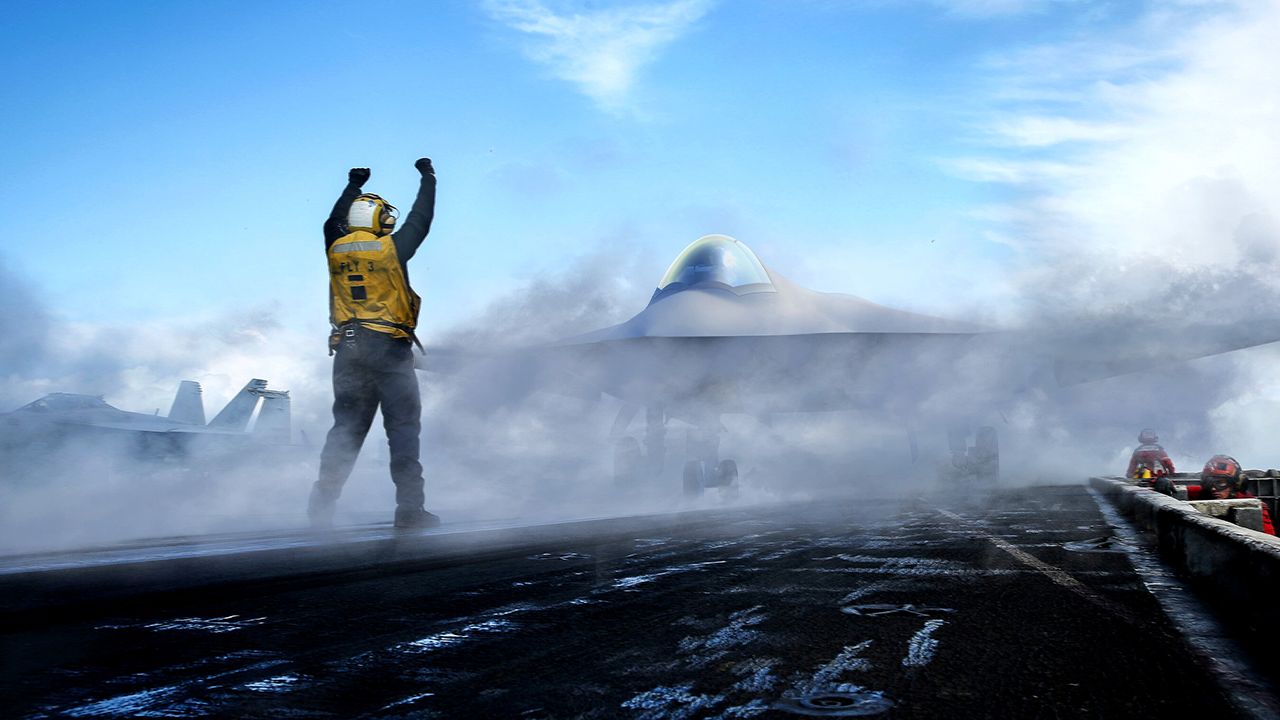

The U.S. Department of Defense announced on September 29, 2026, that Boeing has been selected to develop the F/A-XX, a sixth-generation carrier-based strike fighter intended to replace the Navy's aging F/A-18E/F Super Hornet and EA-18G Growler aircraft. The contract, valued at more than $20 billion for full-scale development, includes production of multiple prototype aircraft for ground testing, airworthiness evaluation, and weapons integration. Boeing prevailed over competitor Northrop Grumman in the selection process.
The F/A-XX is designed to extend the operational strike range of Navy carrier air wings, which has contracted significantly over the past two decades. According to officials, the aircraft will operate as part of a broader ecosystem of manned and unmanned systems, including Collaborative Combat Aircraft (CCA) developed by multiple contractors. The Navy has described the fighter's role as evolving from a "missile truck" concept to a stealthy penetrator capable of commanding armed drones against air, land, and sea targets. Integration with unmanned systems and artificial intelligence-assisted command and control represents a core element of the Navy's future air dominance strategy.
This contract marks Boeing's second major sixth-generation fighter award within the same year, following the company's March 2025 selection for the Air Force's F-47 program. Defense officials and analysts characterized the decision as a significant turnaround for Boeing's defense division, which faced years of challenges with major programs including the KC-46 tanker and T-7A trainer. Michael Duffey, Under Secretary of Defense for Acquisition and Sustainment, described the F/A-XX as a "crucial, non-negotiable investment" in U.S. national security. Acting Navy Secretary Hung Cao called the contract the beginning of "a new era" for naval air superiority.
Chief of Naval Operations Admiral Daryl Caudle indicated that production capacity influenced the selection decision, stating that one potential contractor "really can't deliver in the timeframe we need it." Congress approved $1.7 billion for the F/A-XX program as part of the Fiscal Year 2026 defense budget. Analysts noted that the total program cost could eventually reach hundreds of billions of dollars across development and production phases. The aircraft is scheduled to enter service as the first F/A-18E/F Super Hornets are retired from the fleet in the 2030s.
However, defense analysts warned of potential execution challenges for Boeing. The company will simultaneously manage development and production of the F/A-XX, the Air Force's F-47, the T-7A training jet, and increased production rates for the F-15EX—all primarily from the same manufacturing complex in St. Louis. Concerns centered on workforce availability and the ability to maintain production quality and schedule adherence across multiple concurrent programs, issues that have historically affected Boeing aerospace projects.
Why This Matters
Boeing's $20 billion full-scale development contract positions the company to lead sixth-generation fighter development for both the Navy and Air Force, affecting long-term U.S. carrier strike capability and defense industrial capacity. The F/A-XX is scheduled to begin service in the 2030s as aging Super Hornets retire, extending Naval air strike range through integration with unmanned systems. However, Boeing will simultaneously manage the F/A-XX, F-47 Air Force fighter, T-7A trainer, and F-15EX production from its St. Louis facility, raising measurable concerns about workforce availability and schedule adherence that could affect program timelines and production rates across all four initiatives.
Timeline & Sources
Sep 29, 2026
WirePentagon announces Boeing contract for F/A-XX Navy sixth-generation carrier fighter development
Related Signals
Sources
- Boeing Picked to Build Navy’s F/A-XX Carrier Fighter in Estimated $20B DealusniMediaSep 29, 2026
- Pentagon in $20 billion deal with Boeing to develop F/A-XX fighter jet for NavytassMediaSep 30, 2026
- Boeing lands $20B-plus Navy deal for sixth-generation fighter to deliver ‘absolute air superiority’Fox NewsMediaSep 30, 2026
- What Boeing’s F/A-XX win means for the company, and what challenges come nextBreaking DefenseMediaSep 30, 2026