
Oct 25·Geo
Follow-up 1d ago4
95%
Trump Rules Out Iran Strike October 25, Leaves Door Open to Future Action
President Trump ruled out a military strike against Iran on October 25, 2026, but framed US policy as a choice between reaching a diplomatic agreement and pursuing further military action. He cited conflicting intelligence reports while asserting American control of the Strait of Hormuz and leaving open the possibility of future strikes if negotiations fail.
Quick Facts
- Trump ruled out an immediate military strike against Iran
- Trump framed US approach as a choice between diplomatic deal or military escalation
- Trump acknowledged conflicting intelligence reports on Iran
- Barrack initially stated a strike this weekend was possible, later refuted by Trump
- US claimed control of Strait of Hormuz
Related Insights
Trump Drops Major Warning of Further Strikes on Iran New York Post · YouTube
Trump on Iran: "We're knocking the sh** out of them" LiveNOW from FOX · YouTube
REVEALED: Trump Blocks Netanyahu's Military Strikes On Iran; Bid To Influence Israel Poll Foiled? Times Of India · YouTube
LIVE: Iran Warns US Strikes Will Have ‘Everlasting Consequences’ | Trump On Iran | Israel War Times Now World · YouTube
US–Iran War: Trump's 3-Day Strike Plan & Gulf Crisis | Dr Nasir Baig Global Sach ( Dr. Nasir Baig, Ph.D ) · YouTube
10 days to midterms: Obama on the campaign trail, Trump's approval PLUMMETS | MS NOW Highlights MS NOW · YouTube
New Middle East Threats, Russian Diesel Coming to US Bloomberg Podcasts · YouTube
The Dystopian Consequences of A.I. Drone Warfare Then & Now · YouTube
Kayleigh McEnany on Trump’s Rally Blitz: Why He Thrives in Front of the Crowds | Brian Kilmeade Show Brian Kilmeade · YouTube
Why Iran and Israel Went to War: 45 Years of a Rivalry Nobody Explained Chrono Atlas · YouTube


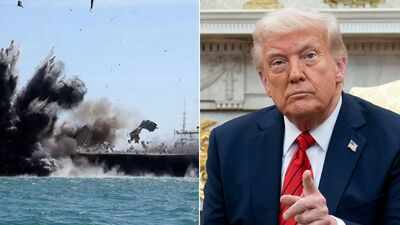
US President Donald Trump ruled out an immediate military strike against Iran on October 25, 2026, telling reporters "there will not be a strike today" as he departed the White House for a campaign rally in Michigan. However, Trump framed the broader US approach to Iran as a binary choice: striking a diplomatic deal or pursuing military escalation. "Do I make a deal with them, or do I finish them off? That's the only question," he said in an interview with Fox News, signaling that further military action remained possible if negotiations failed.
Trump acknowledged uncertainty in US intelligence assessments, stating "we have two very different sets of intelligence reports" on Iran, described as "very advanced." Despite this conflicting information, he insisted the United States was "doing well with Iran." An unnamed US official told Israeli news outlet i24NEWS that Trump was prepared to "shift gears on Iran," characterizing potential military strikes as "a question of if, but of when." Trump's denial of an immediate strike appeared to directly refute comments made by US Ambassador to Turkey and special envoy for Syria Tom Barrack, who had told a blogger that a strike this weekend was "absolutely" possible.
Trump also claimed that the United States now controlled the Strait of Hormuz, a critical global shipping chokepoint through which approximately 25% of oil and 20% of LNG supplies transit. He asserted that commercial vessel crossings through the strait had exceeded pre-war levels with American force assistance and that the US Navy's blockade on Iranian ports was "unbelievable." According to US Central Command (CENTCOM), more than 3,000 commercial vessels have crossed the Strait of Hormuz with American support over the past six months.
The US-Iran conflict began on February 28, 2026, following joint US-Israeli military strikes. A ceasefire and memorandum of understanding were signed in June, but the United States resumed large-scale attacks on Iran in early July after accusing Tehran of breaching agreements related to the Strait of Hormuz. The US subsequently signaled a shift toward economic pressure through sanctions rather than sustained military operations, though Trump's recent statements keep military options explicitly on the table pending diplomatic progress.
Why This Matters
Oil and LNG shipments through the Strait of Hormuz (approximately 25% of global oil and 20% of LNG supplies) face ongoing disruption risk. The US-Iran military escalation cycle—paused by ceasefire in June 2026, resumed in July, and now constrained by diplomatic framing—affects energy markets, insurance costs, and shipping routes. Trump's explicit retention of military options pending negotiation outcomes creates policy uncertainty that directly impacts commodity prices, global trade, and insurance premiums for commercial vessels in the region.
Timeline & Sources
Feb 28, 2026
WireUS and Israel launched military strikes against Iran
Jul 8, 2026
WireUS resumed large-scale attacks on Iran, accusing Tehran of breaching agreements on Strait of Hormuz
Oct 25, 2026
WireTrump rules out military strike on October 25, but frames policy as choice between negotiation and escalation
Related Signals
- GeoRelated Company
Iran Claims Seven Ships Hit in Strait of Hormuz, Warns US of Wider Response
Follow-up 3d ago
- GeoContinuation
US Defense Secretary Hegseth visits Netanyahu in Israel eight days before elections
Follow-up Oct 20
- GeoMarket Impact
Oil prices retreat from six-month highs amid technical corrections and lingering Middle East tensions
Follow-up 15h ago
- GeoRelated Company
UK Deploys RAF Typhoons to Saudi Arabia for Houthi Defense
Follow-up 5d ago
- GeoGeographic Impact
Israel votes in tight race between Netanyahu and former military chief Eisenkot
Follow-up 1d ago
Sources
- Trump says choosing between making deal with Iran and ‘finishing it off’tassMediaOct 25, 2026
- No plans for striking Iran on October 25 — TrumptassMediaOct 25, 2026
- Iran war live: Trump rules out strikes ‘today’; Israeli forces raid HebronAl JazeeraMediaOct 26, 2026
- US has ‘two very different sets of intelligence reports’: Trump rules out Sunday strikes on IranThe Times of IndiaMediaOct 26, 2026