
Today·Emerging
Follow-up 41m ago14
95%
Belgian physicist Francis Halzen wins 2026 Nobel Prize in Physics for neutrino discovery
Belgian physicist Francis Halzen has won the 2026 Nobel Prize in Physics for his decisive role in developing the IceCube Neutrino Observatory at the South Pole and discovering high-energy neutrinos from cosmic sources. The instrument uses Antarctic ice to detect rare particles that reveal the origins of extreme astrophysical events such as supernovae and black holes.
Quick Facts
- Awarded the 2026 Nobel Prize in Physics
- Developed the IceCube Neutrino Observatory concept
- Discovery of high-energy neutrinos of astrophysical origin
- First detection of astrophysical neutrinos beyond the Solar System
- Established neutrino astronomy as a new field

Francis Halzen, a Belgian-born physicist at the University of Wisconsin–Madison, has been awarded the 2026 Nobel Prize in Physics by the Royal Swedish Academy of Sciences on 6 October 2026. The award recognizes his decisive contributions to the IceCube Neutrino Observatory and the discovery of high-energy neutrinos of astrophysical origin. Halzen, now 82, conceived the vision of using Antarctic ice as a natural detector for neutrinos in the 1980s, presenting the concept in 1988.
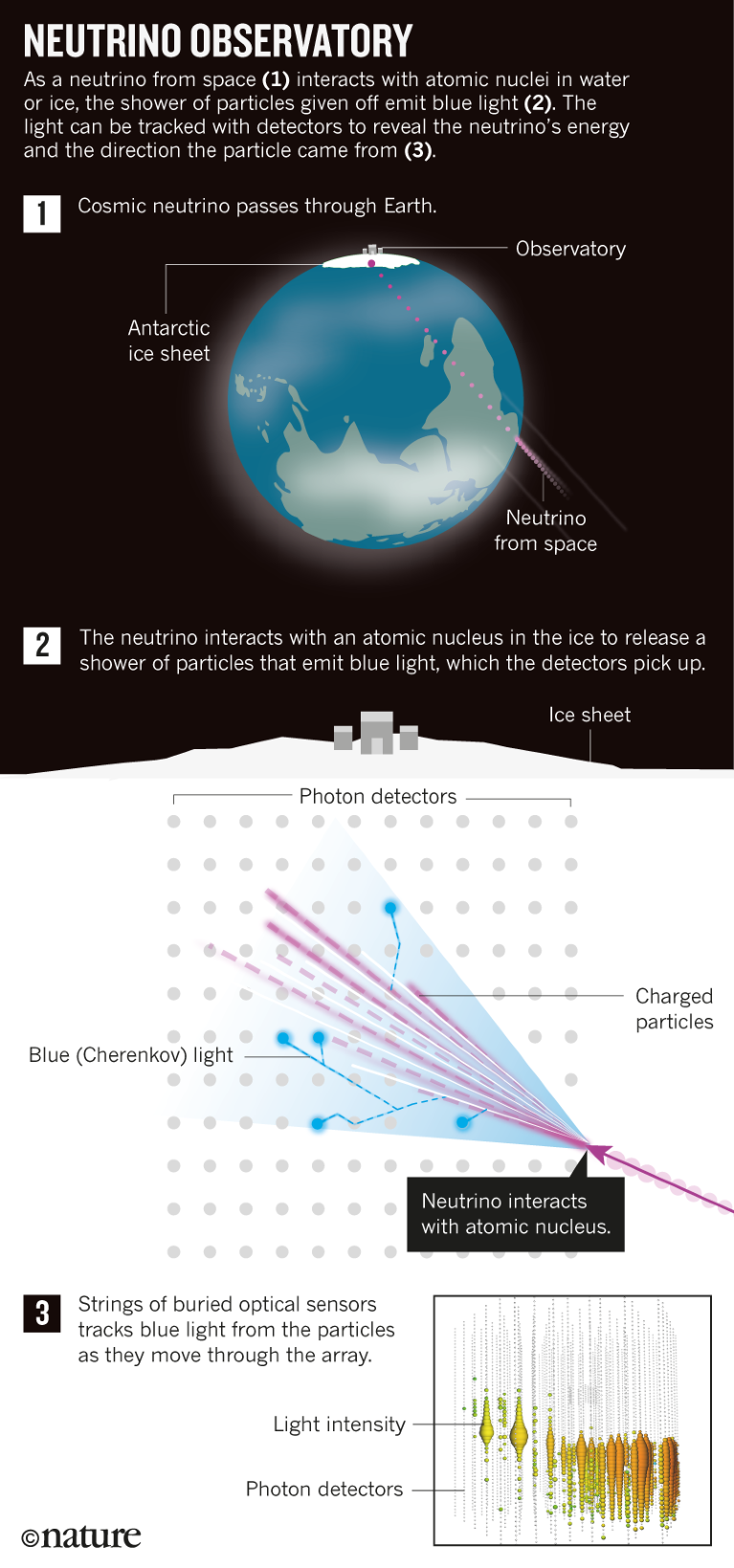
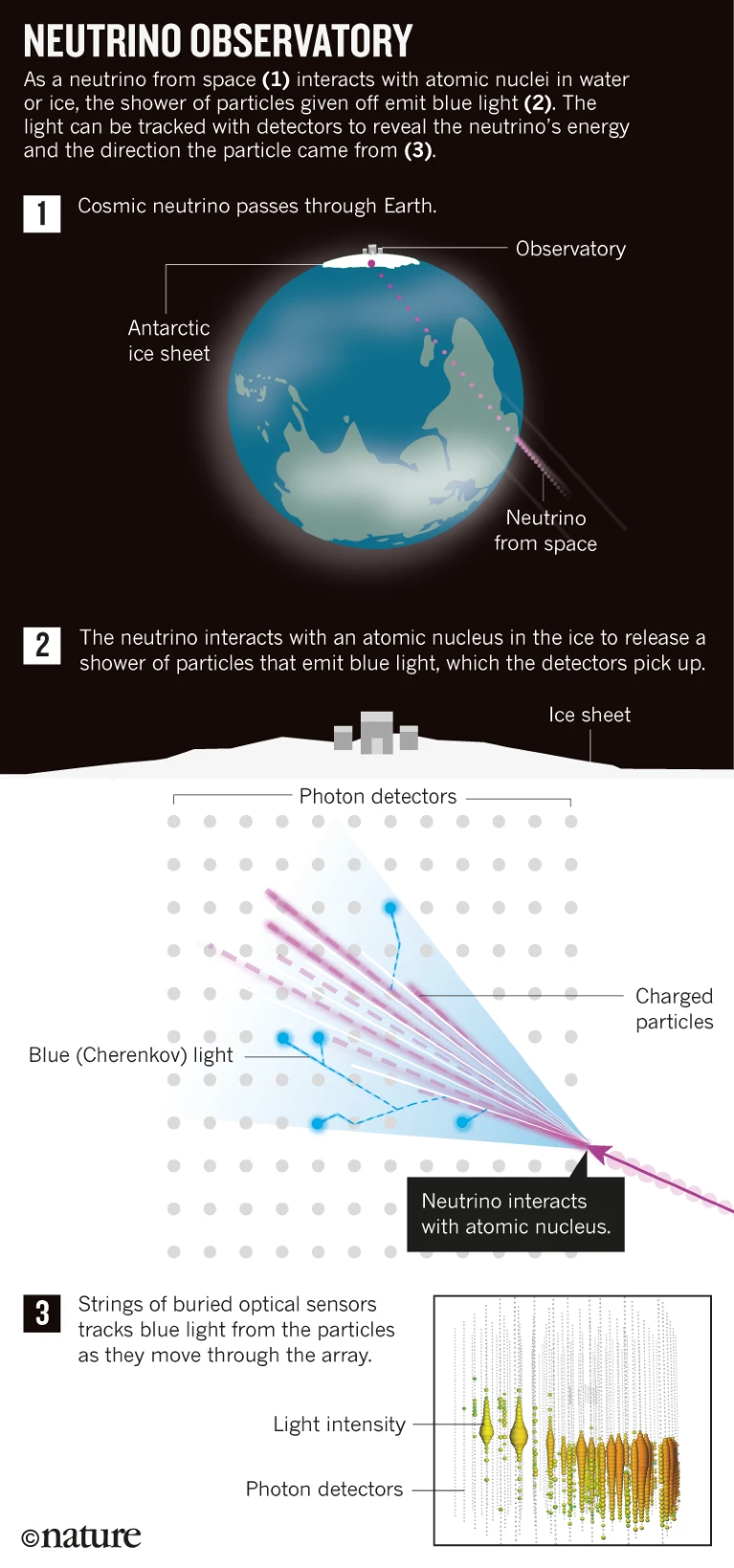
The IceCube Neutrino Observatory, located at the South Pole, consists of 5,160 light sensors embedded in a cubic kilometre of Antarctic ice at depths between 1,450 and 2,450 metres. The instrument detects rare, high-energy neutrinos originating from cosmic phenomena such as supernovae, black holes, and gamma-ray bursts. When a neutrino interacts with ice, it produces charged particles that emit faint flashes of light—a telltale signal captured by the sensors. This enables researchers to trace neutrinos back to their cosmic sources, providing a unique window into extreme astrophysical events that conventional telescopes cannot easily observe.
Construction of IceCube was completed in 2011 after approximately 1.5 decades of development and a decade of construction. Within two years of operation, the observatory had detected neutrinos from beyond the galaxy with energies far exceeding those produced anywhere in the Solar System. In 2013, IceCube published its landmark discovery of astrophysical high-energy neutrinos, establishing neutrino astronomy as a new field. Subsequent detections, including evidence from active galaxy NGC 1068 and a 2023 map of high-energy neutrinos along the Milky Way plane, have demonstrated the observatory's scientific impact.
Halzen leads an international collaboration of over 450 researchers and engineers. The project includes participation from Japanese researchers at Chiba University, who contributed significantly to the 2012 high-energy neutrino discovery. Mark Pearce, Chair of the Nobel Committee for Physics, stated: "Francis Halzen has led an international team of researchers and engineers who have provided us with a fantastic instrument. His tenacity and scientific vision has paved the way for a new kind of astronomy."
Halzen was born on 23 March 1944 in Tienen, Belgium, and earned his doctorate from KU Leuven in 1969. Before joining the University of Wisconsin–Madison in 1972, where he served as a physics professor, he conducted research in particle physics and hadron symmetry breaking. He is also author of the widely-used textbook "Quarks and Leptons." The prize carries a monetary award of 12 million Swedish kronor (approximately USD 1.2 million or GBP 900,000). A highland in Antarctica has been named Halzen Mesa in recognition of his scientific contributions.
Why This Matters
The award recognizes establishment of a new observational astronomy field using Antarctic ice as a particle detector, enabling detection of high-energy cosmic neutrinos from supernovae, black holes, and gamma-ray bursts. This provides measurable data on extreme astrophysical phenomena not accessible via conventional telescopes. The IceCube Observatory involves over 450 international researchers and has produced landmark publications establishing neutrino astronomy; the prize carries 12 million Swedish kronor (approximately USD 1.2 million).
Timeline & Sources
Mar 23, 1944
WireFrancis Halzen born in Tienen, Belgium
Jan 1, 1969
WireHalzen earns doctorate from KU Leuven
Oct 6, 2026
WireNobel Prize in Physics announced for Halzen
Oct 6, 2026
WireRoyal Swedish Academy of Sciences announces Halzen as 2026 Nobel Prize in Physics laureate
Related Signals
Sources
- 'Ghost particles' from space telescope wins physics NobelBBCMediaOct 6, 2026
- Nobel prize in physics goes to Francis Halzen for south pole work on neutrinosThe GuardianMediaOct 6, 2026
- 【速報】ノーベル物理学賞にフランシス・ハルツェン教授 素粒子ニュートリノの研究(テレビ朝日系(ANN))Yahoo!ニュースMediaOct 6, 2026
- ノーベル物理学賞に米ウィスコンシン大のフランシス・ハルツェン博士…ニュートリノ関連の研究で功績読売新聞MediaOct 6, 2026
- 授賞理由は高エネルギーニュートリノの発見沖縄タイムス社MediaOct 6, 2026
- Nobel Prize in physics awarded for ‘ghostly’ cosmic particlestassMediaOct 6, 2026
- Urgent: Francis Halzen wins 2026 Nobel Prize in PhysicsxinhuaMediaOct 6, 2026
- Flash: Francis Halzen wins 2026 Nobel Prize in PhysicsxinhuaMediaOct 6, 2026
- Nobel Prize in Physics goes to Francis Halzennobelprize.orgMediaOct 6, 2026
- 哈尔岑荣获2026年诺贝尔物理学奖zaobaoMediaOct 6, 2026
- Nobel physics prize awarded for detection of ghostly neutrinosnatureMediaOct 6, 2026
- 刚刚,诺贝尔物理奖一人独揽!qbitaiMediaOct 6, 2026
- Xinhua News | Francis Halzen wins 2026 Nobel Prize in PhysicsxinhuaMediaOct 6, 2026
- Francis Halzen wins 2026 Nobel Prize in PhysicsxinhuaMediaOct 6, 2026