
Today·Emerging
Follow-up 4h ago5
95%
UK Inflation Hits 3.1% in August as Fuel Prices Surge
UK inflation rose to 3.1% in August 2026, driven by sharp increases in petrol and diesel prices linked to Middle East conflict and rising oil supplies. The rise exceeds the Bank of England's 2% target, with economists forecasting further increases through January 2027 as businesses pass on higher energy costs.
Quick Facts
- UK CPI rose to 3.1% year-on-year in August
- Petrol and diesel prices reached highest levels in nearly four years
- Motor fuel prices rose 23% year-on-year
- Airfares increased, particularly for long-haul flights
- Brent crude oil exceeded $100 per barrel
Related Insights


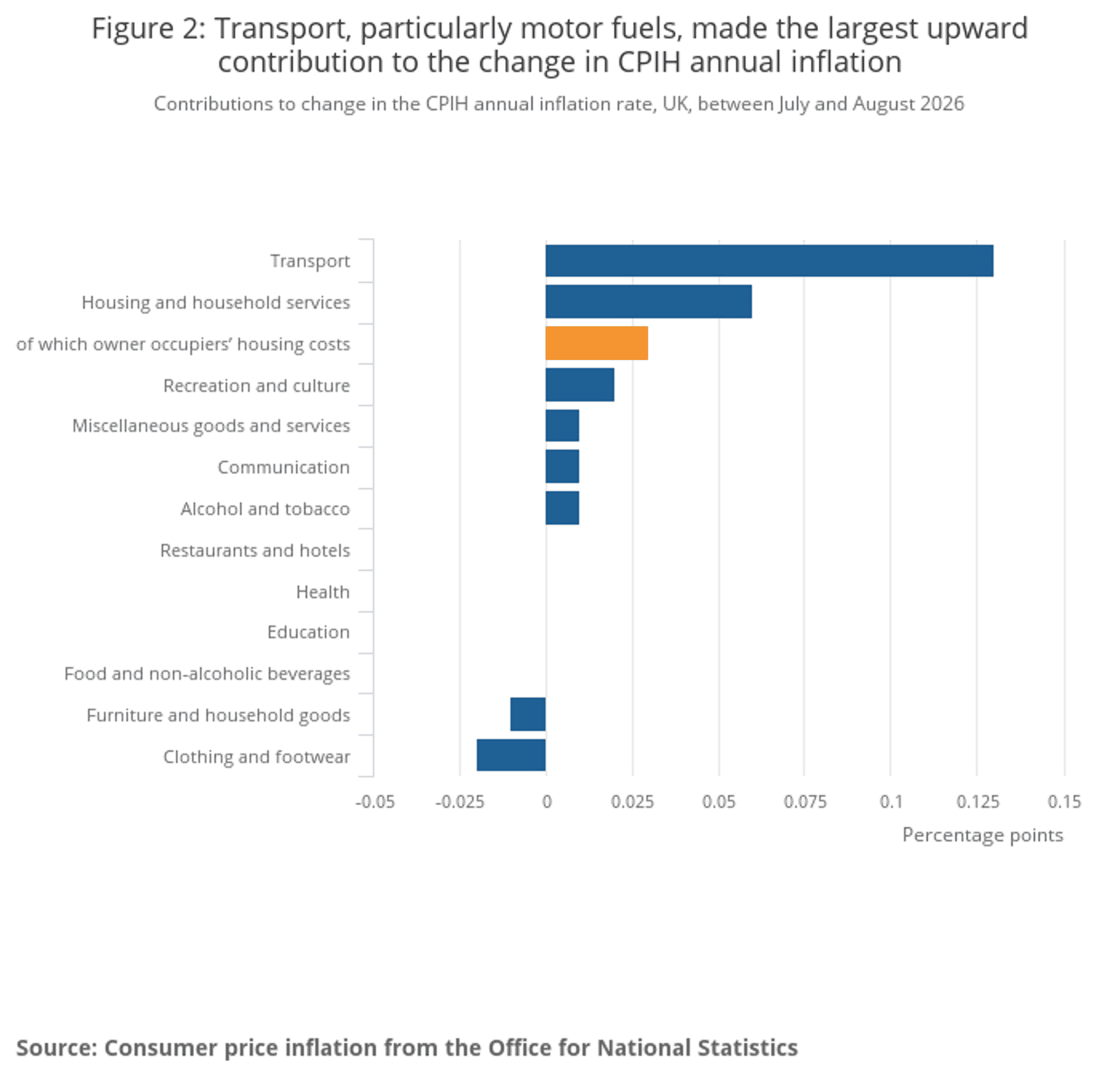
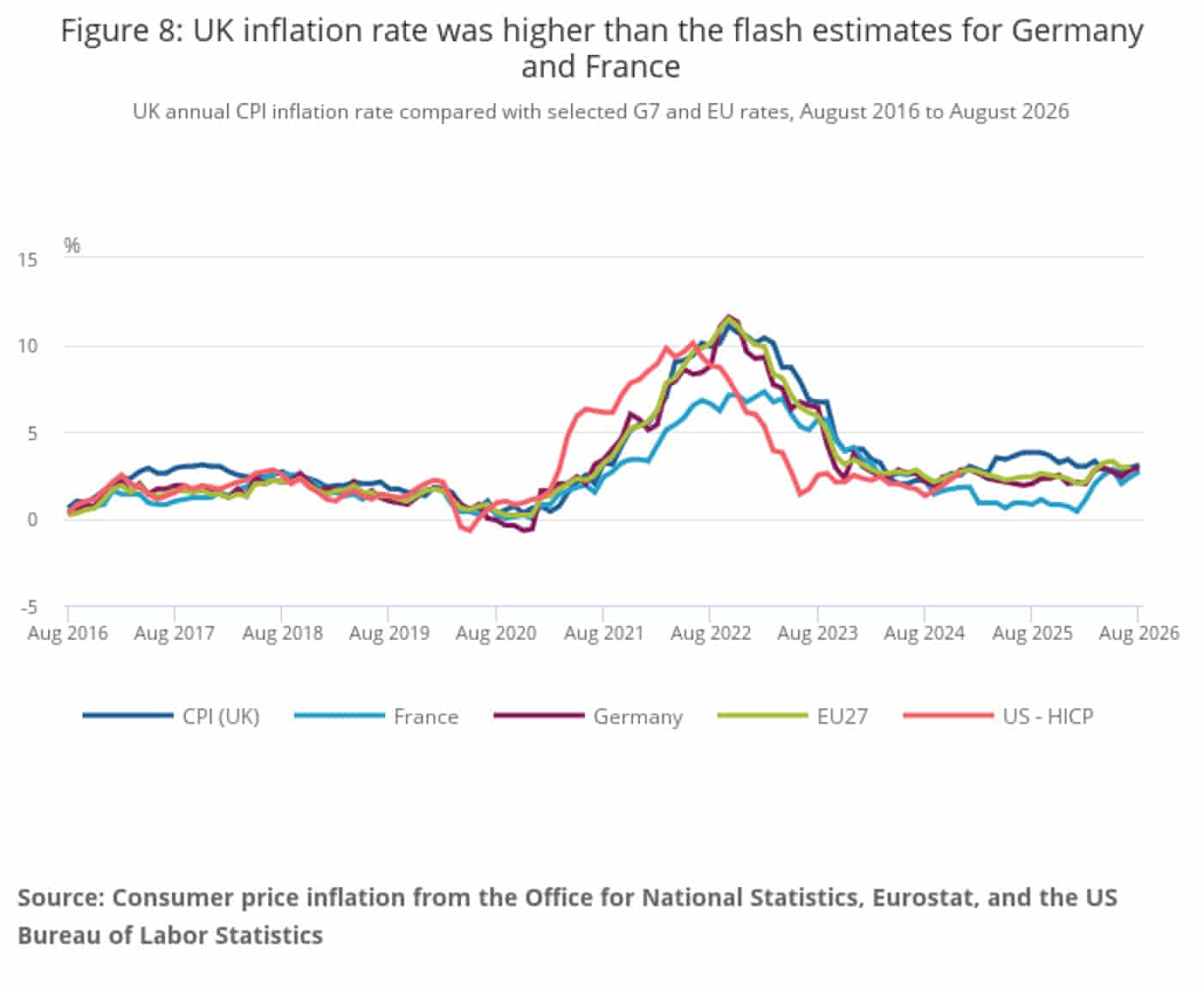
The UK's consumer price index (CPI) rose to 3.1% in the year to August, up from 2.9% in July, according to data released by the Office for National Statistics (ONS) on 16 September 2026. The increase was driven primarily by sharp rises in petrol and diesel prices, which reached their highest levels in nearly four years. Motor fuel prices rose 23% year-on-year, with petrol climbing 9.1p to 161.3p per litre between July and August—the highest recorded since November 2022. Airfares, particularly for long-haul flights, also contributed to the acceleration. On a monthly basis, CPI rose 0.5% in August, compared with 0.3% in the same month in 2025.
The conflict in the Middle East and resulting disruptions to global oil supplies have underpinned the energy price surge. Brent crude oil exceeded $100 a barrel in recent days, rising from around $73 before hostilities escalated earlier in the year. Core CPI, which excludes volatile food and energy items, remained unchanged at 2.6% year-on-year, while food inflation stayed stable at 1.3%. Grant Fitzner, chief economist at the ONS, attributed the rise to "sharp price rises for petrol and diesel" and higher airfares.
The inflation reading moves further away from the Bank of England's 2% target. The central bank's policy rate stands at 3.75%, and the Bank of England was scheduled to meet on 17 September to decide on interest rate policy. Markets were pricing in at least four interest rate rises by the end of 2027, which would lift the Bank rate to 4.75%. However, the immediate decision was expected to be a hold, with the broader monetary policy outlook uncertain.
Economists have warned of continued inflationary pressure ahead. Paul Dales, chief UK economist at Capital Economics, forecast that inflation will rise to around 3.6% in September and peak at approximately 4.2% in January, driven by the combination of higher oil and gas prices and businesses passing on elevated energy costs. The British Chambers of Commerce predicted CPI will rise further over the final months of the year due to oil price volatility and ongoing Middle East tensions. Capital Economics noted that while the current inflation spike stems from external energy pressures rather than domestic wage-price spirals, the effect has not yet spilled into food and drink prices.
The inflation rise comes as households face renewed financial pressure. According to the Money Advice Trust, nearly half (46%) of people seeking support through National Debtline do not have enough money to cover essential bills monthly, and two in five are behind on energy bills. Chancellor John Healey will deliver his first Budget on 28 October, with inflation posing challenges to economic management. Prime Minister Andy Burnham acknowledged inflation as "a concern" but stated that the underlying UK economy remained resilient, noting the economy expanded 0.4% in July, bolstered by investment in artificial intelligence.
Why This Matters
UK inflation at 3.1% exceeds the Bank of England's 2% target and approaches forecasts of 4.2% by January 2027, driven by global oil supply disruptions. This affects household borrowing costs (markets price four rate rises to 4.75% by end-2027), purchasing power (46% of National Debtline users cannot cover essential bills monthly), and fiscal policy decisions (Chancellor's October Budget announcement). Energy-linked inflation may persist through business cost pass-through, with uncertain spillover to food and wage-setting.
Timeline & Sources
Jan 1, 2026
WireMiddle East hostilities began, Brent crude at approximately $73 per barrel
Jul 8, 2026
WirePetrol price rose 9.1p between July and August
Oct 28, 2026
WireChancellor John Healey scheduled to deliver first Budget
Dec 31, 2027
WireMarkets price in at least four interest rate rises by end of 2027, lifting Bank rate to 4.75%
Related Signals
- GeoRelated Topic
Federal Reserve poised to raise rates for first time since 2023 amid persistent inflation
Follow-up 7h ago
- GeoMarket Impact
EU Proposes Canada as First Associate Member Amid US Trade Crisis
Follow-up 6h ago
- GeoMarket Impact
Canada pursues 'unique alliance' with EU as US tariffs escalate
Follow-up 9h ago
- GeoMarket Impact
Pentagon Report: Iranian Strikes Damaged U.S. Bases Across 8 Middle East Countries
Follow-up 4h ago
- GeoRelated Company
Saudi Arabia intercepts Houthi drone near Mecca; group denies targeting holy city
Follow-up 3h ago
Sources
- Petrol and diesel price rises push UK inflation rate up to 3.1%BBCMediaSep 16, 2026
- Bank of England expected to leave interest rates on hold on Thursday despite inflation hitting 3.1% – business liveThe GuardianMediaSep 16, 2026
- Petrol and diesel price rises push UK inflation higherBBCMediaSep 16, 2026
- Britain's CPI up 3.1 pct in AugustxinhuaMediaSep 16, 2026
- United Kingdom CPI inflation jumps to 3.1% YoY in August, as expectedFXStreetMediaSep 16, 2026