
Nov 2·Geo
Follow-up 3h ago Major5
100%
Democrat Annie Andrews Wins South Carolina Senate Seat, First Democratic Victory Since 1998
Democrat Annie Andrews, a pediatrician, defeated Republican Darline Graham in South Carolina's Senate race, becoming the first Democrat elected to the seat since 1998. Graham, appointed earlier in the year to complete her brother Lindsey Graham's term following his death, faced criticism for limited political experience and close alignment with Trump, while Andrews significantly outraised and outspent her opponent.
Quick Facts
- Annie Andrews defeated Darline Graham in South Carolina Senate race
- First Democratic Senate victory in South Carolina since 1998
- Darline Graham appointed to complete Lindsey Graham's term
- Lindsey Graham died of heart condition in July
- Darline Graham won Republican primary and special primary runoff
Related Insights
Annie Andrews Claims Victory In South Carolina Senate Race, Eyes Historic Democratic Flip | N18G CNBC-TV18 · YouTube
Annie Andrews celebrates historic South Carolina Senate upset FOX 9 Minneapolis-St. Paul · YouTube
Democrat Annie Andrews notches upset win in South Carolina Senate race Scripps News · YouTube
Annie Andrews speaks after becoming first woman elected to US Senate from South Carolina News 19 WLTX · YouTube
🚨 Annie Andrews Wins South Carolina Senate Race! Historic Democratic Victory The Geopolitics Hub · YouTube
What an Annie Andrews win could mean for South Carolina WJCL News · YouTube
US Midterms Elections: Democrats Flip South Carolina Senate Seat After Historic Upset | WION WION · YouTube
Annie Andrews Flips South Carolina Senate Seat | 2026 Midterms StoryRoom News US · YouTube


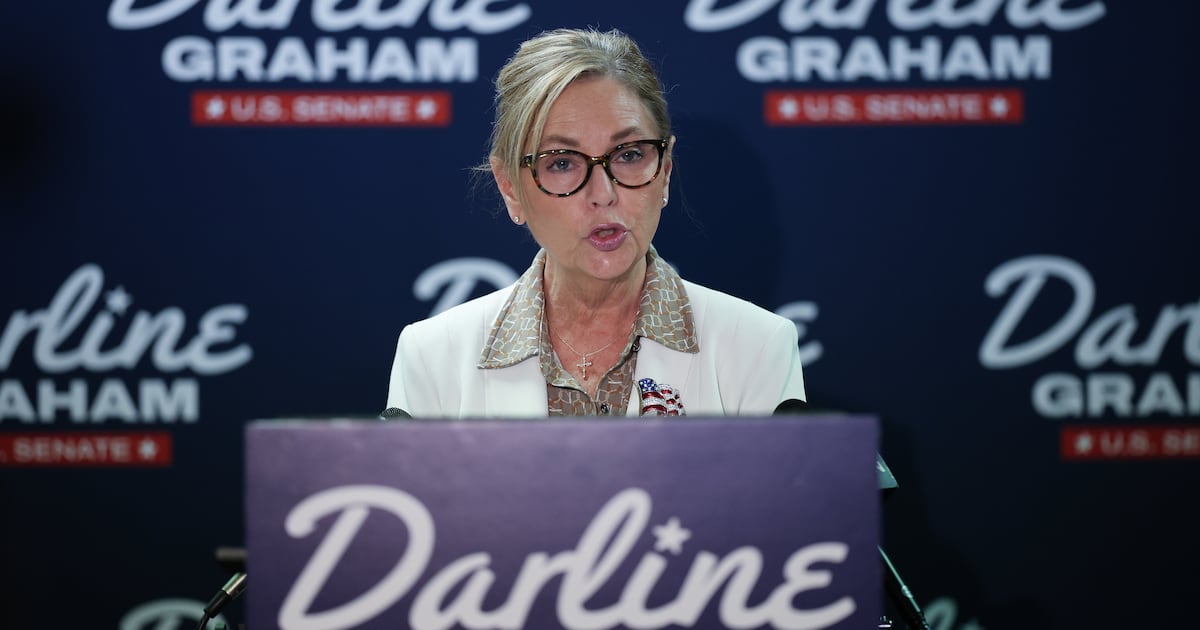

Annie Andrews, a pediatrician, has defeated Republican Darline Graham in South Carolina's Senate race, marking the first Democratic victory in the state's Senate race in over 25 years. The upset victory occurred in a state that President Donald Trump carried by more than 17 percentage points in the previous presidential election, signaling a significant political shift in what has been considered a Republican stronghold.
Graham, 62, was appointed by Governor Henry McMaster in July to complete the term of her brother, longtime Senator Lindsey Graham, who died of a heart condition. She subsequently won the Republican primary and decided to run for a full term, but faced immediate scrutiny for her limited political experience. During an August debate, Graham acknowledged being "not that informed on national security," a vulnerability that drew criticism from both opponents and some fellow Republicans. The Cook Political Report reflected the race's competitiveness by downgrading its forecast from "Solid Republican" in August to "Lean Republican" by late October.
Andrews significantly outperformed Graham in fundraising and spending. In the final pre-election period, Andrews raised over $4 million—mostly from online donors—and spent more than $4.6 million in two weeks, while Graham raised approximately $90,000 and spent $65,000. Outside spending also favored Andrews, with the Senate Majority PAC announcing a $750,000 digital buy in the closing stretch, compared to the Senate Leadership Fund's $13 million boost for Graham.
The race centered on healthcare affordability, national security, and foreign policy. Andrews criticized the war in Iran as "illegal" and "unconstitutional," while Graham aligned closely with Trump's positions, including on tariffs and the Iran conflict. Trump actively campaigned for Graham, holding rallies on her behalf, yet her association with the former president did not prevent the upset. A New York Times/Siena poll conducted the week before the election showed the candidates statistically tied at 48 percent each.
Andrews' victory also makes her the first woman ever elected to represent South Carolina in the U.S. Senate. The race attracted significant national attention as one of several Trump-endorsed candidates facing unexpectedly competitive races, alongside contests in Texas and Ohio, reflecting broader headwinds for Republicans during the midterm election cycle.
Why This Matters
South Carolina had not elected a Democratic U.S. Senator in 26 years; this outcome signals measurable shifts in voter preference in a state Trump carried by 17+ points in the previous presidential election. Andrews' victory, combined with competitive races in Texas and Ohio, reflects changing electoral dynamics affecting seat projection and party control of the Senate. Darline Graham's appointment to complete Lindsey Graham's unexpired term and subsequent primary victories established her as the Republican nominee; her loss to an opponent who significantly outspent her (Andrews: $4.6M vs. Graham: $65K in the final period) demonstrates the role of campaign resources and fundraising capacity in determining outcomes.
Related Signals
- GeoMarket Impact
Trump Announces End of $4 Billion Annual U.S. Aid to Israel by Year-End
Follow-up 7h ago
- GeoRelated Topic
US Midterm Elections: Republicans defend control of Congress
Follow-up 8h ago
- GeoRelated Company
Ossoff and Collins make final appeals in Georgia Senate race
Follow-up 16h ago
- GeoRelated Topic
US midterm elections held amid economic strain from inflation, Iran war
Follow-up 3h ago
- GeoRelated Topic
Democrats projected to win House control in 2026 midterms
Follow-up 4h ago
Sources
- Democrat Annie Andrews flips South Carolina Senate seat held by Republicans since 1998The GuardianMediaNov 4, 2026
- Could a Democrat Win the Senate Race in Deep-Red South Carolina?Time MagazineMediaNov 2, 2026
- Trump’s ‘Hostage’ Senate Pick Sparks GOP Panic Days Before ElectionThe Daily BeastMediaNov 2, 2026
- Democrat Annie Andrews defeats GOP Sen. Darline Graham in South Carolina, a major upsetNBC NewsMediaNov 4, 2026
- Urgent: Democrats projected to flip South Carolina's U.S. Senate seat, first since 1998xinhuaMediaNov 4, 2026